This is the first of three rye breads on my list, and a great loaf for beginners. It’s a sturdy, easy, straight forward recipe, and doesn’t take a lot of active time, which makes it perfect for those of us “baking while working”. I’ve doubled the caraway seeds, for just a little more flavor.
Continue reading “Week 11: Sandwich Rye” →Category: Lean
Week 9: Focaccia
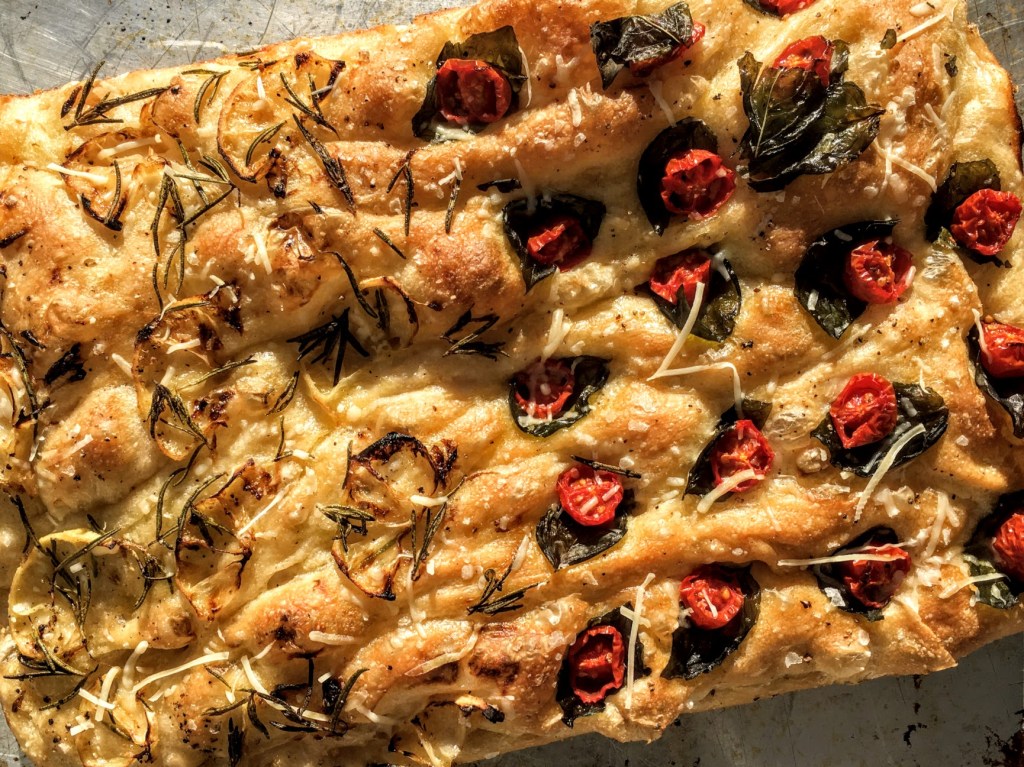
ITALY: A thick, airy, flat bread with a lot of potential. It’s delicious with the traditional topping of olive oil, salt and rosemary. Or, you can join the Focaccia Bread Art movement and make it a meal. I tested a few quicker versions, with just one rise time, but this version, with a super wet dough and the addition of a salamoia (brine) is the most authentic. Plus, the four rises/folds ever 30 minutes are a great excuse to get up from your desk and move, if you’re working from home!
The Easiest Focaccia | Ethan Chlebowski
Rise time: 20 + 30 + 30 + 30 + 30 + 60
Equipment: None!
| 9 grams | yeast |
| 335 grams | water (110 degrees) |
| 450 grams | flour (all purpose or bread) |
| 9 grams | salt |
| 9 grams | olive oil |
| 20 grams | olive oil |
| 20 grams | water |
Week 6: Baguette
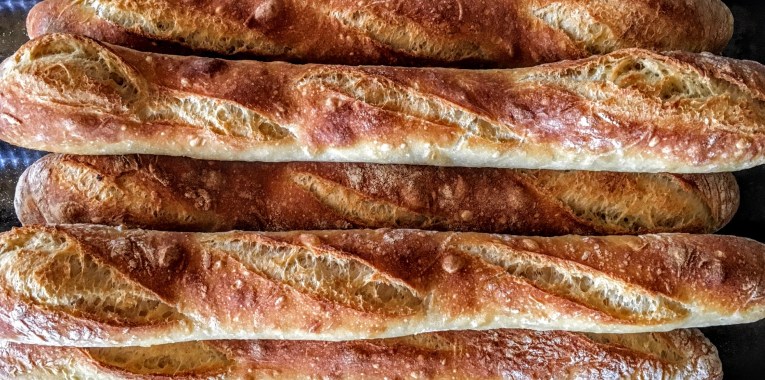
FRANCE: A long, thin loaf with a airy center and thin, crisp crust. It’s a wet dough, so hard to manage. We learned some new methods: “turning” the dough, and using water to keep it from sticking. John’s got a soothing, calm voice, and talks us through every step of the process.
Continue reading “Week 6: Baguette”Week 3: Boule
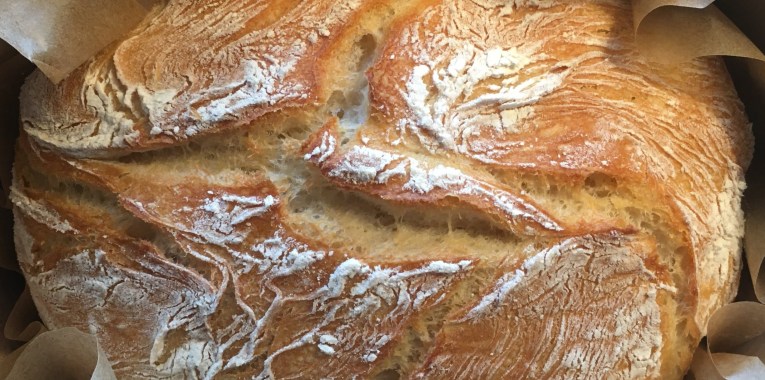
FRANCE: A round, heavy loaf baked in a pot with a lid (it doesn’t have to be a dutch oven). I chose this version because of the detailed instructions, great videos, delicious taste, and the no-knead method. If you learn how to make just one bread this should be the one. The perfect loaf to impress!
Continue reading “Week 3: Boule”Week 2: Ciabatta
ITALY: The perfect ciabatta is full of holes, and has a sturdy, crisp crust. You can make one loaf, or divide into to eight for individual sandwiches. We chose this version because it offers the chance to knead by hand, and goes into great detail for handling wet dough. Erin gives a good explanation on the different types of yeast, and which ones to use.
Continue reading “Week 2: Ciabatta”