
I use Kenji Lopez-Alt’s recipes for thin crust and thick crust pizzas.
Neapolitan Pizza Sauce: Blend one 14 oz can DRAINED whole peeled tomatoes with 1/4 tsp salt. Use 2 Tbsp per 12″ skillet/pizza pan.
I use Kenji Lopez-Alt’s recipes for thin crust and thick crust pizzas.
Neapolitan Pizza Sauce: Blend one 14 oz can DRAINED whole peeled tomatoes with 1/4 tsp salt. Use 2 Tbsp per 12″ skillet/pizza pan.
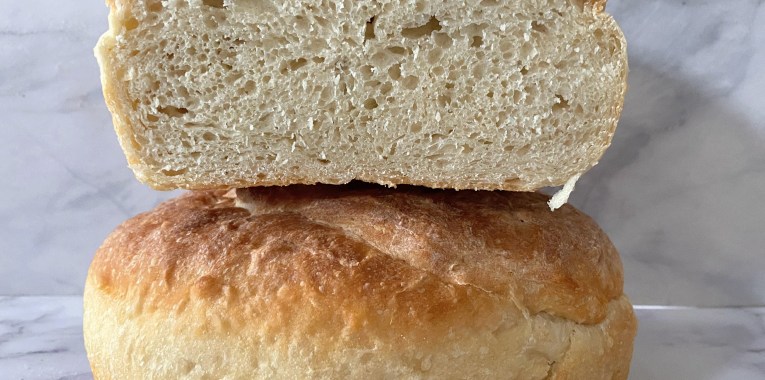
This comes our way via Alexandra’s Kitchen. It’s easy, fast and satisfying to make. She’s also got a version made with 50% whole wheat, instructions for baking in loaf pans if you prefer sliced sandwich bread, and suggestions on adding toppings, making it with gluten free flour, etc.
I’ve listed the ingredients so you can have them at the ready, then follow along in the video linked below. Link to full written recipe here.

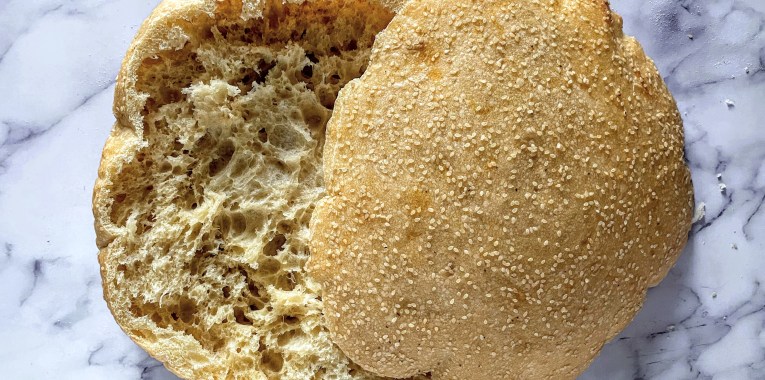
NEW ORLEANS by way of SICILY: A focaccia-type bun, that was traditionally served for breakfast during Festa dei Morti (Day of the Dead), and topped with olive oil, anchovies, oregano, and caciocavallo cheese. It’s ties to New Orleans are through Salvatore Lupo, an Italian immigrant who opened the Central Grocery & Deli in the French Quarter, and began making his own version of the stuffed focaccia. Legend says that at lunchtime, farmers would buy a loaf of muffuletta bread, sliced deli meats, olives and cheese, and then proceed to eat standing up. Lupo decided to put all the ingredients together in a sandwich to make it easier for them to enjoy their lunch.
Today’s muffuletta sandwich feeds 4-6 people and is made with a large 14″ round loaf. It consists of layers of marinated olive salad, mortadella, salami, ham, and provolone, mozzarella and Swiss cheeses. Although Central Grocery has been closed since Hurricane Ida, you can still order a muffuletta and/or jars of their olive salad to ship anywhere in the U.S. And, here’s a good recipe for olive salad if you want to make your own.
Napoleon House is another place in the Quarter that folks like to go for their muffuletta. They serve the sandwich heated, which I prefer because then the crust is crunchy, but of course, there’s a TON of controversy surrounding that!

This version is adapted form the muffaletta recipe on the King Arthur Baking website. I used the ingredients exactly as listed, and it produces a superb loaf. But my method is a little different, so I’ve written out instructions below. And be forwarned: timing is a factor, and it’s important to figure out what schedule you’re going to follow before you begin. You can start in the evening, before you go to bed, or first thing in the morning. Also, you need a 14″ pizza pan to bake the bread.

| Start just before bedtime | Start in the morning |
|---|---|
| 10:00pm – 8:00am, First rise, 8 hours | 10:00AM – 6:00pm, First rise 8 hours |
| 9:00am – 10:00am, 2nd rise: 1 hour | 6:00pm – 7:00pm, 2nd rise: 1 hour |
| 10:30am – 12:30pm, 3rd rise: 2 hours | 8:30pm – 10:30pm, 3rd rise: 2 hours |
| 1:00pm – 9:00pm, 4th rise: 8 hours | 11:00pm – 8:00am, 4th rise: 9 hours |
| 9:30pm -10:00pm, 5th rise: 30 minutes | 8:30am -9:00am, 5th rise: 30 minutes |
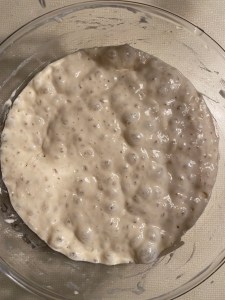
Step 1: Make starter (8 hour rest)

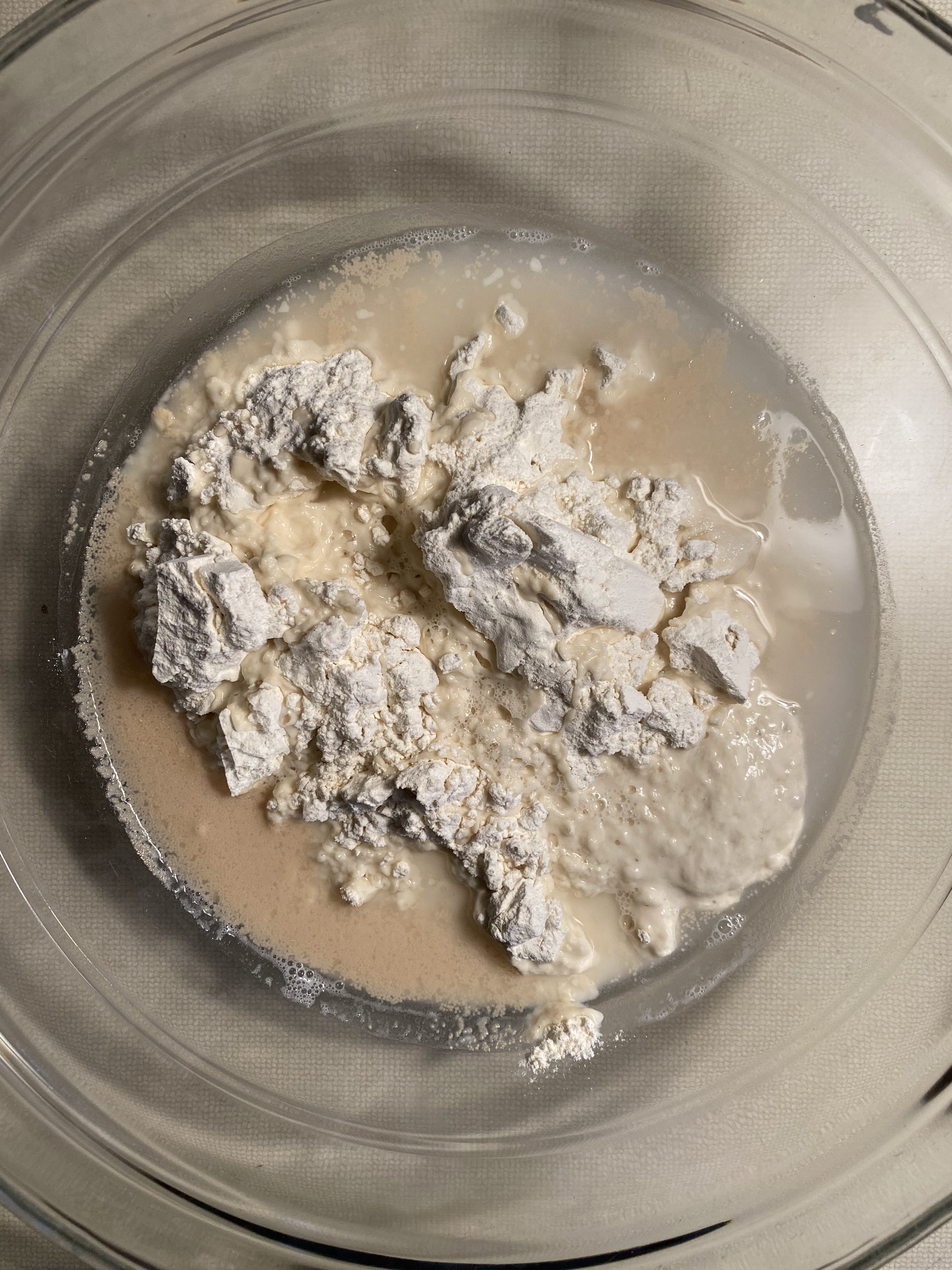
Step 2: Make dough


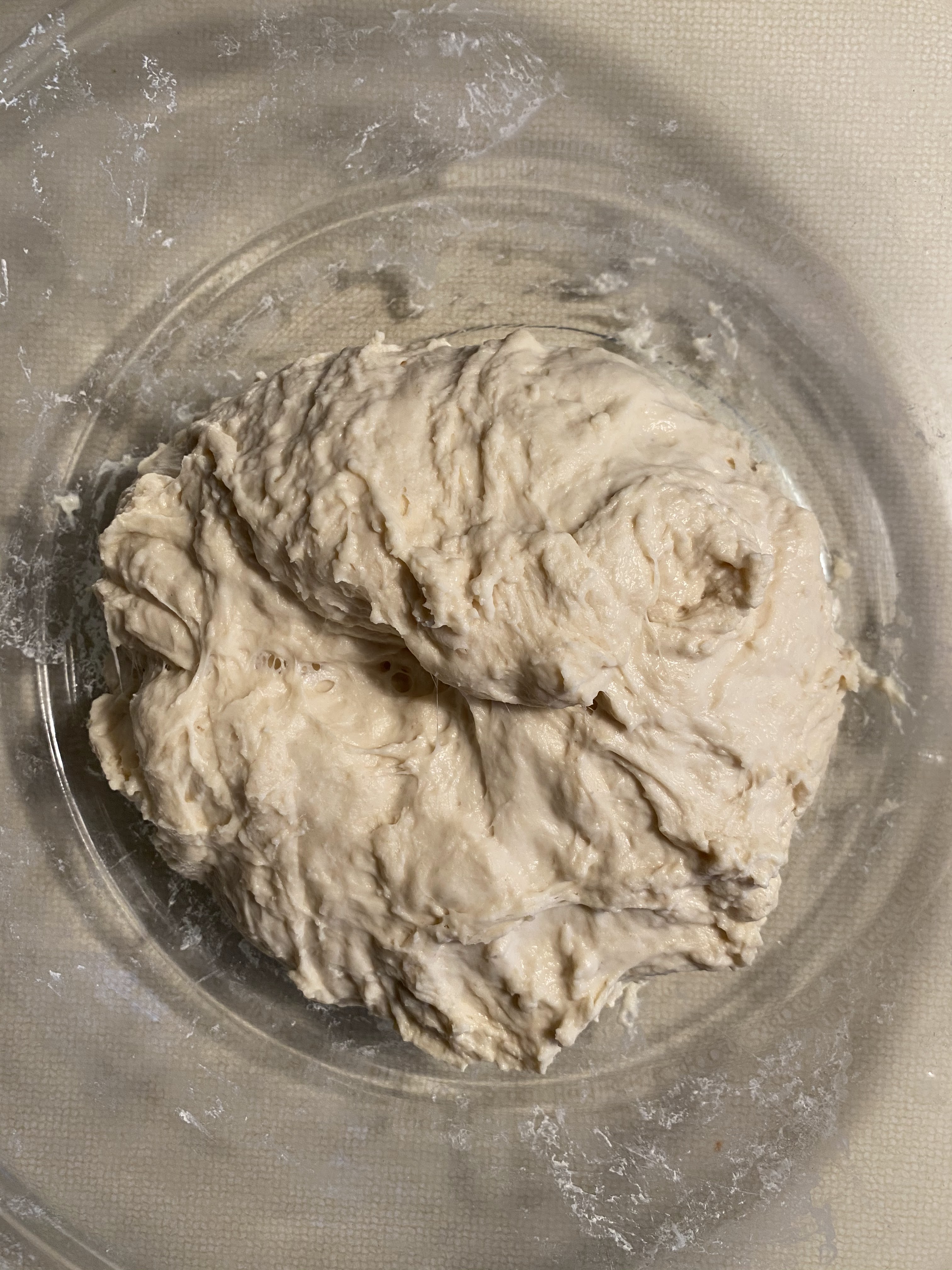
Step 3: Envelope kneading, proofing, and shaping


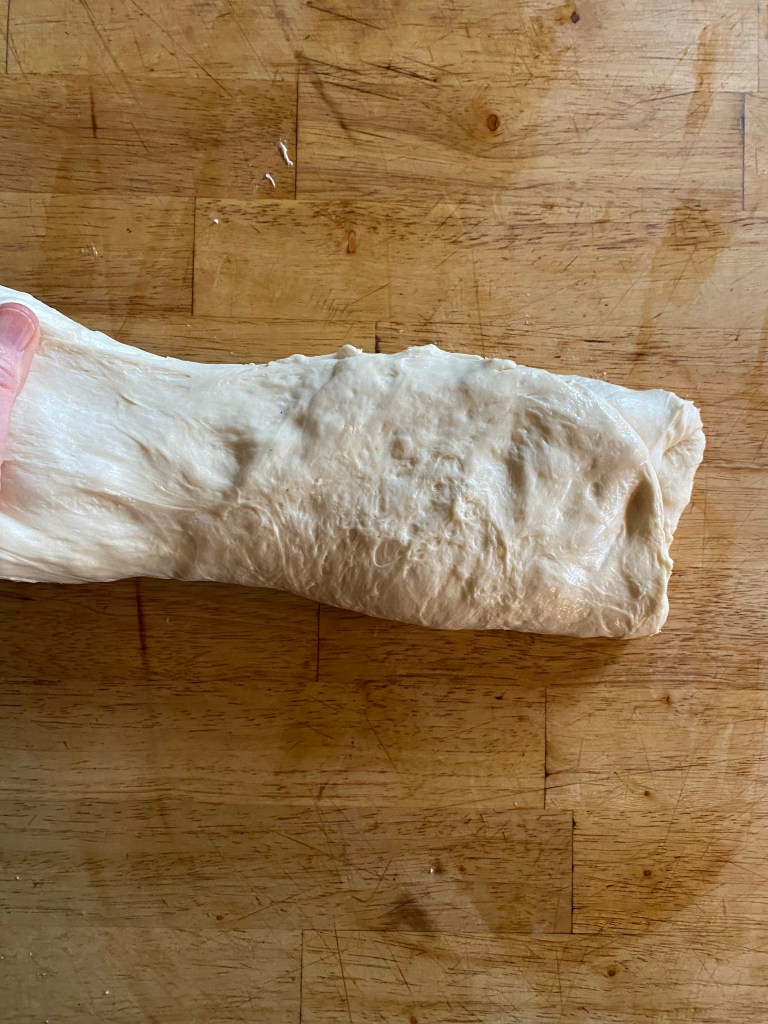
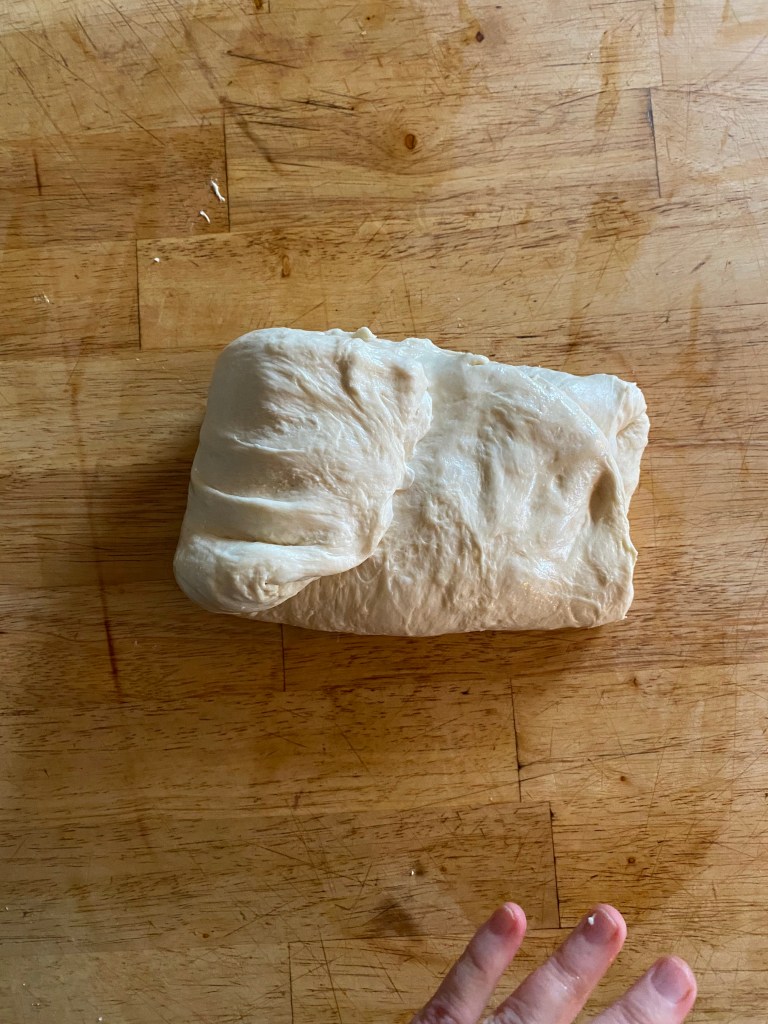


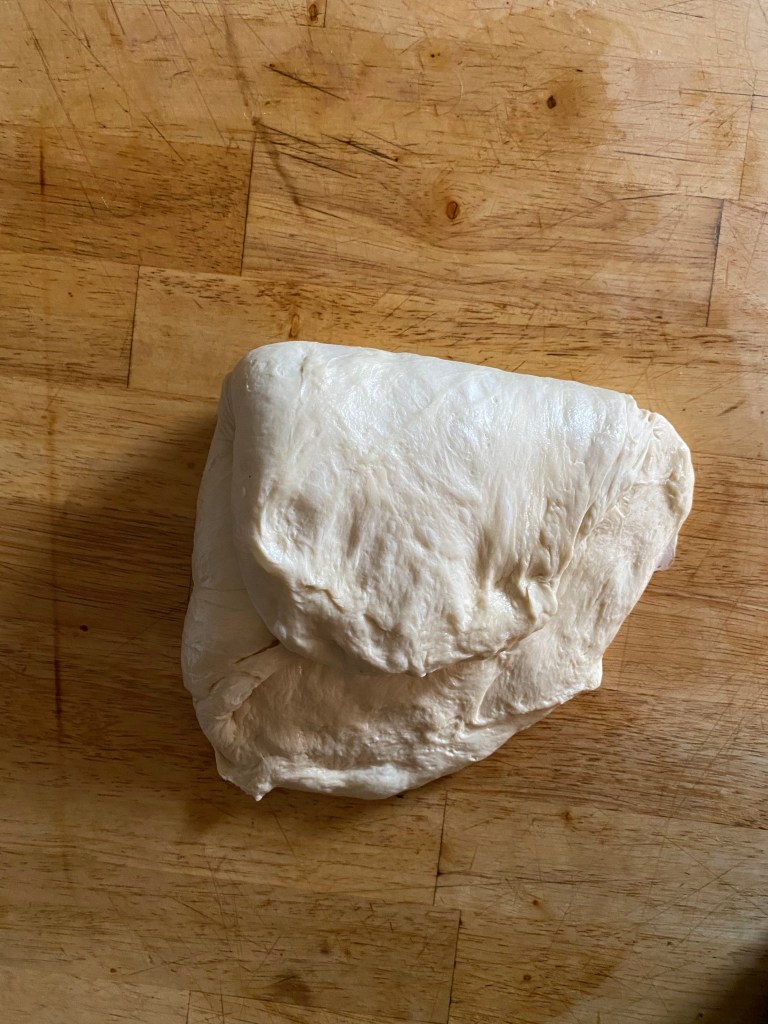


Step 4: Bake
Sandwich fillings

Want the savory punch of a bagel without the time-consuming process of either baking them yourself or going out to get some? Then this bread is for you – delicious, easy and satisfying. It does require an overnight rest, but after that, you don’t need to spend much time on it at all. The Everything Bagel seasoning is mixed into the dough in addition to being sprinkled on top, making it the perfect foil for some avocado toast. This is one of my favorite breads so far!
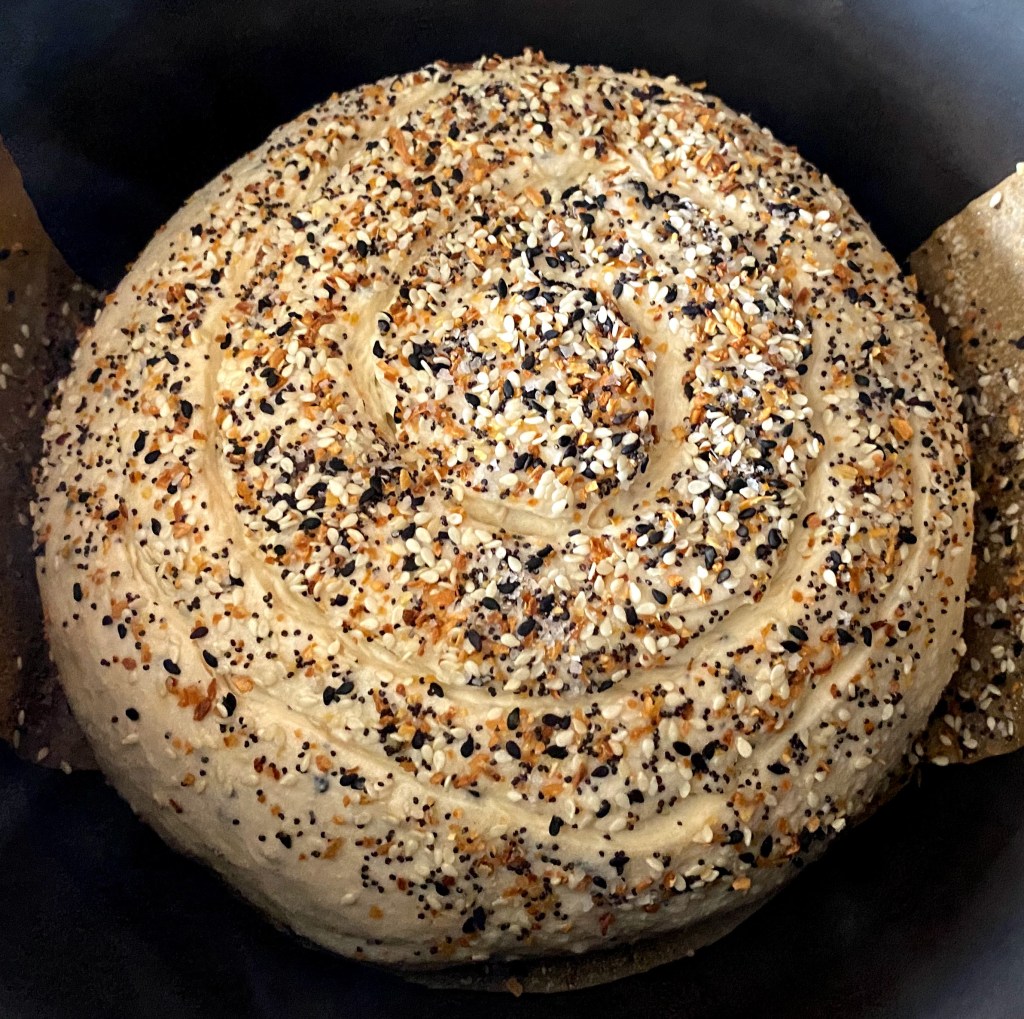

I found this on Leite’s Cuisine, one of my top ten food blogs. It’s been around since 1999, and has thousands of tested, well-written recipes, from hundreds of professional contributors. All bread recipes are written in both US and Metric measurements, which is super convenient.
Click here for the recipe. Trader Joe’s makes a good seasoning mix, but if you can’t find it, Leite’s Cuisine’s recipe is below:
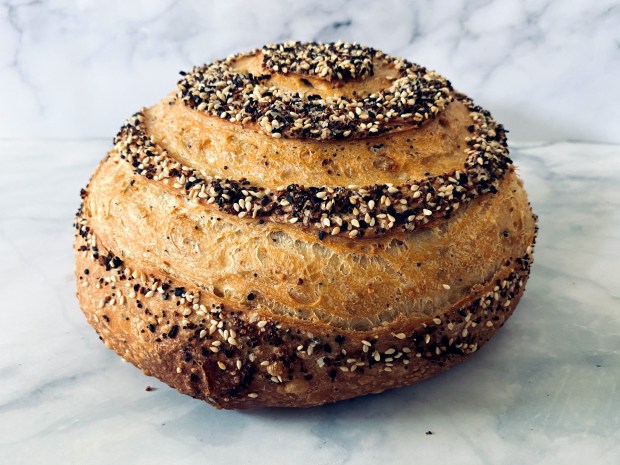
If you want to try your hand at bagels, we made them during Week 51. Recipe and lots of tips here.

This Swedish sandwich “cake” is a wonderful party dish in the Spring; perfect for Easter or Mother’s Day. It’s made with bread instead of cake, filled with a variety of savory spreads, iced with cream cheese, and decorated with fresh herbs and vegetables. You can make it ahead of time, and then finish off the outside on the day you’re going to serve it. Fillings and toppings are varied, and can be seafood and/or meats, or vegetarian. And, best of all, it’s super easy to make (although a little time consuming).
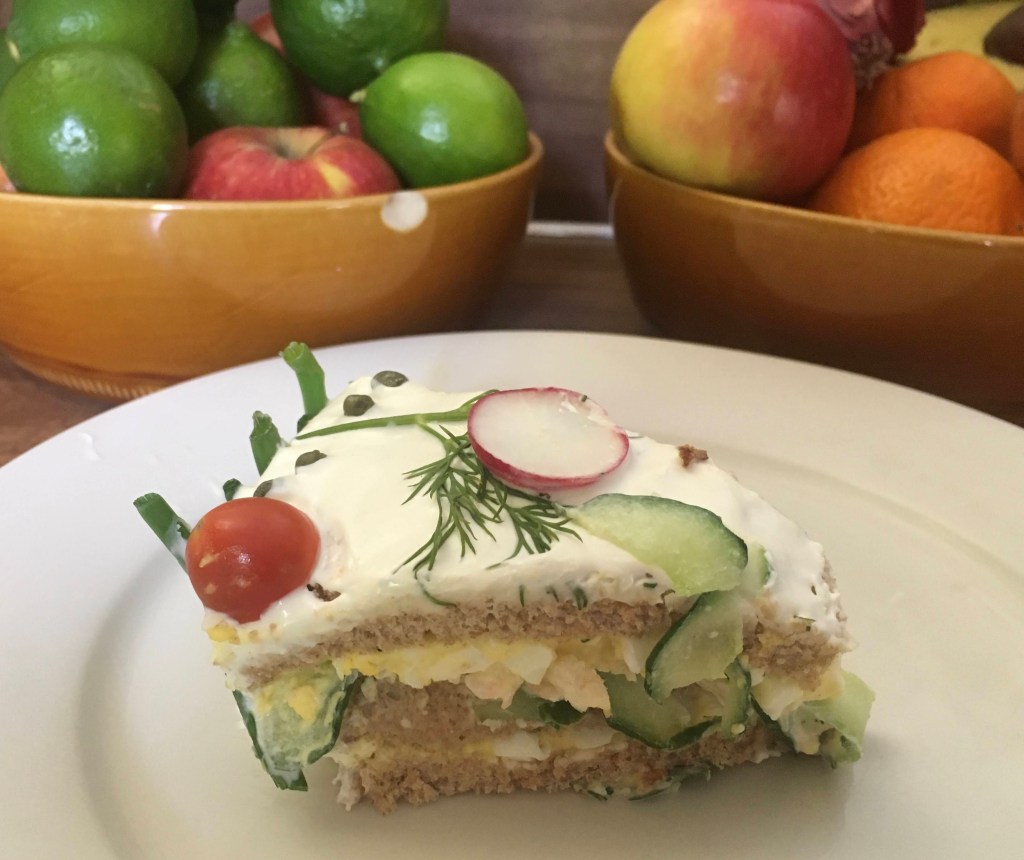
I like to make salmon pate, egg salad, and a creamy shrimp filling for a four-layered cake, but a three-layered cake (above) works just as well. I make the icing by mixing some sour cream with softened cream cheese (one small carton of each is enough for both the fillings and the icing). I decorate with carrot, radish, capers, cherry tomatoes, cucumber, chives, flat leaf parsley, dill and grated lemon and/or lime zest, and this last time I made it, I added kiwi crescents to the top. Some folks put lox and shrimp as decorations as well, but I find it’s hard to cut through those, so I leave them for the inside.
Both the fillings and decorations are totally up to you, and can be guided by what’s in season, or the occasion.

Start with a bread layer, then add a layer of bread on top of each filling, ending with a layer of bread on top of the thrid filling. Spread mayonnaise or softened butter on bread before topping with filling. Press down on bread layers after loading up each one. Cover and store in fridge overnight to set.


* I use a spring form pan for a circular “cake” even when I don’t have a round loaf to start with, but it’s kind of a pain. If you don’t want to fool with that, just use four slices of square sandwich bread for each layer to make a square, free-form version.


MAKING DOUGH

(Since we’re still waiting on our starter, here’s a bread for Easter weekend!) ENGLAND: These yeasty, heavenly spiced buns are typically eaten on Good Friday, celebrating the end of Lent. There are a multitude of references to the cross representing the crucifixion of Christ, and suggestions that the spices signify those used to embalm, but as food historian Ivan Day says, “The trouble with any folk food, any traditional food, is that no-one tended to write about them in the very early period.” Which is to say, most of this is conjecture, and it is just as likely that the cross is a way to separate the bun into sections. Back in the day, folks would grate, then save the bread that was baked on Good Friday to use as a medicine in later years, and some believed that the buns would never go moldy, so they nailed up in the house as a good luck charm.
I found many versions of hot cross buns (12M results on Google!) and tested three. I am happy to report that Bake with Jack’s Hot Cross Buns is the clear winner — and he just today posted an accompanying video with tips and updates, since that recipe was originally posted on his blog in 2017.

Bake with Jack’s Hot Cross Buns Recipe
My tips:
Video below has tips that would be useful in making this recipe.
Links to some of his videos that would be useful for this recipe
Video 150: Incorporating Dried Fruit in Real Time – https://youtu.be/TEa-D0yoHfc
Video 149: Do You NEED to Soak Dry Fruit for Bread? – https://youtu.be/j9_KuJ0voq0
Video 131: Kneading Bread Dough in REAL TIME – https://youtu.be/BBRmfxumyh0
Video 87: FIVE signs your Bread Dough is Fully Kneaded – https://youtu.be/rHgtvDMrffc
Video 148: Make it EASY for yourself – https://youtu.be/_FTA2maeqh8
P.S. I really wanted to like Dan Lepard’s Spiced Stout Buns recipe — link here — because they seemed like a grown-up version, and feature the no-knead method. But the special ingredients, the length of time with it’s overnight ferment, and tricky method if you’re a beginner, just didn’t seem worth it in the end. They are tasty though, and it’s a no-knead method, so have at if you’re interested!

While you wait for your sourdough starter to be ready, you can satisfy your sweet tooth without the guilt! Inspired by Rogue Ale’s Cherry Choctabulous, with a hint of cardomon and coffee, this bread is as good with a cold glass of milk as it is with a glass of red wine. Recipe makes one loaf, and there’s also instruction for individual Chocolate-Cherry Bombes.
Continue reading “Week 53: Cherry Choc-tabulous”
Unless you live in New York (or Montreal, strangely enough), you’re surrounded by people who complain that they can’t get a decent bagel anywhere.* But, it doesn’t matter where you live, because a perfectly satisfying version can made at home! Follow a method that incorporates a.) proofing the dough overnight, b.) boiling them before baking (duh), and c.) using a high protein flour and barley malt, and the end result will be bagels with a shiny, thin, crispy crust and a dense, chewy , slightly tangy interior. The most successful batch I made comes from Zingerman’s Bakehouse, with a few adjustments on my part: I boosted the protien content of the flour, added an overnight proof, and used malt powder rather than syrup.
Bagels originated in Poland, (first written mention of them is in 1610), and were brought to America by Eastern-European and Jewish immigrants in the late 19th century, becoming mainstream in the ’70s. There’s a few theories on the origin of the name, some say it comes from the Yiddish beigen, which means “to bend”, others say it’s from the Hebrew word b’igul meaning “in a circle”.
*The New York Times just published The Best Bagels are in California (Sorry, New York)
Below are answers I found to some bagel questions I had while doing research for this week’s bread:
Tips
DAY ONE
STEP 1: Make the sponge
STEP 2: Make the dough
DAY TWO
STEP 1: Shape Bagels


STEP 2: Rest, boil and bake


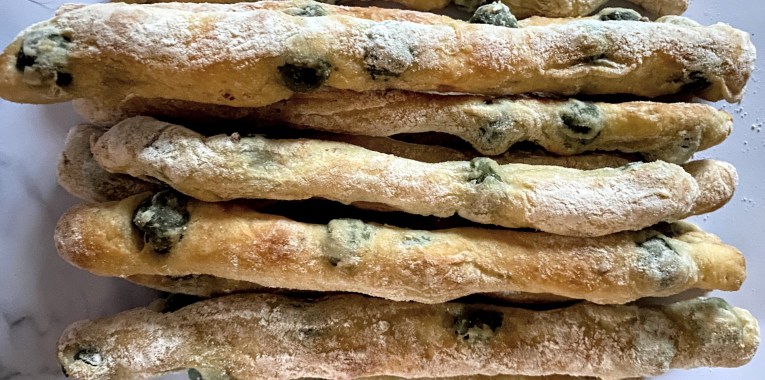
ITALY: These oven-baked wider-than-grissinis (Italian breadsticks) are inspired by the traditional long and thin Italian sfilatino which is similar to a French baguette. These were so much fun to make; there’s no kneading involved because the dough is so wet. It won’t seem like you can actualy shape the sticks from this wet, airy dough, and lift them onto the baking sheet, but follow along with the video instructions and you’ll see that it does, in fact, work.
This is from The Great British Baking Show Master Class: Season 2, Episode 1, beginning at around 24:21. The ingredients listed below are half of the recipe that’s demonstrated in the video. These don’t really keep well (they lose their crunch pretty much overnight), so it’s best to make as many as you’d consume in a day.
Mix these first, then add the olive oil and olives
Tips:
Don’t you just love Paul & Mary?


 Breademic