Week 106: Couronne Bordelaise

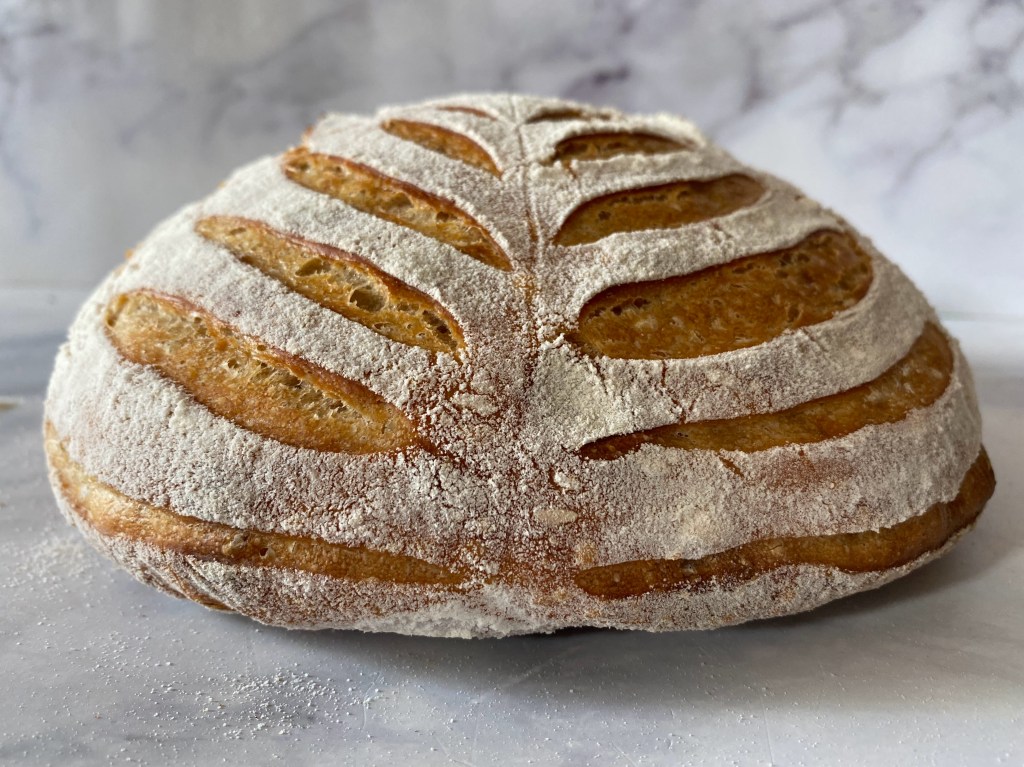
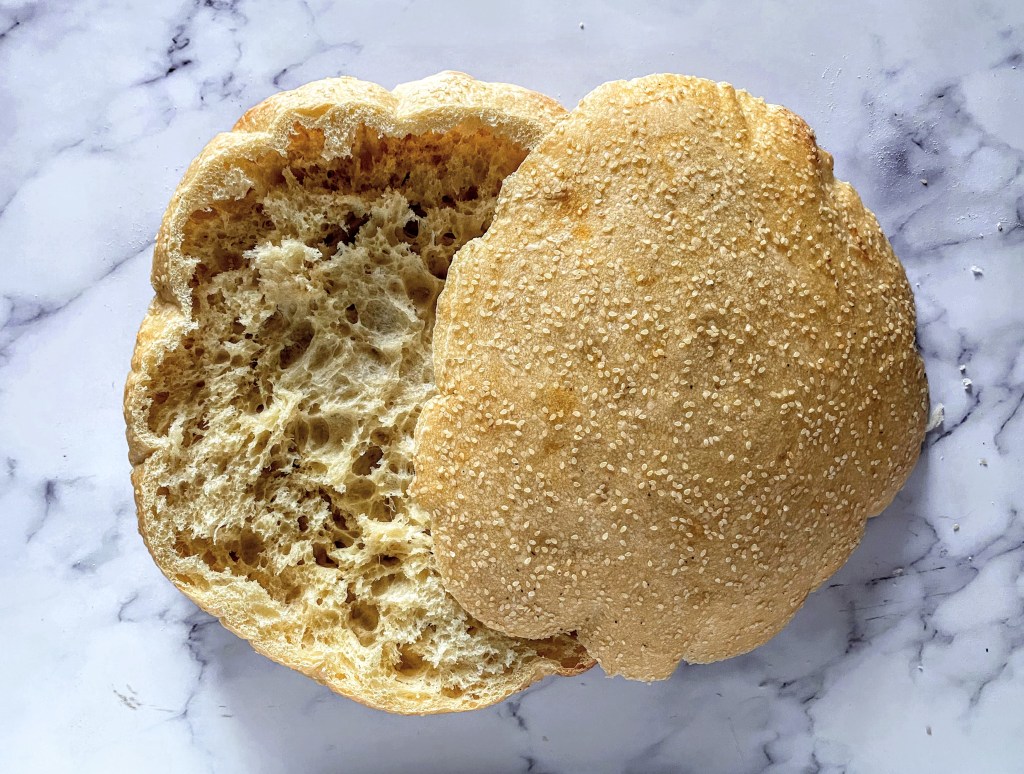
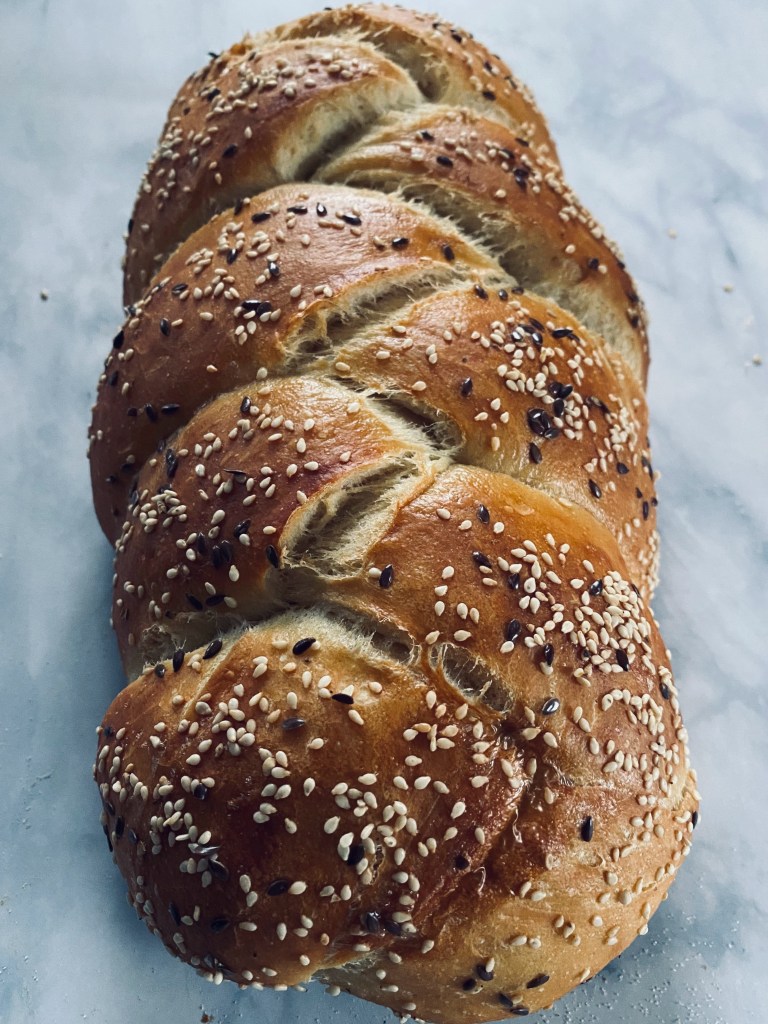
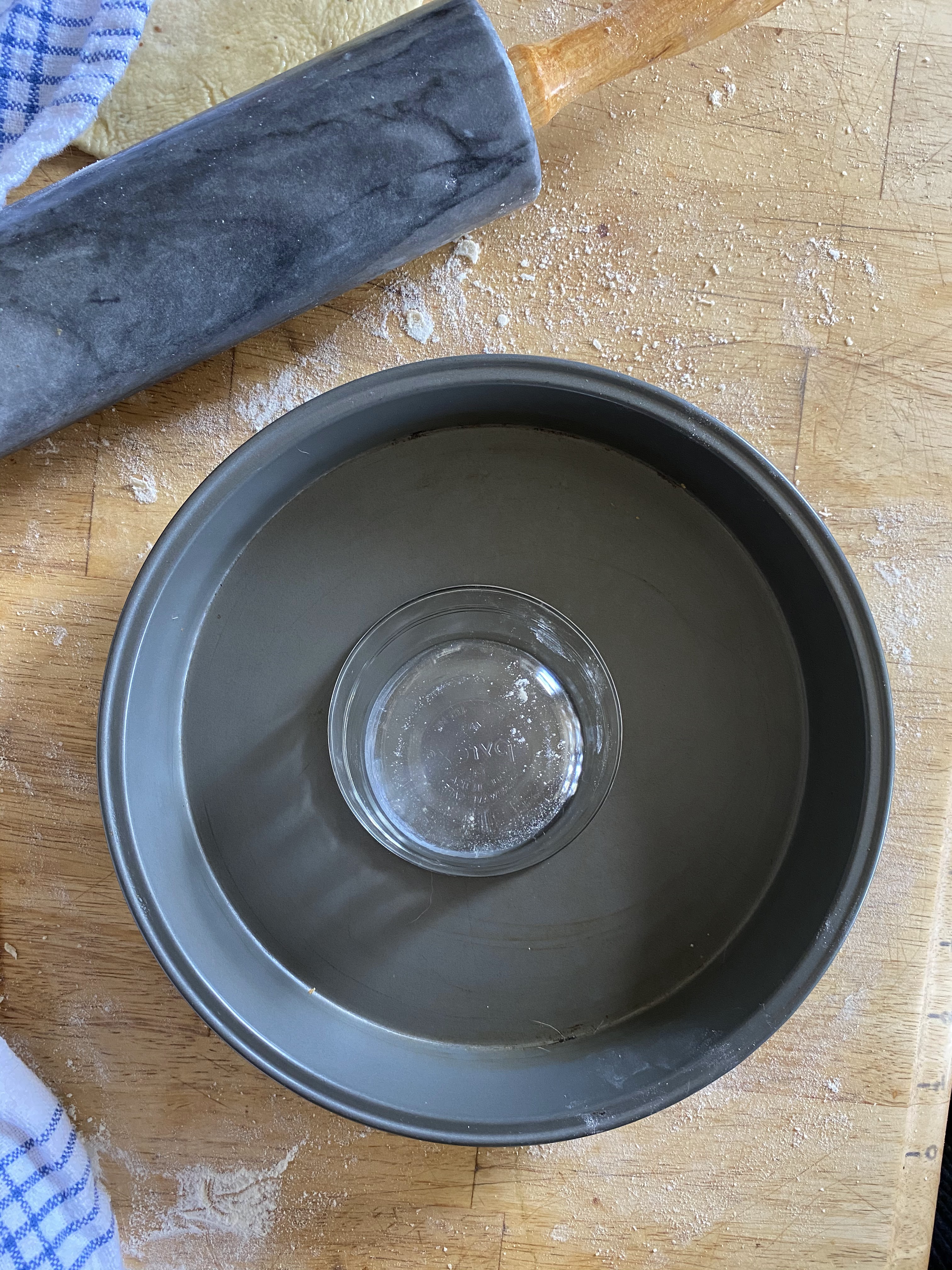
If Pain de Campaigne (Week 59) is the king of breads, then the Couronne Bordelaise is most definitely the queen. It’s easier to make than it looks so give it a try! Professionals use a special basket to shape the crown, but you can make one at home with a 9″ cake pan and very small heat-proof bowl/ramekin.

Day 1: Make dough

  • 340g bread flour
  • 40g whole wheat flour
  • 4g sugar
  • 7g salt
  • 1/4 tsp yeast
  • 300g room temperature water
  • 15g olive oil
  • (additional ingredients below)
  1. In a large bowl, whisk flours with sugar, salt and yeast to combine.
  2. Add water and olive oil and mix thouroughly, so there are no dry bits left. You can use your hands, a dough whisk, or the handle of a wooden spoon.
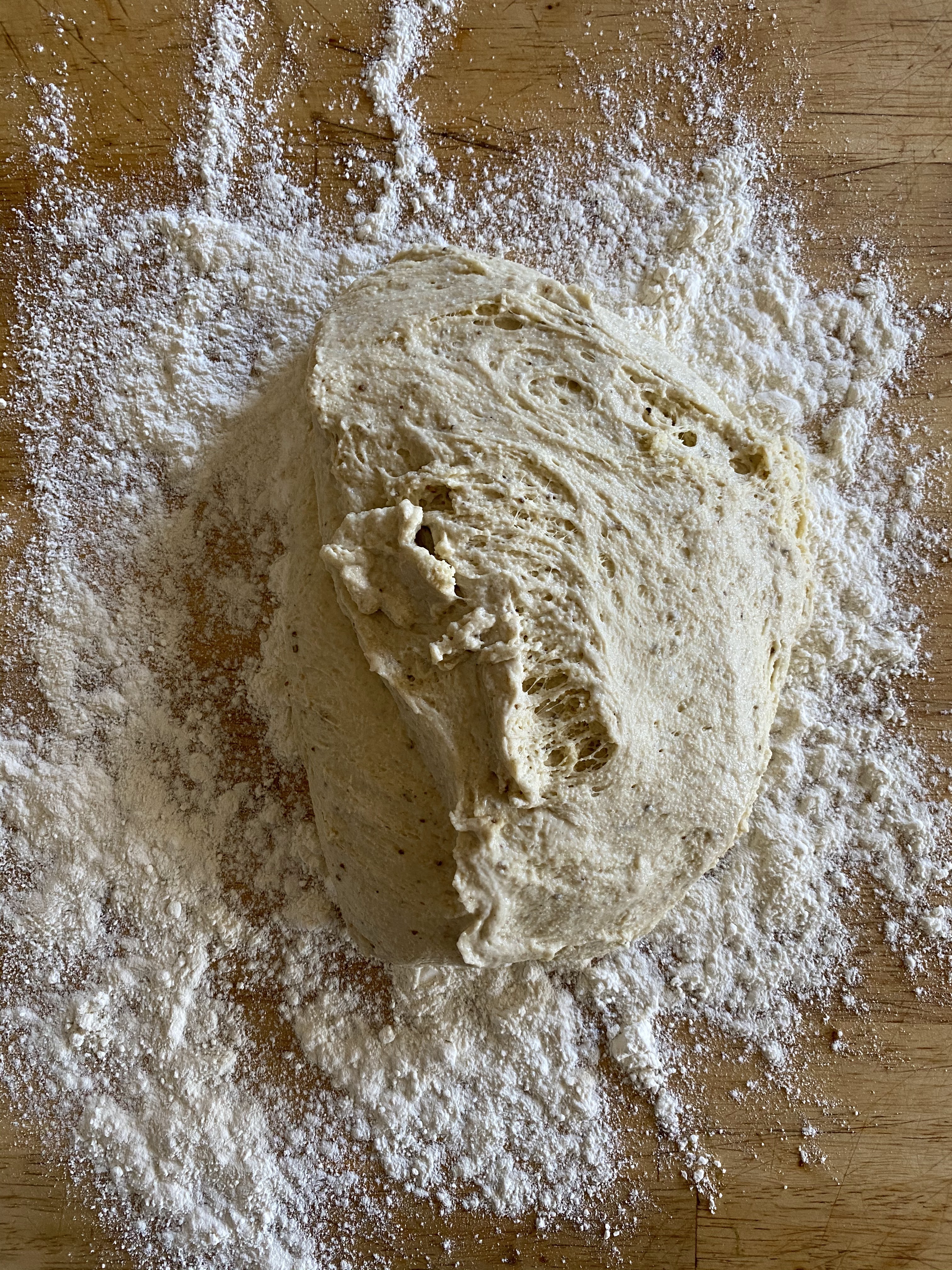
  3. Scrape sides down to clean it off and incorporate all the dough into one place. It’s very wet and sticky, so that’s fine.
  4. Cover, and let rest overnight.

Next Day

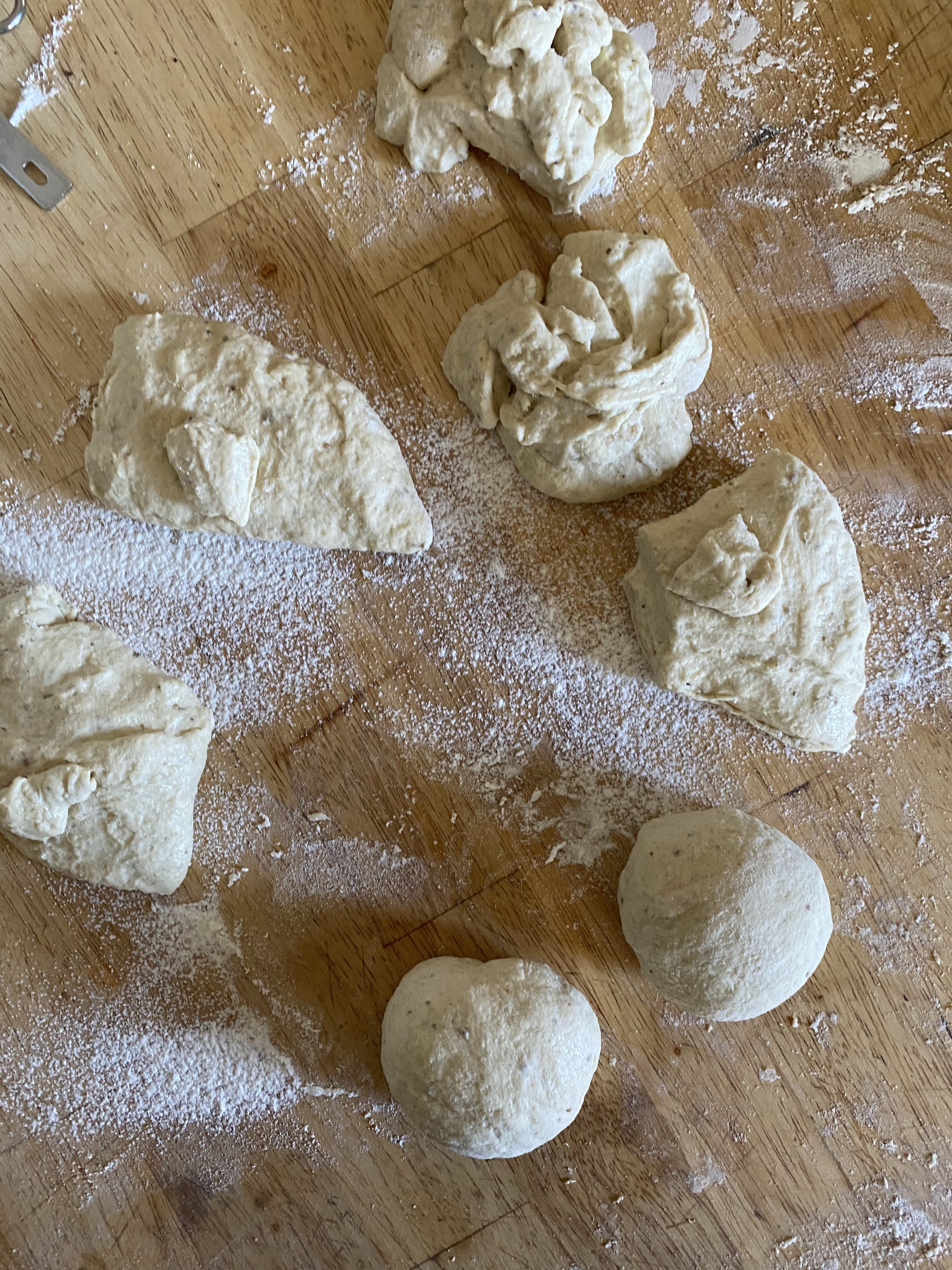
  1. Scrape dough out of bowl into a very well floured surface, about 2 level tablespoons worth.
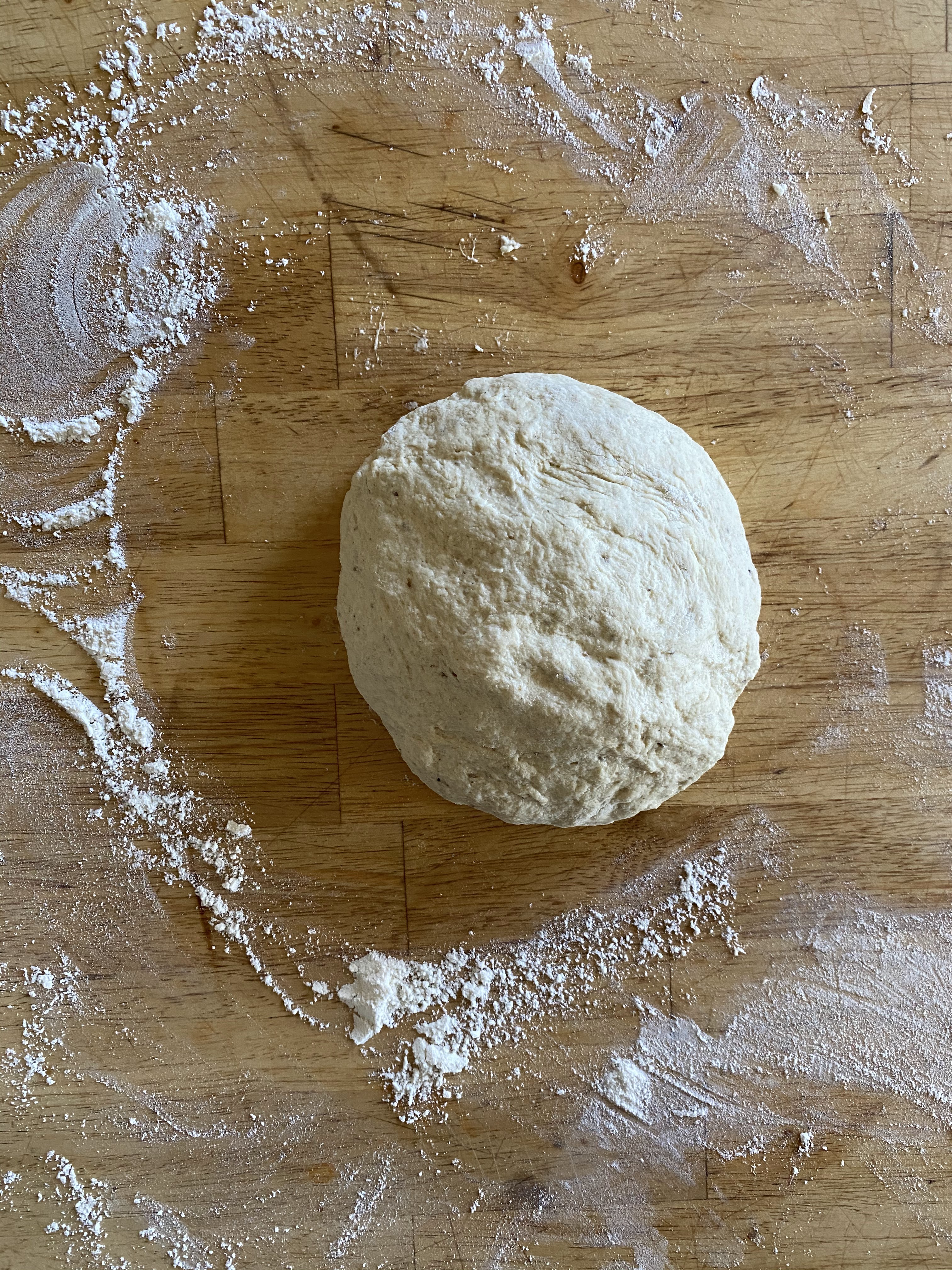
  2. Knead to incorporate flour into the dough so that it’s not as sticky and easier to work with, using a bench scraper if it starts sticking to the counter.
  3. Seperate dough into into seven pieces, six weighing 110g and one a bit larger, weighing 124. (Total weight should be around 784g.)
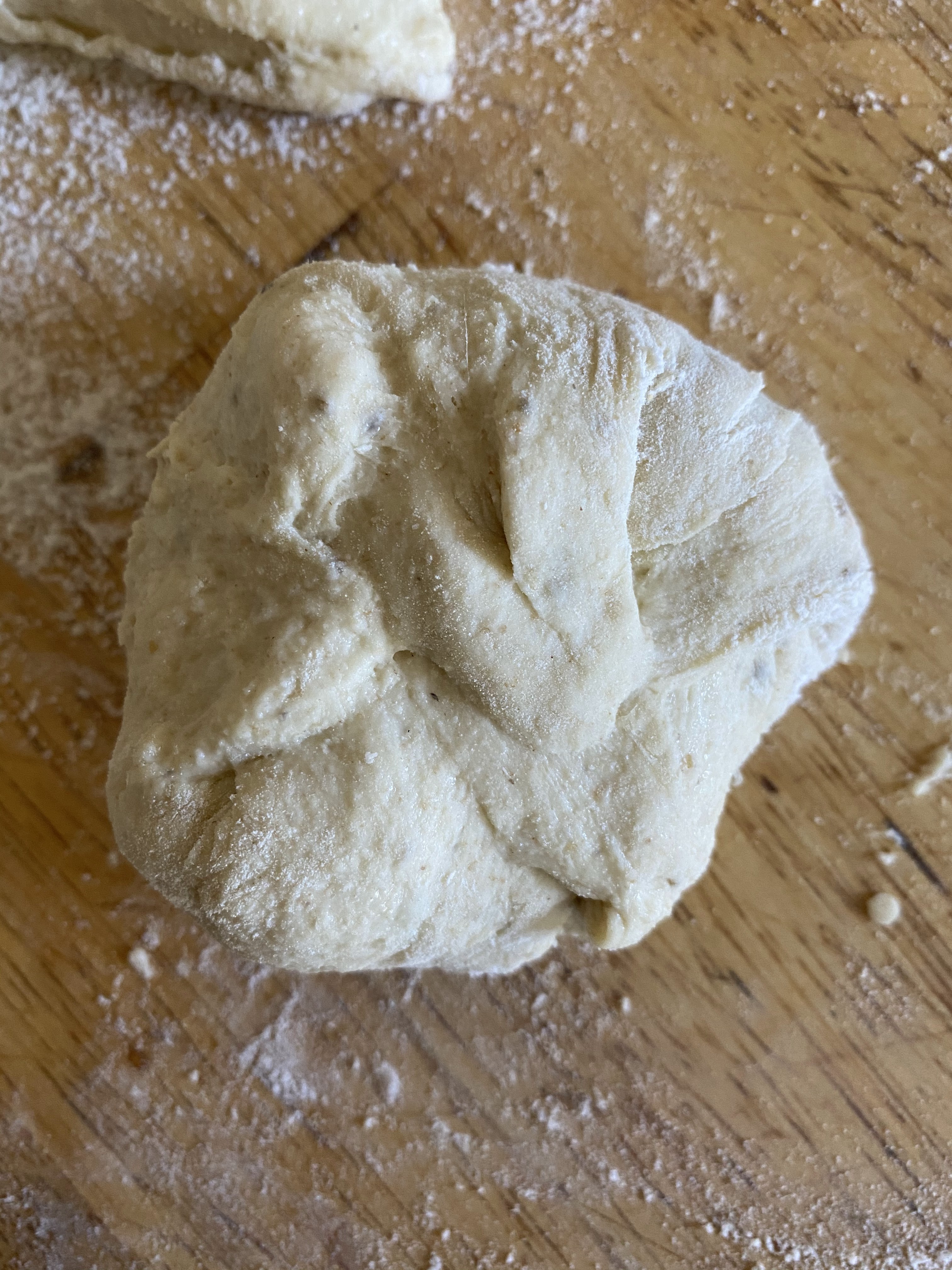
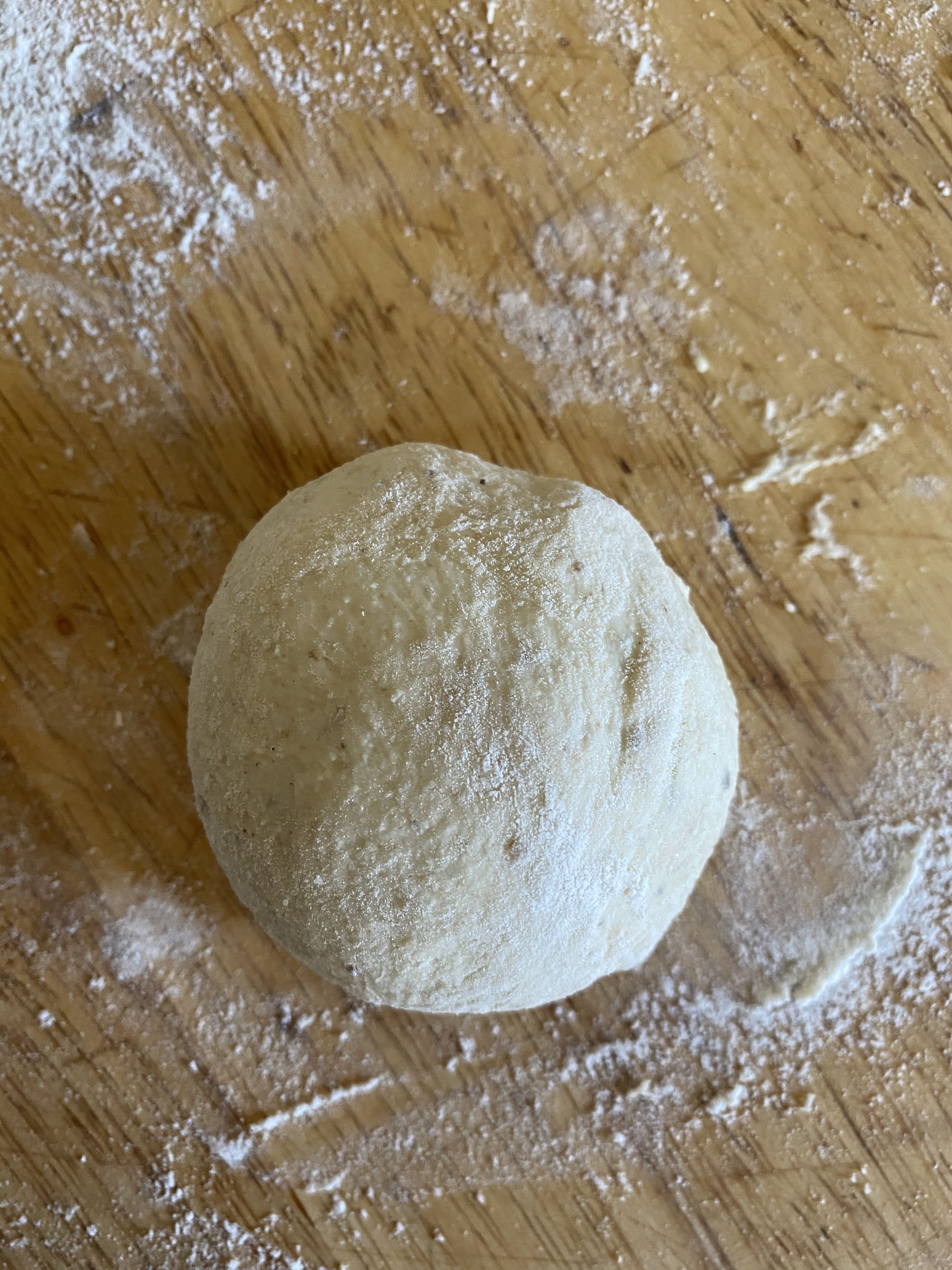
  4. Shape pieces into a ball by flattening them out, then folding the edges up over towards the middle. Turn over and shape into a ball. (See video page for a visual)
  5. Cover the six smaller ones so they don’t dry out.
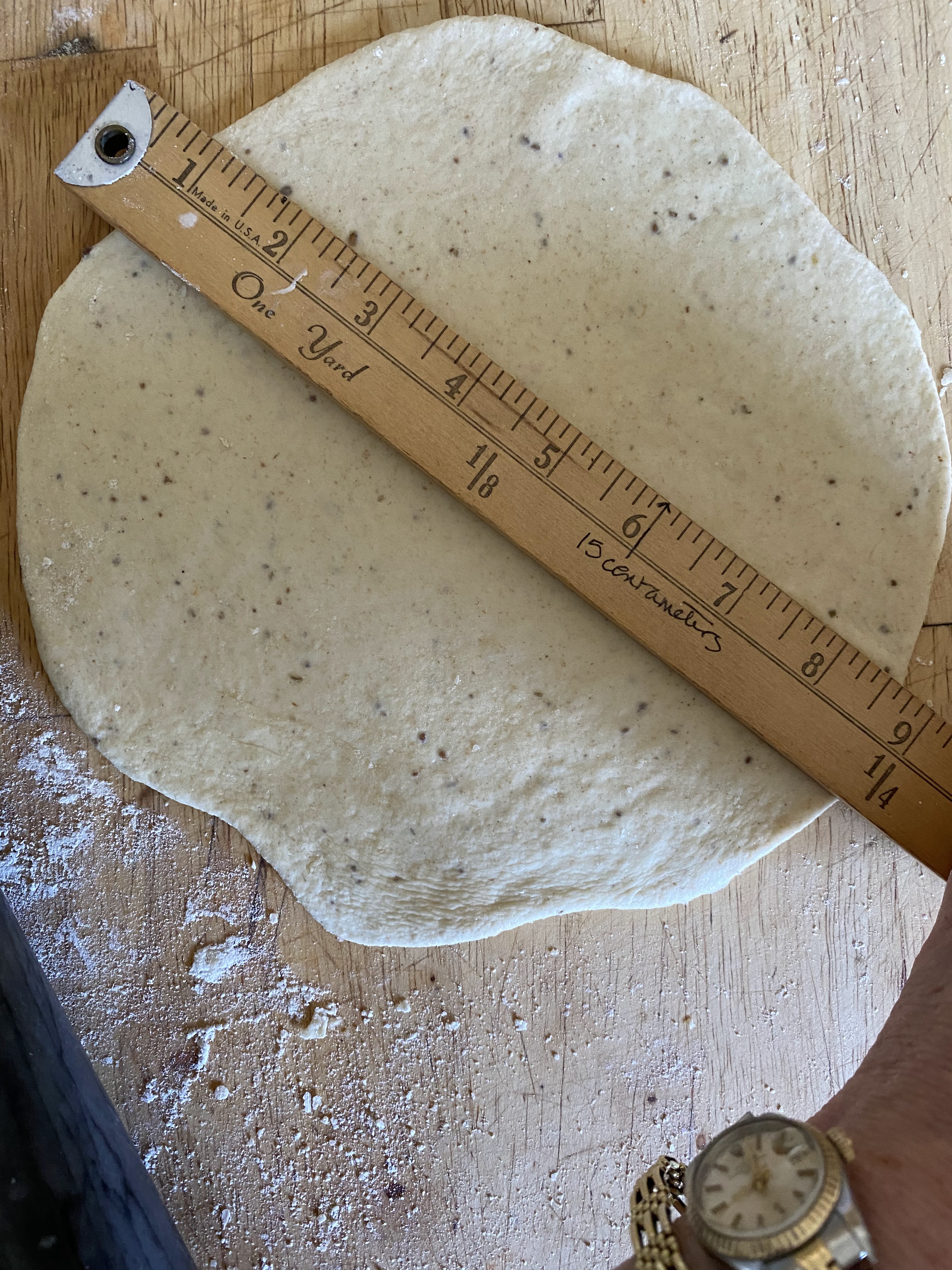
  6. Flatten the larger ball and roll out to an 9″ disc. Dust with flour if necessary if it is sticking to the countertop.
  7. Brush outer edge with oil so that it won’t stick to the dough balls
  1. Prepare the cake pan:
    • Place a heat proof glass bowl/small ramekin in the center of the cake pan.
    • Coat a tea towel with flour and rub it in.
    • Drape the tea towel over the ramekin, into the cake pan.
  2. Drape the dough disc over the ramekin as evenly as possible. You want a good amount of dough to be on the bottom so that it covers well the dough balls.
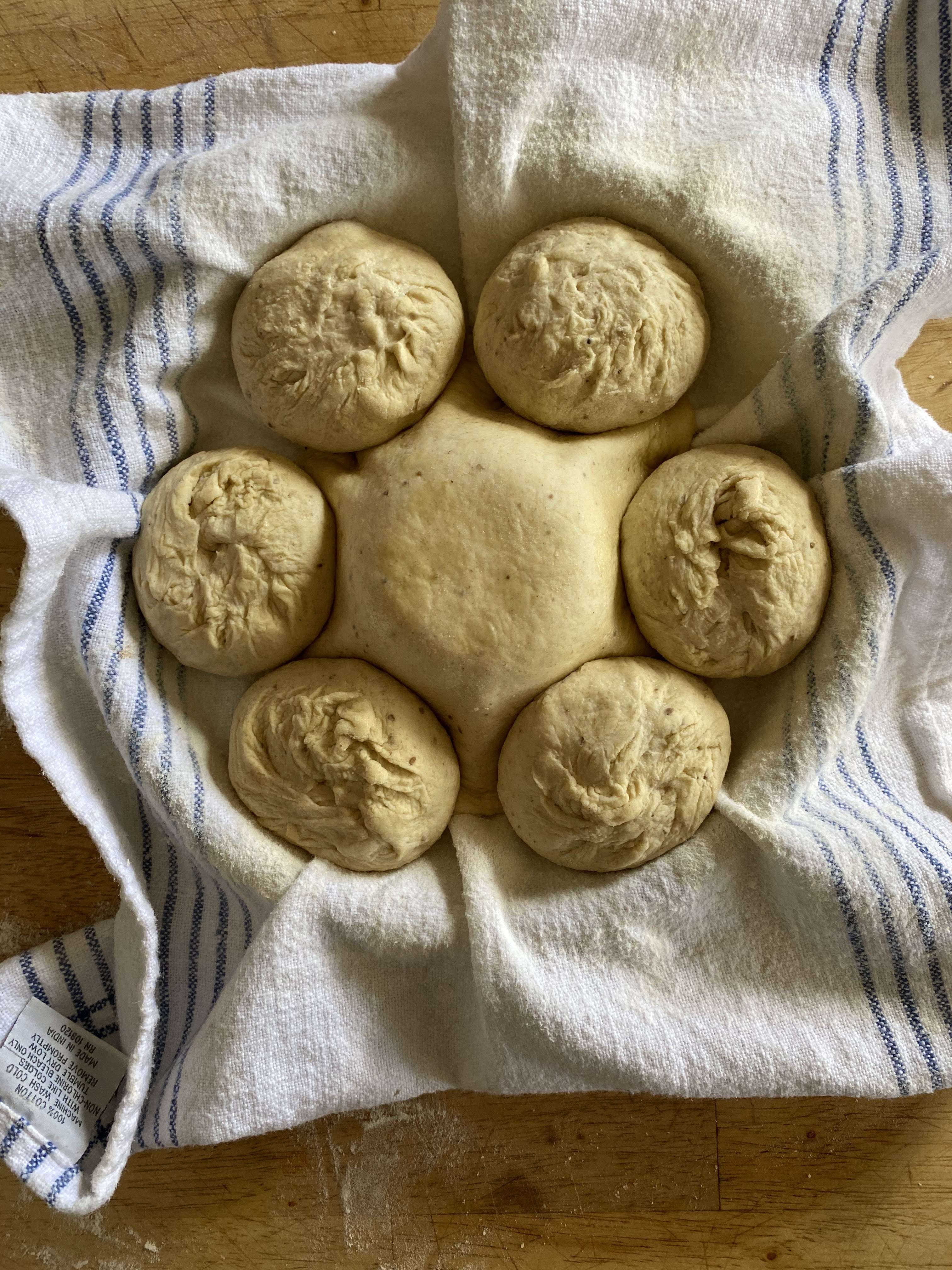
  3. Place the dough balls around in a ring evenly spaced, seam side up.
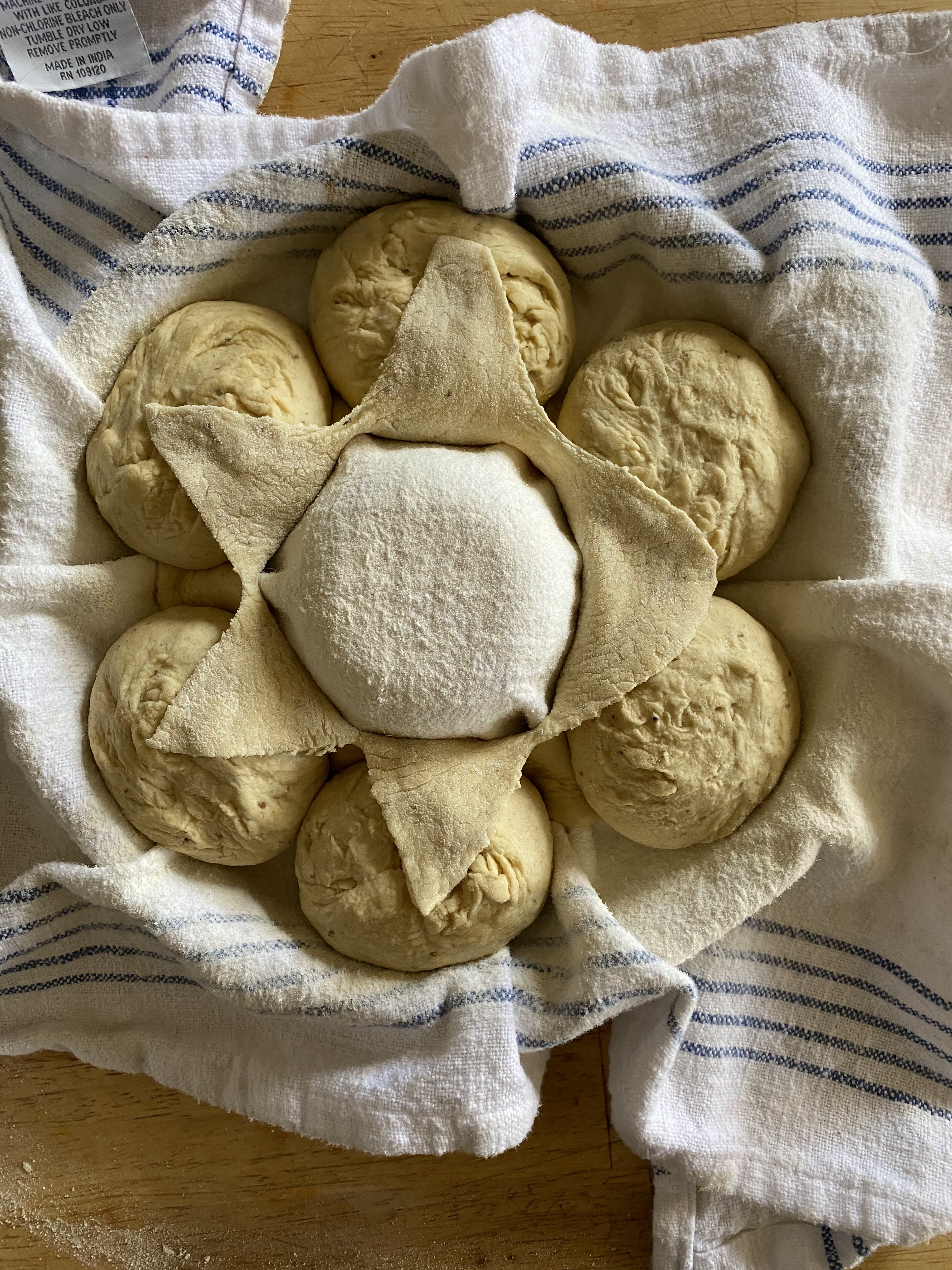
  4. Cut across the top of the dough that is stretch over the ramekin, then cut 2 more lines to create 6 triangles.
  5. Fold the triangles back over onto the dough balls.
  6. Cover and let rest about 30 – 60 minutes until dough balls have expanded and puffed.
  7. Meanwhile preheat oven to 450 degrees.
Bake

egg white, salt, herbs de provence, sesame seeds

  1. Beat the egg white with 1 Tbsp water and a pinch of salt
  2. Place parchment paper over the dough, then the baking sheet (I use a10-1/2″ iron skillet) and flip. Remove the tea towel and ramekin.
  3. Brush tops with the egg white wash, then sprinkle with the herbs de provence and sesame seeds
  4. Bake for about 30 minutes, until golden brown, and 190 degrees inside.

This video shows how to shape the crown once you’ve made the dough
Week 105: Chocolate Sourdough

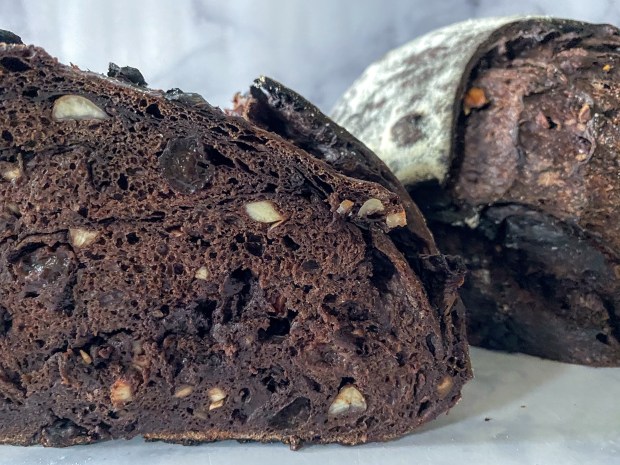
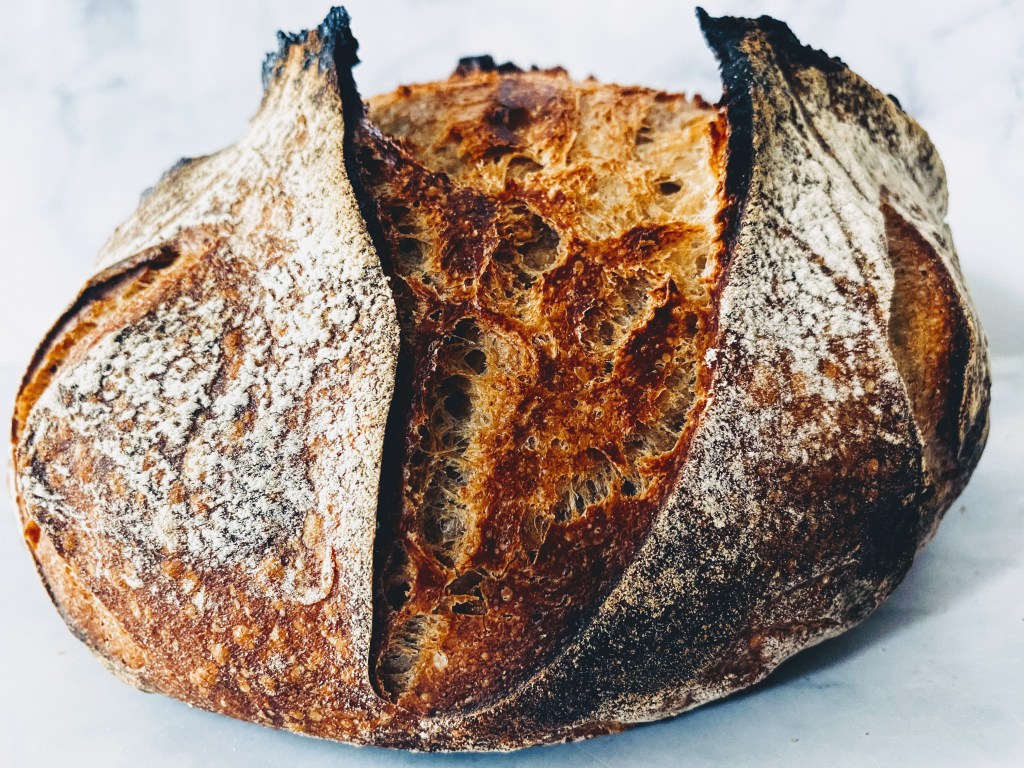
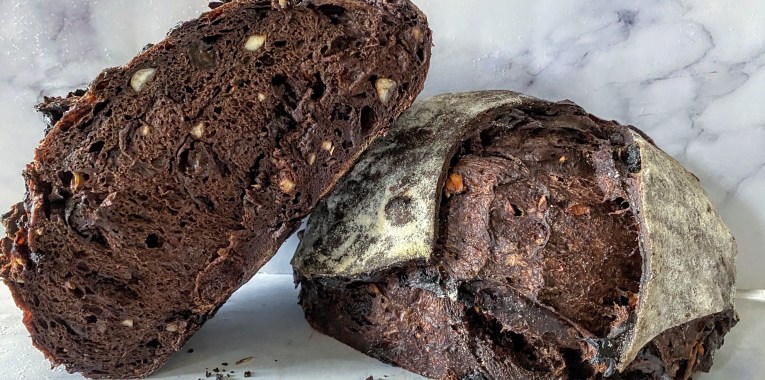
This decadent loaf is reminiscent of Cadbury’s popular Fruit & Nut chocolate bar. It’s got a soft, chewy crumb, a sturdy, crisp crust and is loaded with raisins, almonds and chocolate chips. I’ve adopted it from the Chocolate Sourdough Noir I found on Emilie Raffa’s website, The Clever Carrot. The website and her book, Artisan Sourdough Made Simple, are highly recommended for anyone with even just a passing interest in sourdough.

As with most sourdoughs, you have to feed your starter the night before, and it’s best if you use a Dutch oven, or some similar heavy-duty pot with a lid.

Step 1: Make dough

  • 500g bread flour
  • 50g cocoa powder
  • 9g salt
  1. In a medium bowl, measure the flour, cocoa powder and salt and whisk to combine. Don’t worry about the lumps of cocoa powder just yet. Set aside.
  • 350g room temperature water
  • 150g active sourdough starter
  • 50g brown sugar
  • 4g vanilla extract (that’s about 1 tsp)
  1. Measure the water, starter, sugar and vanilla into a large bowl, then whisk to combine.
  2. Sift the flour and cocoa powder into the liquid. If you don’t have a sifter, you can use a mesh-type colander.
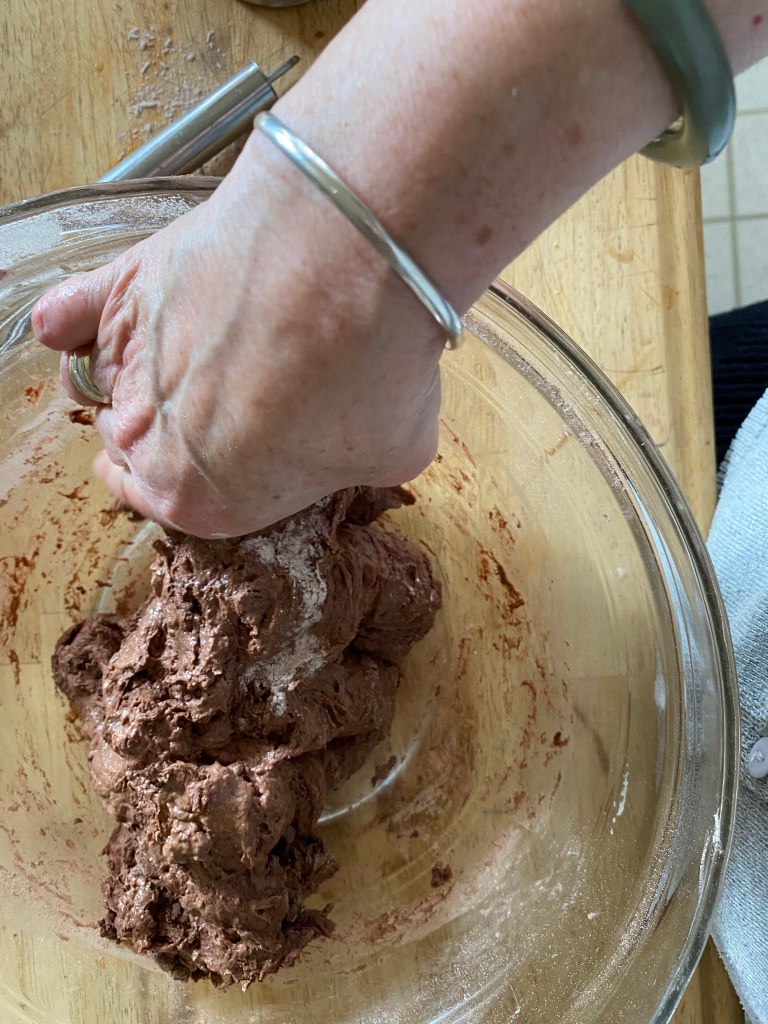
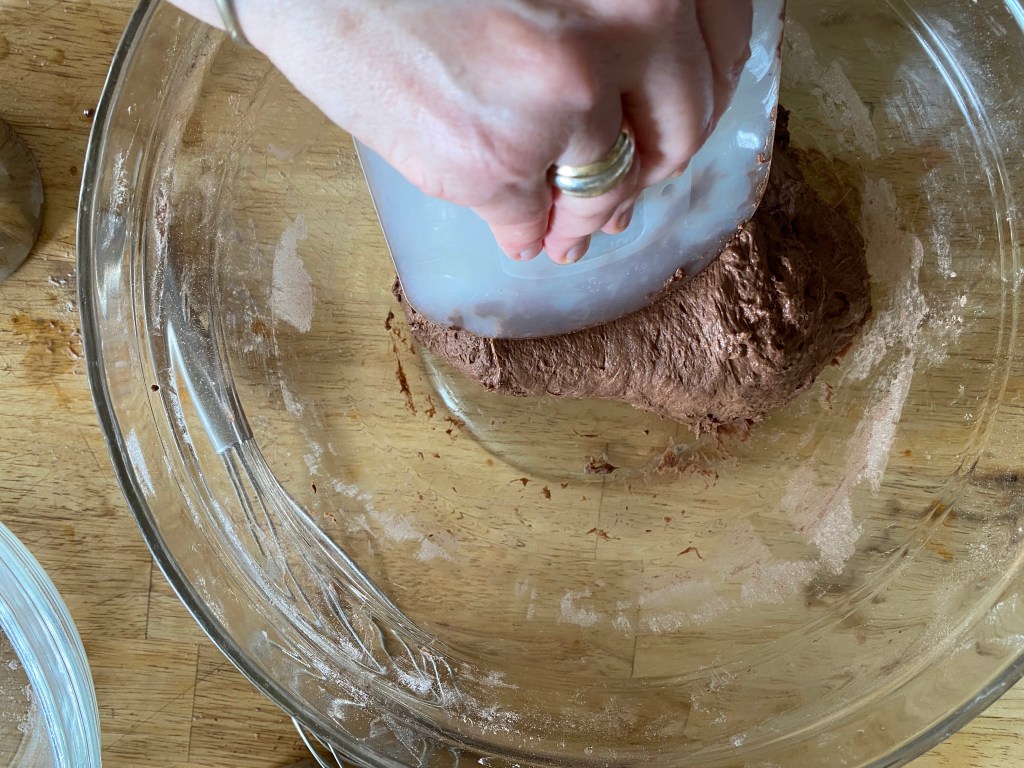
  3. Mix together with the handle of a wooden spoon, using wet bits of dough to scrape the dry bits off the sides. It’s a bit of a stiff dough, so kind of hard to mix.
  4. Use your dough/bowl scraper to scrape down the sides of the bowl. Then, place the scraper under one edge of the dough, lift it up a bit and then fold it over itself, as you use your other hand to squish any dry spots to ensure they get incorporated.
  5. Cover and set aside to rest for one hour. Meanwhile, prepare the fruit, nuts and chocolate chip mixture.
  • 65g raisins
  • 65g chopped almonds
  • 150g chocolate chips (not chunks, or mini chips)
  • 1 tsp vanilla extract
  • 1 tsp almond extract
  • pinch of salt
  1. Measure raisins, nuts, chocolate chips and pinch of salt into a small bowl.
  2. Add extracts, stir to coat, then set aside.
  3. After the dough has rested an hour, fold in the raisin/nut/chocolate mixture.

Step 2: Stretch & Fold kneading and resting

  1. Cover bowl and let rest in a warm place (72 degrees) for 30 minutes.
  2. Next, do a round of 4 stretch and folds (view the Stretch and Fold video under the heading “Kneading During Proofing” on the Video page for a visual). Turn over and tuck in sides.
    • Repeat #1 and #2 three more times for a total of four stretch and folds, and four 30-minute rests.
  3. Cover and let rest until it’s doubled in size and is puffy and wiggles a bit when you shake the bowl. The amount of time this takes is varied, and depends on the temperature of the room, anywhere from 3 (very warm, like summertime without A.C., to10 hours (very cool, like in the kitchen at night without the heater on).

Step 3: Shape dough

  1. View the Shaping a Boule tutorial on the Video page for a visual.
    • Remove dough to a floured countertop.
    • Lift an edge, stretch it out a bit (it’s tighter than most doughs) and fold it in toward the center. Do this all around until all sides have been folder over.
    • Turn over, and cup the dough with your hands and rotate, pushing the the sides down and under a bit to make the surface taut.
    • On a non-floured surface, slide the dough towards you a bit to make the surface taut. Rotate and slide again.
  2. Place dough in a lined and floured basket, seam side up.
  3. Cove and let rise 30 – 60 minutes, until puffy (not doubled). If you want, you can put it in the fridge overnight instead of baking right away.
  4. Meanwhile, preheat over to 450 degrees, with your baking receptacle inside.
  5. Bake 30 minutes at 400 top on, 30 minutes top off, until it reaches 205 degrees.

Week 104: End of Year Two!

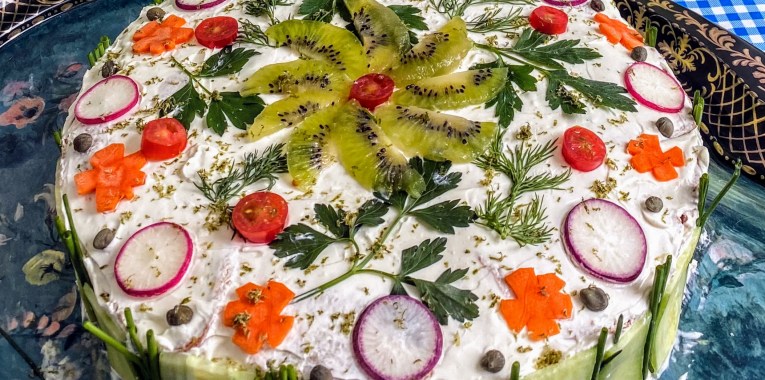
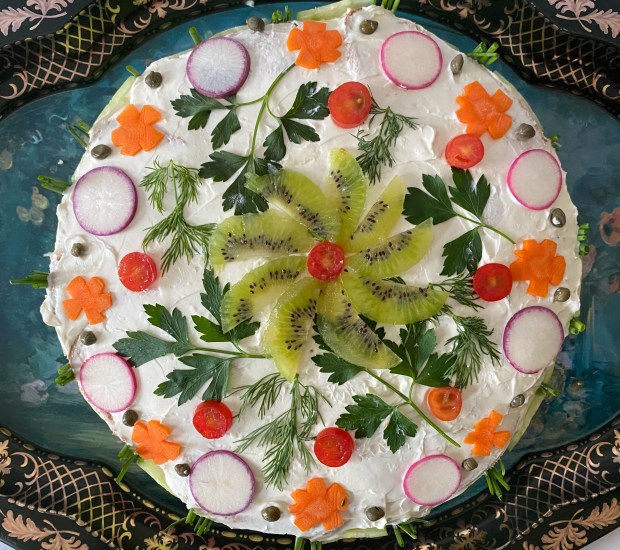
Smörgåstårta: I’m celebrating Breademic’s two-year anniversary, so have taken the week off from baking, and taking the opportunity to share with you Smörgåstårta, a Swedish sandwich cake that all bread bakers should be aware of. It’s beautiful, delicious, and makes great use of leftover bread! (More info below.)

Year Two was the year of sourdough. I tested three methods of making a sourdough starter (ended up adopting the most straight forward method and it’s never let me down), and also learned a lot of baking techniques. I looked for easy, quick breads to make in between sourdough bakes because they can be very time consuming, and a bit tricky,
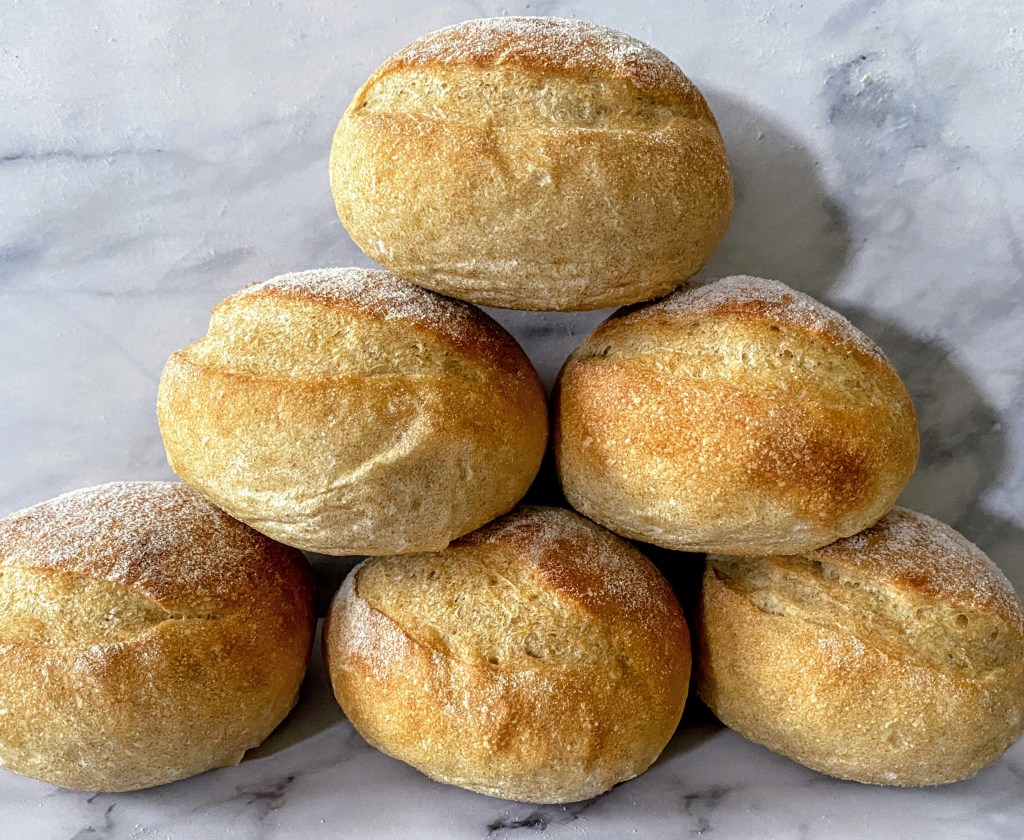
These are my top five breads from Year Two. If you haven’t already, give one of them a try!

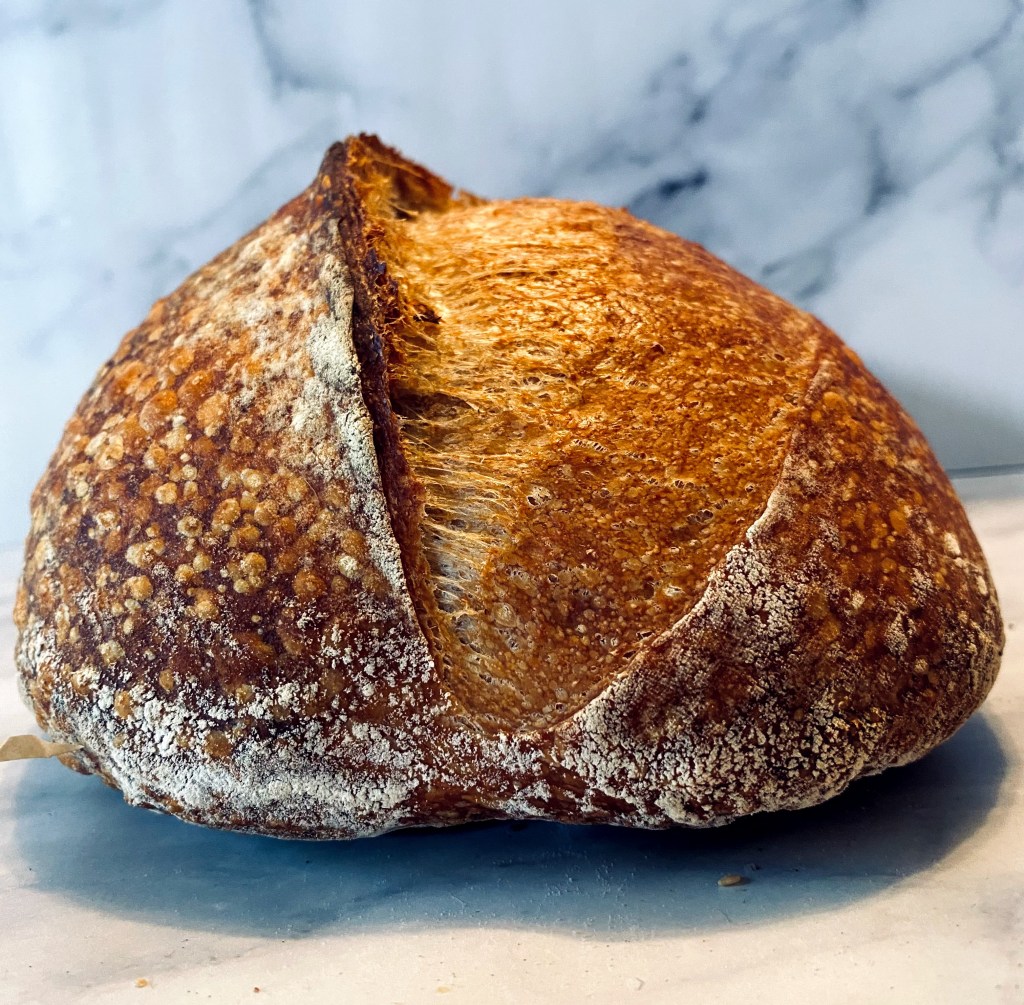
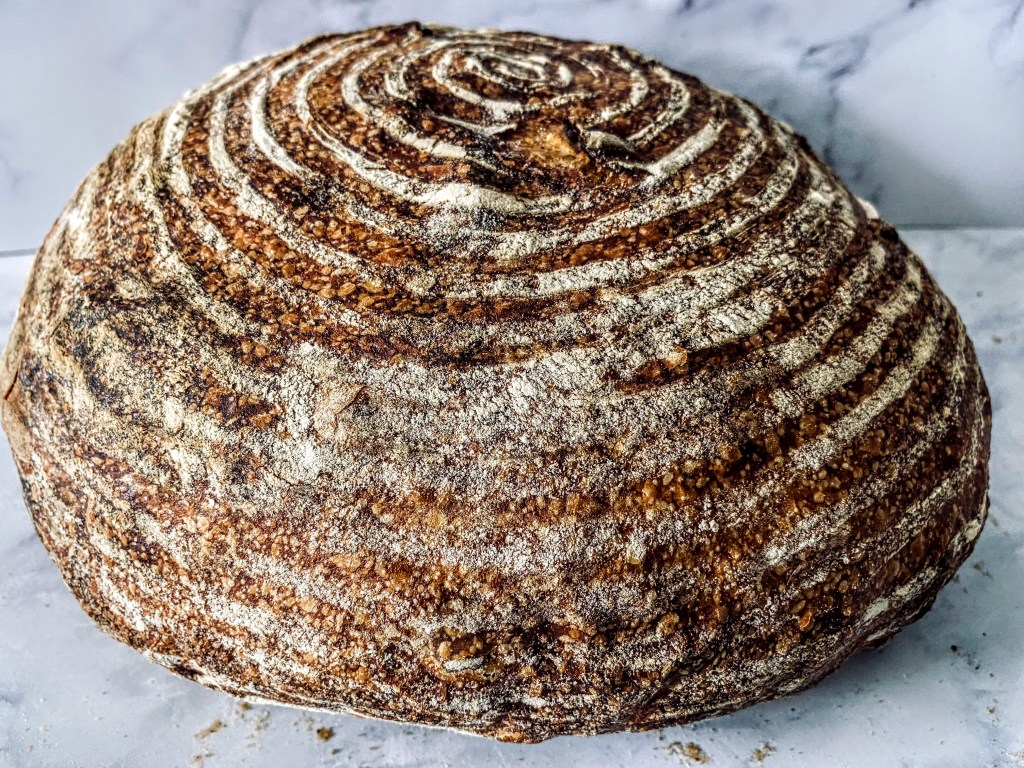
  • Week 56: Sourdough – This is the loaf to try if you’ve never made sourdough, but you really want to get involved with it. It is the most comprehensive recipe I found.
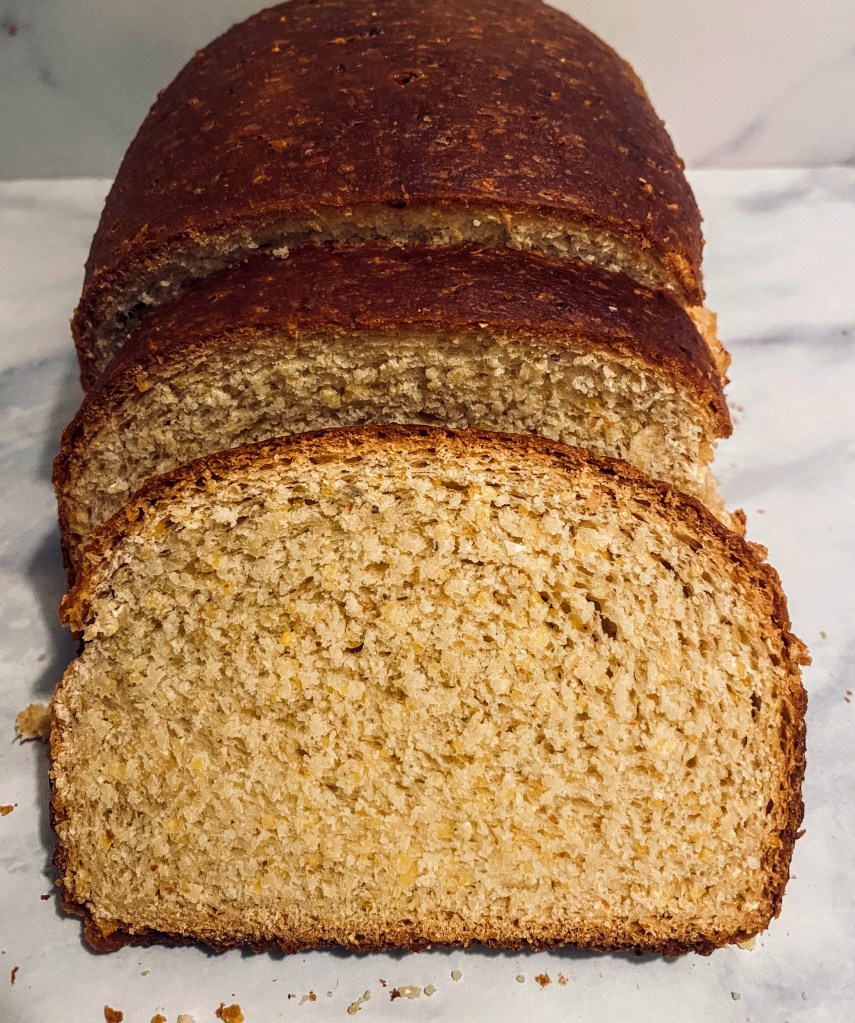
  • Week 59: French Sourdough – I like this one because you can use your starter straight from the fridge. That saves a lot of time, and gives you the ability to start making the bread as soon as you feel the urge.
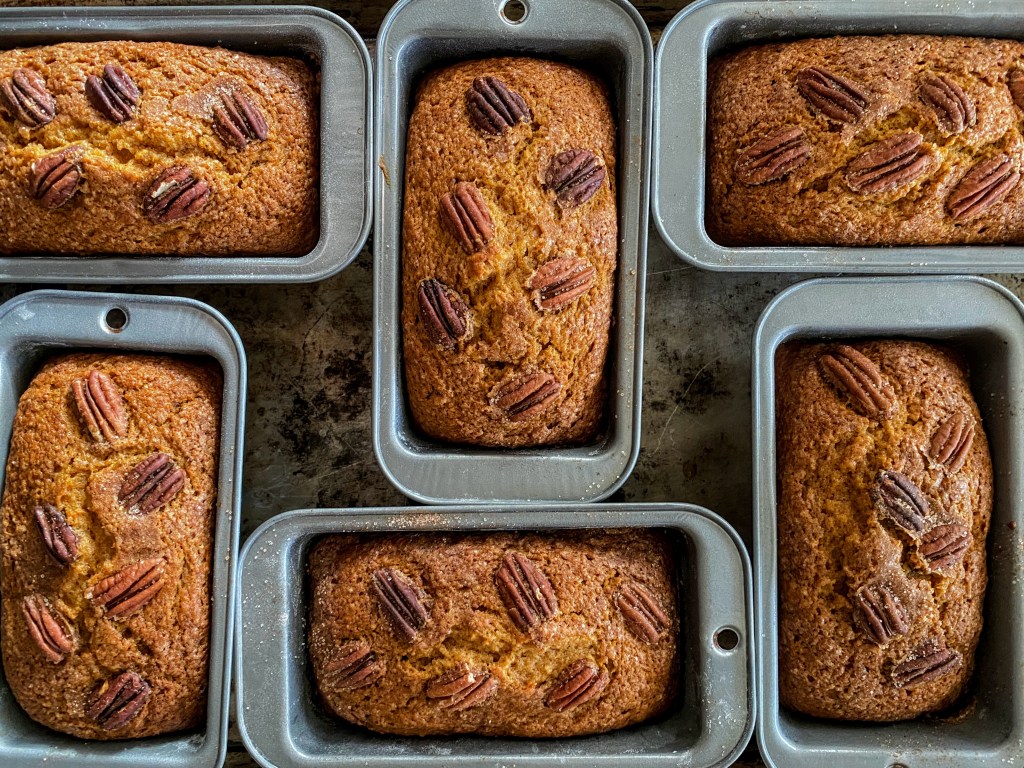
  • Week 64: Everything Bagel Bread – This no knead bread is easy and absolutely delicious. You’ll find yourself making it again and again.
  • Week 70: No Knead Black Bread – This absolutely wonderful, complex loaf is a real crowd pleaser and should definitely be added to your repertoire.
  • Week 97: Pan co’Santi – This is a great bread to make for gifting. It’s beautiful and full of flavor.

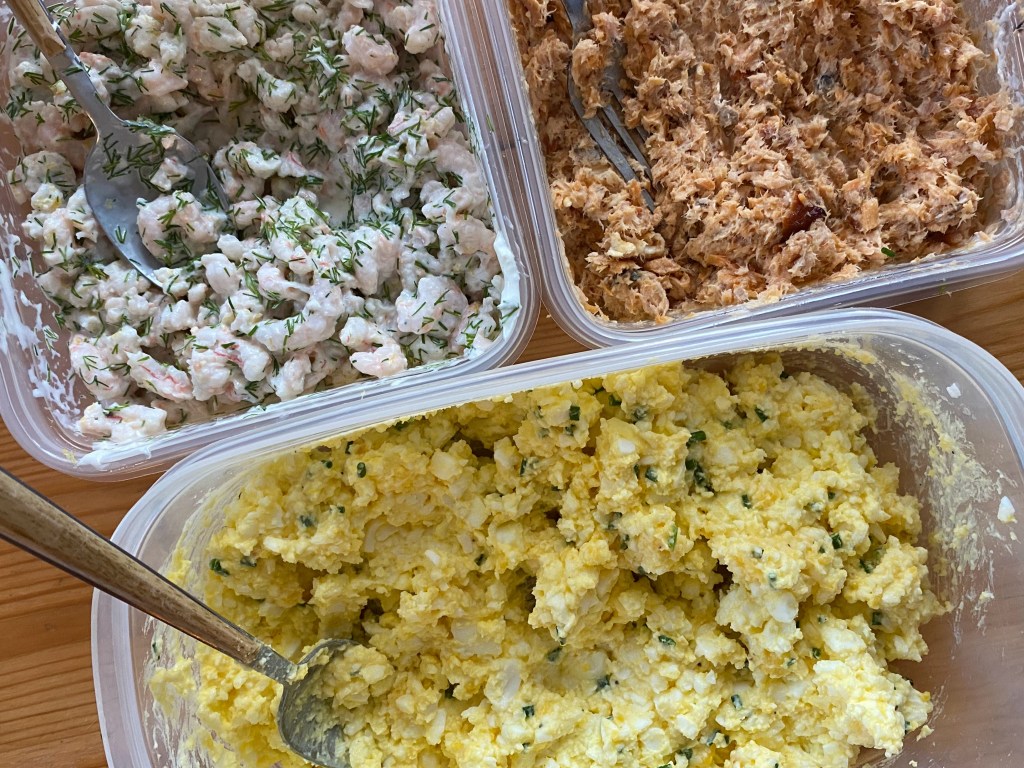
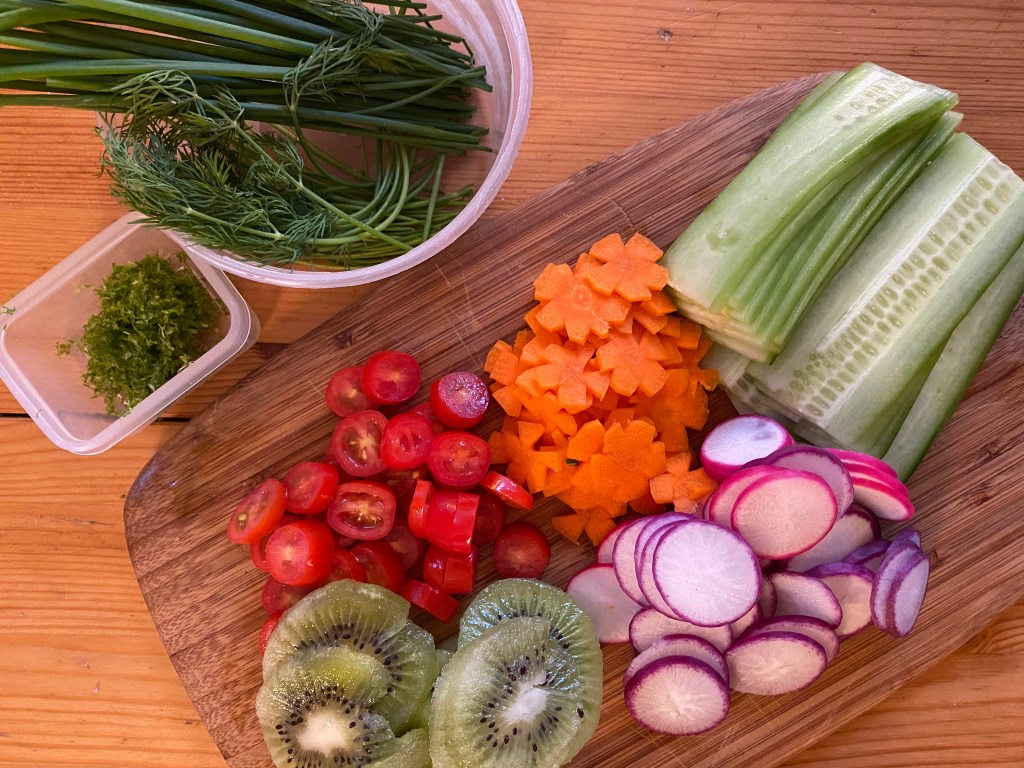
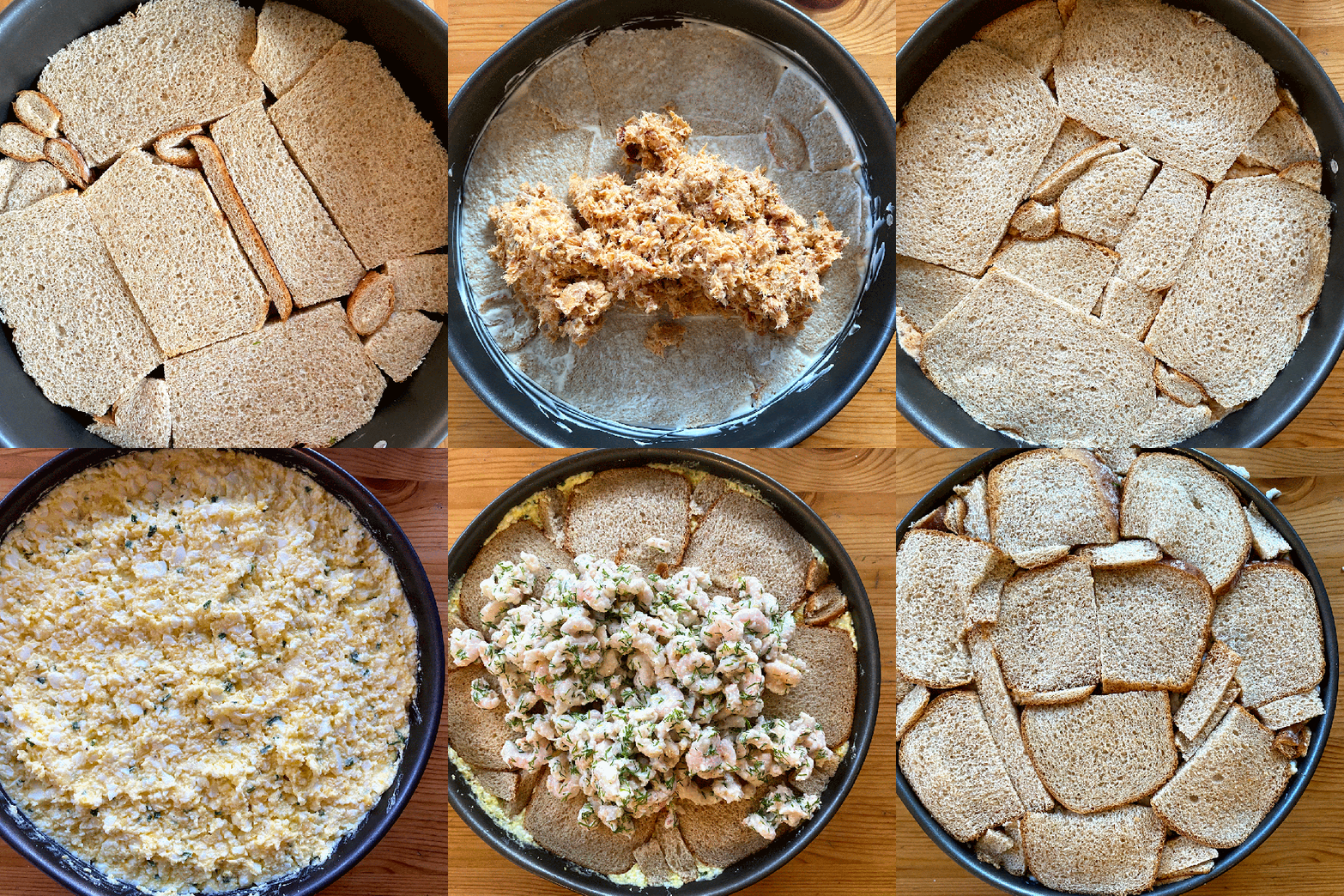
Smörgåstårta is a savory bread-layered cake, and you can use any fillings you like (we prefer egg salad, smoked salmon spread, and bay shrimp mixed with sour cream and fresh dill), cover it with a cream cheese/sour cream mixture and then decorate with fruits, vegetables and/or herbs.
Smörgåstårta: Swedish Sandwich Cake
How to make Smörgåstårta 

If you’re new to the site, make sure to check out all the breads from Year One and Year Two, read over the Tips page if you’re new to baking, and if you find yourself as enamoured of bread baking as I, visit the Library page to see what my favorite bread baking books are.

Stay tuned for Year Three, which will have as it’s focus gluten-free breads!

Year Two Breads