Week 37: Pumpkin Rolls

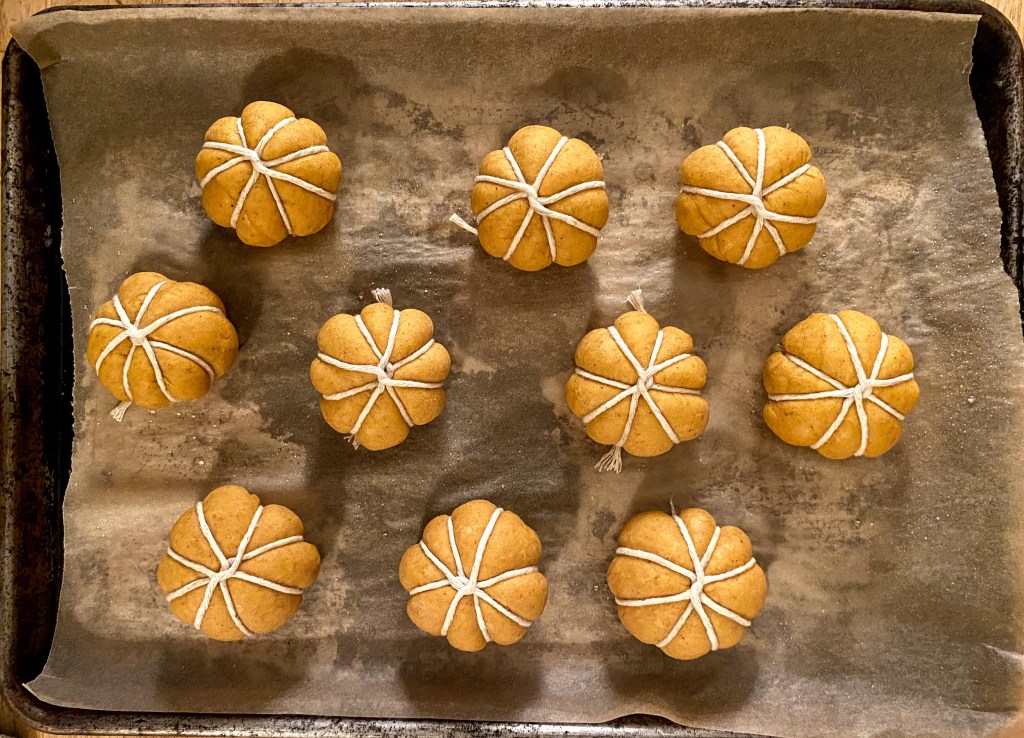
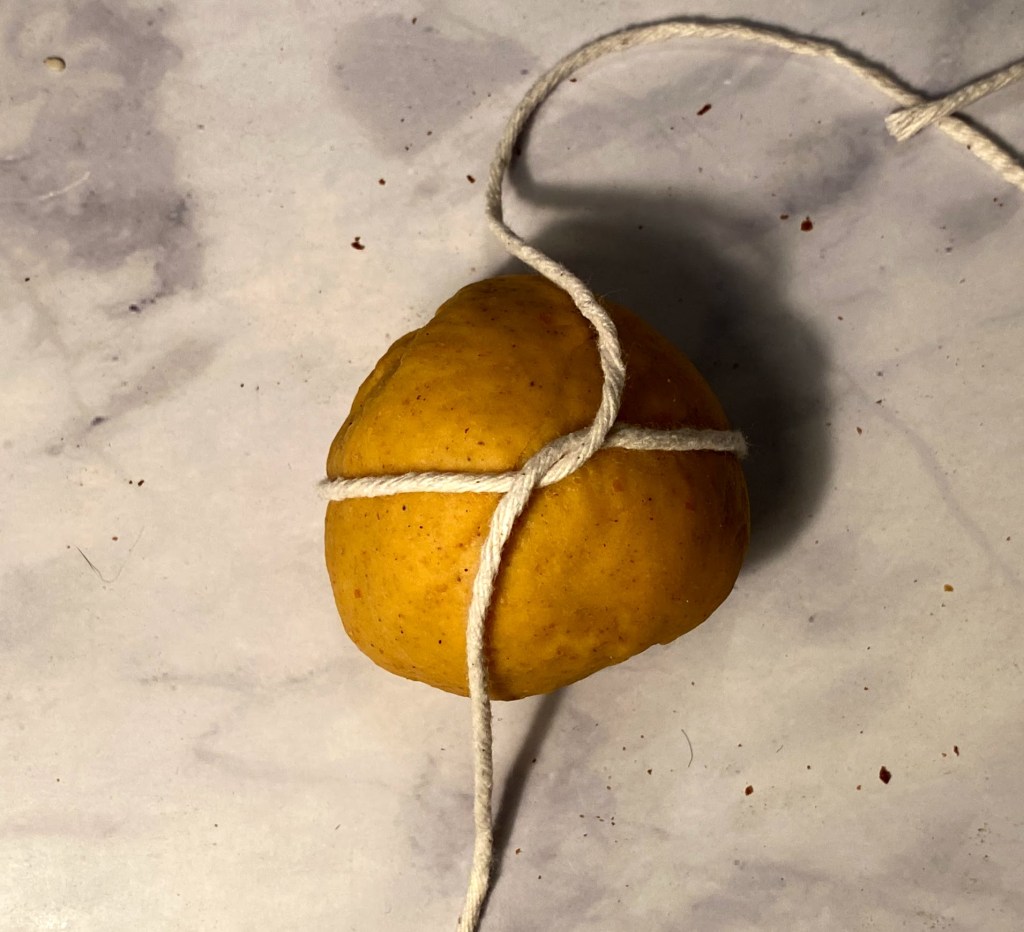
USA: These autumn-spiced rolls are just a tad sweet, so are as nice with dinner as they are with afternoon tea. Make a batch of these when fall starts, for practice, and then you can make your second, perfected batch for Thanksgiving. They are shaped by wrapping twine around them before baking; if you’re not up for that, you can just use scissors to cut the indentations in the dough.

  • 425 g AP flour
  • 50 g whole wheat flour
  • 2-1/4 tsp yeast
  • 1/2 tsp cinnamon
  • 1/4 tsp ginger
  • 1/4 tsp coriander
  • 1/4  tsp cloves
  • 1/4  tsp nutmeg
  • 1 tsp salt
  1. Measure flours, yeast, spices and salt in the bowl of a stand mixer.
  2. Whisk to combine
  • 1 cup milk
  • 3 tbsp butter, melted
  • 2 Tbsp maple syrup
  • 1 egg yolk, beaten (reserve white for brushing on dough just before baking)
  • 1/2 cup pumpkin puree (canned is fine, just not the pumpkin pie filling stuff!)
  1. Mix wet ingredients together until well combined.
  2. Warm to 110 degrees
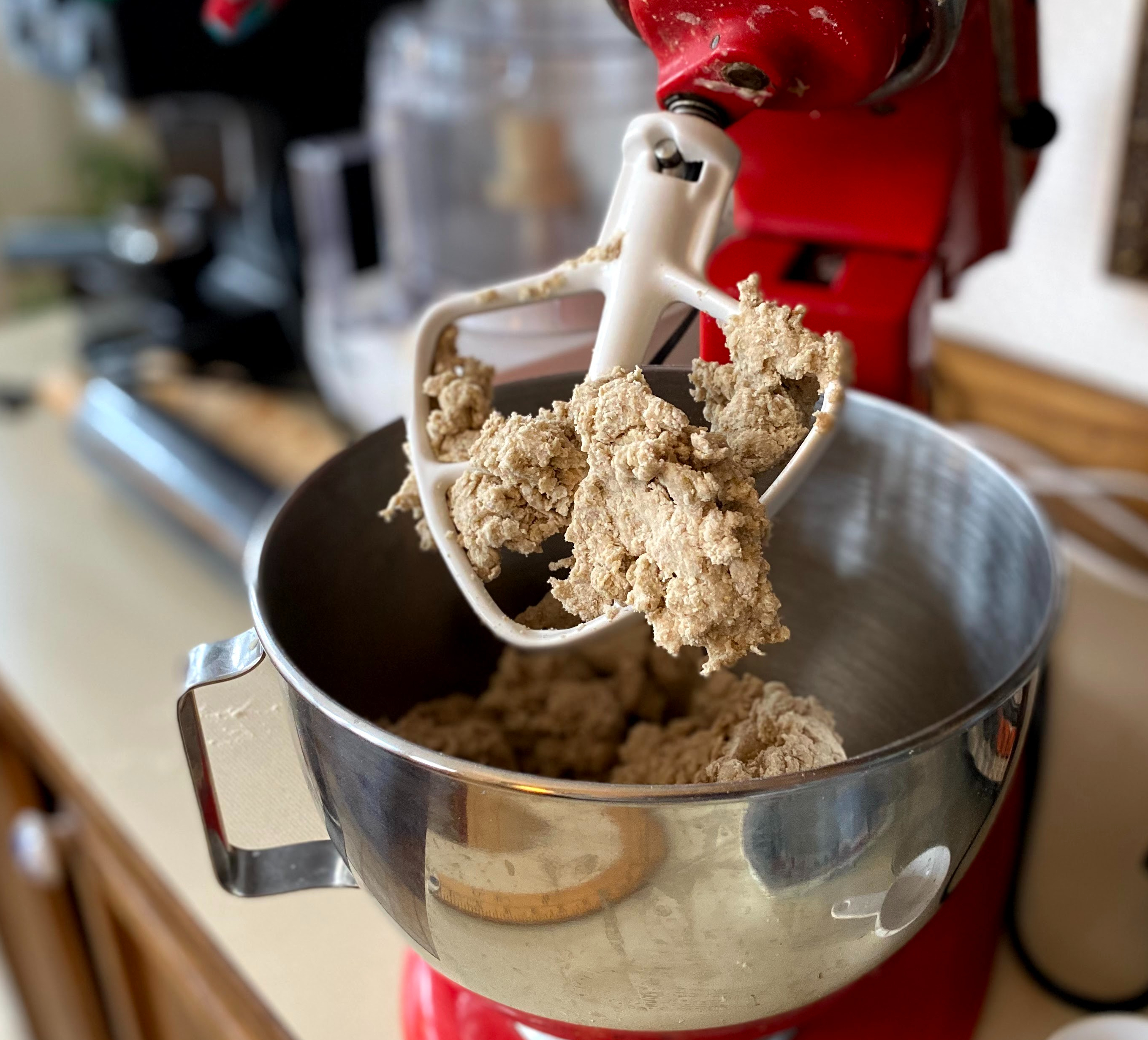
  3. Add to the dry ingredients and mix with the paddle attachement until everything’s well combined. If it seems a little too wet, adn isn’t coming together, add a teaspoon of flour. No more than that — a little goes a long way!
  4. Cover and let rest for 15 minutes, so flour can absorb all the liquids
  5. With the dough hook attachment, knead on #2 for 5 minutes.

STEP 3: First rise

  1. Place dough in oiled bowl, and turn to coat.
  2. Cover and let rise in a warm place until doubled. This can take anywhere from 45 ~ 90 minutes, depending on temperature of the room.

STEP 4: Shape dough

  • string
  • reserved egg white mixed with some milk
  1. Turn dough out onto oiled counter and divide into 10 pieces or 12 pieces. Cover pieces so they don’t dry out.
  2. Shape into balls, following the video instruction on the Tips page. Cover the dough balls as you shape them so they don’t dry out
  3. Cut pieces of string into 27″ lengths and dip in oil
  4. Wrap string to make pumpkin shaped indents, then place on a baking sheet lined with parchment paper. Cover those too, as you make the other ones.

STEP 5: Second rise and bake

  1. Cover with a damp tea towel, and let rise about 45 minutes until slightly puffy
  2. Preheat oven to 400
  1. Turn down oven to 350 and bake rolls 20 minutes, or until brown
  • 8 whole cloves or pecans and string (10 pices about 27″ long)
  • melted butter to brush on after baking

egg white and milk
Week 35: Harvest Bread

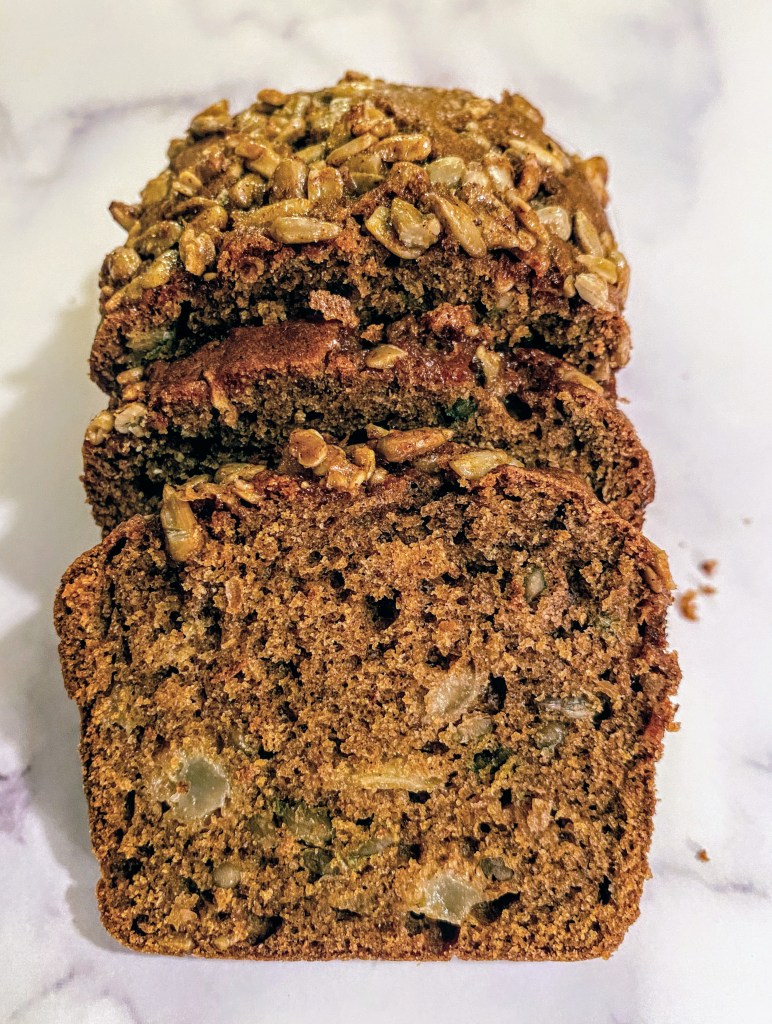
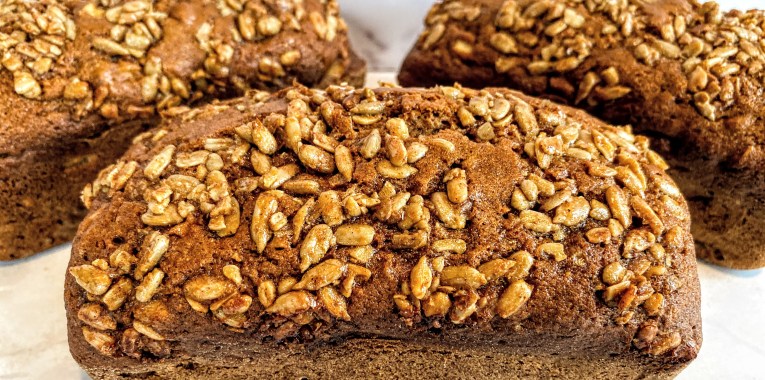
USA: This tea loaf is filled with the flavors of fall: pumpkin, apples, pears, cinnamon, ginger, nutmeg and cloves. Make it in mini loaf pans, and you’ve got the perfect gift for the holidays! You can also make one loaf in a 8″ x 4″ or 9 ” x 5″ loaf pan.

Preheat the oven to 350°F. Grease and flour a 8″ x 4″ loaf pan, or 3 mini loaf pans.

  • Topping: 3 tablespoon sunflower seeds, 1 tablespoon honey, 1/4 teaspoon salt, 1/4 teaspoon cinnamon.
  • 1 cup all-purpose flour
  • 1 cup whole wheat flour
  • 1 tsp baking soda
  • 3/4 tsp salt
  • 3 tsp cinnamon
  • 1/2 tsp each ground nutmeg, cloves, ginger
  • 1/2 cup  melted coconut oil
  • 2 eggs
  • 1/2 cup sugar
  • 1/2 cup dark brown sugar, packed (light is okay0
  • 1/2 cup pumpkin puree
  • 1 cup peeled, finely diced apple
  • 1 cup peeled, finely diced pear
  • 1/2 cup  roasted, salted sunflower seeds
  1. Mix topping ingredients together in a small bowl. You can microwave them for a few seconds to make it easier to spread.
  2. In a large bowl, whisk the flour, baking soda, salt, cinnamon, nutmeg, cloves, and ginger together in a large bowl until combined.
  3. In a medium bowl, whisk eggs, add oil, granulated sugar, brown sugar, pumpkin and cut apples and pears.
  4. Pour the wet ingredients into the dry ingredients and mix until combined.
  5. Add sunflower seeds.
  6. Spread the batter into prepared loaf pan, and add the topping.
  7. Bake for 55~65 minutes, (30~40 minutes for mini-loaves). Cover with foil if it’s browning too much before it’s thoroughly cooked.
  8. Let cool before removing and slicing.

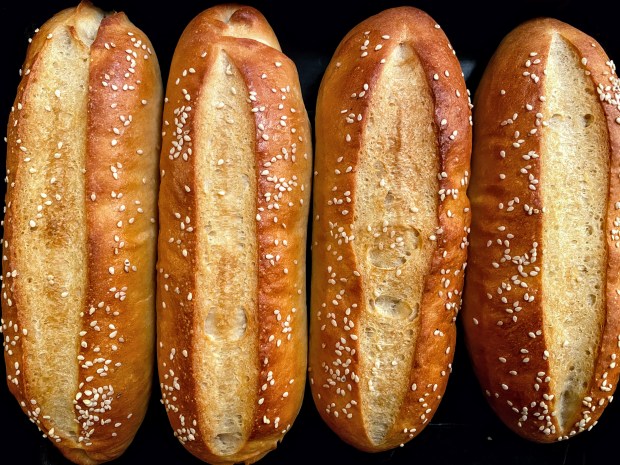
Week 34: Kaisersemmel

AUSTRIA: Often called hard rolls in the U.S., these “emperor’s rolls” are mostly eaten for breakfast in Austria, with butter and jam. I couldn’t really master the “fold and tuck” method of shaping the dough, so tied them in knots instead — no easy feat either! These are a sturdier alternative to Week 10’s Burger Buns which are made with a brioche type dough, so definitely something to add to your repertoire!

Since the video is in Bavarian (or German? I have no idea!), I’ve listed the ingredients below. Get them all measured out ahead of time, then follow the video instructions below.

  • 400 g AP flour
  • 8 g salt
  • 10 g malted barley flour (most AP flour in the U.S. has malted barley flour already added in, so you can ignore this)
  • 5 g sugar
  • 15 g soft butter
  • 7 g yeast
  • 50 ml milk
  • 190 ml lukewarm water (72 degrees)
  • milk and sesame seeds for topping

Instructions (make sure you watch the video – don’t just go by this loose translation!)

  1. Knead on #2 for 3 minutes, scraping down sides to help fully incorporate the dry flour into the dough, then on #4 for 3 minutes, scrape sides, then finish off on #2 for 3 minutes.
  2. First rise is 20 minutes
  3. He makes 9 rolls, but I make 8, each dough ball weighing about 85 grams
  4. Press hard when you are flattening and rolling the balls into buns
  5. He dusts the balls with a “dusting flour” which is 50% rye and 50% cornstartch. I did not do this step because I wanted to coat them with sesame seeds and I figured the flour would interfere with that. But, if you are going to shape them as he does, do the 2nd dusting.
  6. Rest 15 minutes, then shape
  7. After you shape them, they rest for 30 minutes. Preheat the oven to 450 during this rest.
  8. You want a steamy environment, put hot water in a pan on the lowest rack. See the Tips page for more info on that.
  9. Just before baking, I brushed them with milk and added the sesame seeds. So, I did not spray them with water as he does in the video.
  10. Bake for about 18 minutes.

Here’s how to make knots if you would rather go that route. I found it much easier:

YOu could also use an apple cutter, but it doesn’t work as well.

Week 33: Schiacciata con l’Uva

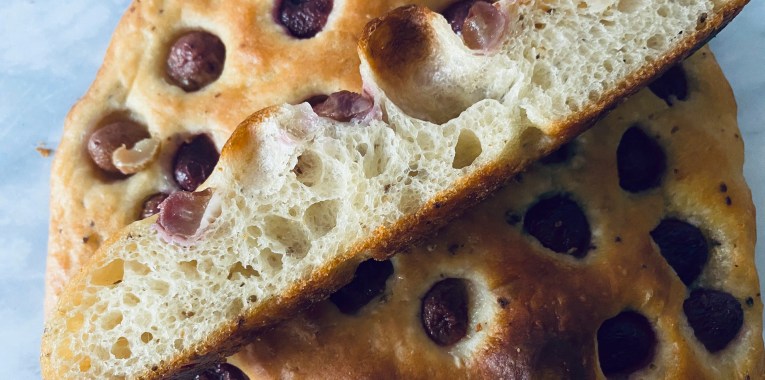
ITALY: Also known as “winemaker’s foccacia”, this salty-sweet flatbread from Tuscany is traditionally made in the fall using grapes from the harvest. The dough has just of touch of sweetness, and some of the water is replaced with a sweet white wine (both of which makes the dough a little denser than the typical airy focaccia). Next time, I think I’ll add some Gorgonzola. You could top this with any fruit on hand; I also made a version with apples and nectarines, and a sprinkling of herbs de Provence. Delizioso!

Continue reading “Week 33: Schiacciata con l’Uva”

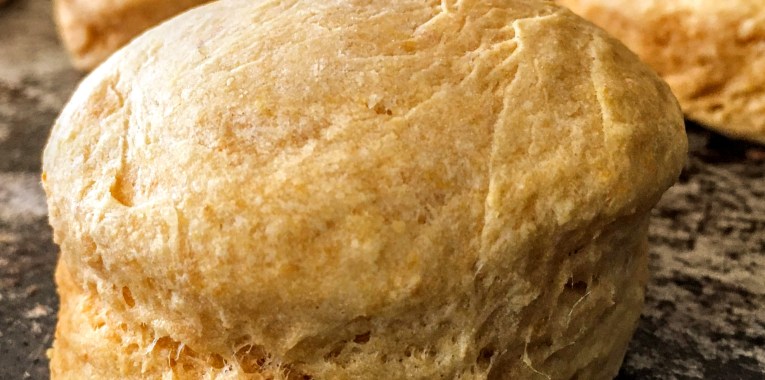
Week 32: Sweet Potato Biscuits

OREGON: I found this on the inside of a box of Tillamook unsweetened butter. And then I found this instructional video courtesy of Alex Town of Pine State Biscuits in Portland, OR.

Continue reading “Week 32: Sweet Potato Biscuits”

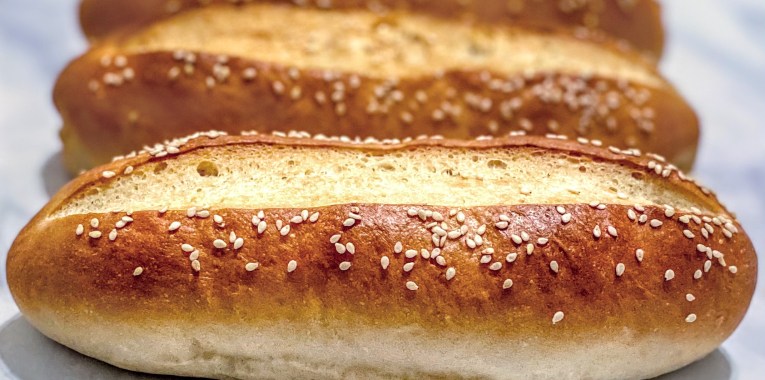
Week 31: Hoagie Rolls

Rumour has it that hoagie rolls got their name from the “hoggie” sandwiches made by Italian immigrants who worked at the Hog Island shipyard in Philedephia during WWI. Call them what you will, (“subs” in North Jersey, “hoagies” in South Jersey, “heroes” in NYC, and “grinders” if you’re from New England), but the style of the roll remains the same: dense and sturdy with a hard crust.

STEP 1: Proof yeast

  • 1 cup milk – measure into a small pyrex measuring cup
  • 1-1/4 tsp yeast – measure out into a small bowl.
  1. Pour some of the warm milk into the bowl with the yeast.
  2. Mix to combine
  3. Add the rest of the milk and mix
  4. Let sit while you measure out and mix up the dry ingerdients.

STEP 2: Hydrate flour

  • 400 g bread flour (AP is okay)
  • 10 g sugar (about 2 teaspoons)
  • 8 g salt (about 1 teaspoon)
  • 20 g olive oil (abot 1-1/1 tablespoons)
  1. Measure out the flour, sugar, and salt in the bowl of a stand mixer
  2. Mix on low speed (I prefer the paddle attachment) to combine.
  3. Add the milk/yeast mixture, and the olive oil
  4. Mix on low speed until it’s all incorporated
  5. Scrape down sides, remove the paddle, cover loosely with plastic wrap, then let rest 15 minutes.

STEP 3: Knead and first rise

  1. With the dough hook attachment, knead on #4 for 3 minutes, then #2 for 5
  2. Dough should come away from the sides, and be able to stretch with out breaking
  3. Cover and let rise until doubled in size. This could take about an hour, but it depends on the temperature of the room, so check on it often!

STEP 4: Shape rolls

  1. Gently punch dough down, then turn out onto your countertop. You can put a little oil on the countertop, rubbed in well, to keep it from sticking, but you shouldn’t have to. Same goes for dusting with flour. If you really want to use flour, don’t use too much!
  2. Separate dough into 4 even pieces, weighing about 165 grams each.
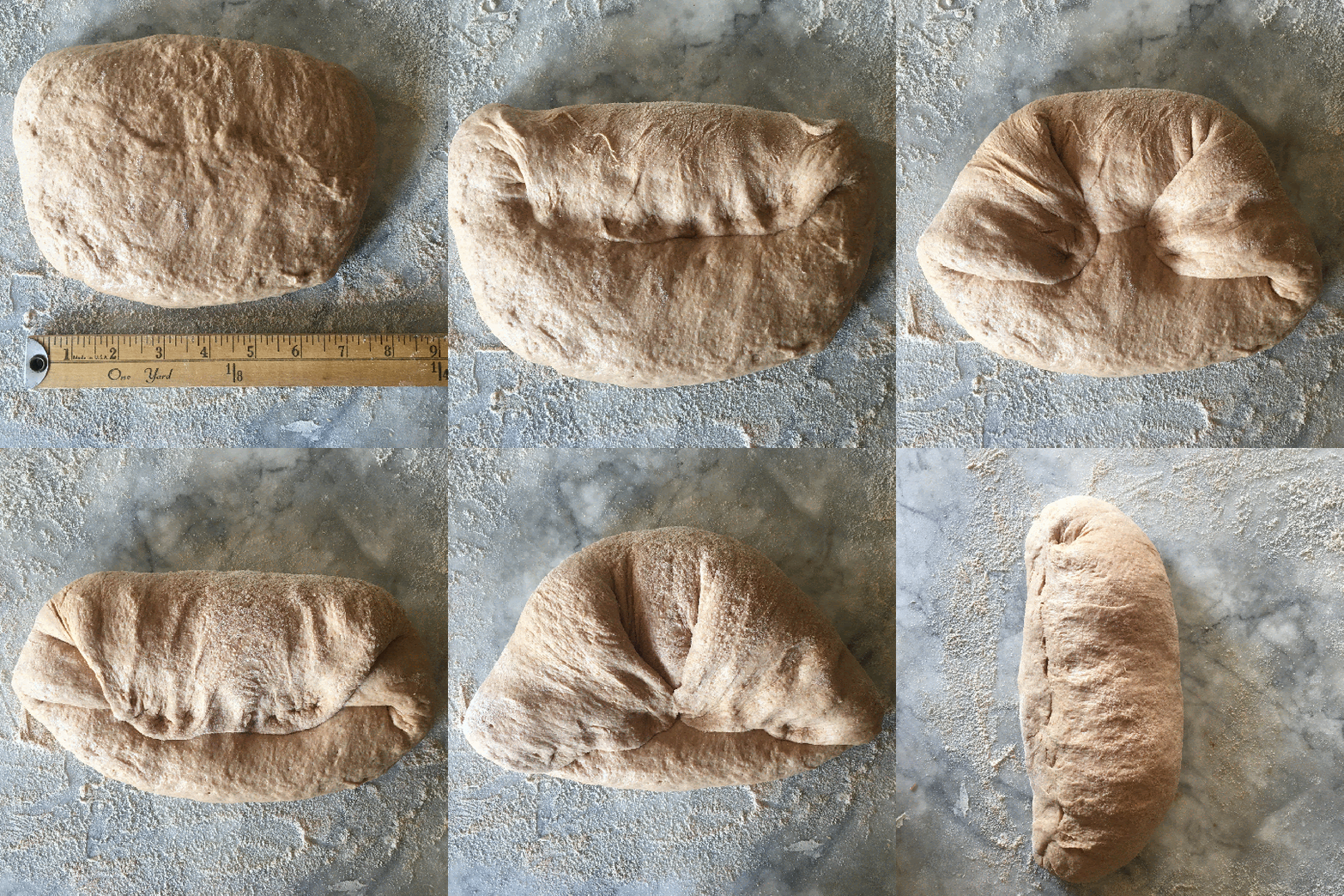
  3. Flatten each one into a square, then roll up and press seam together to seal.
  4. Roll each one to a length of about 10″

STEP 5: Second rise

  1. Place rolls on a baking sheet, covered, and let proof about 30 – 45 minutes, until doubled in size. I place glasses in the corner, than cover the whole thing with a clear kitchen trash bag.
  2. Preheat oven to 400 degrees, so it’s ready by the time they rise

STEP 6: Score, top and bake

  • 1 egg white beaten with a Tbsp of water and a pinch of salt
  • Sesame seeds
  1. When oven has reached 400, pour boiling water in a iron skillet, or baking pan with high sides and place on the bottom rack. Careful – it’s easy for the water to splash out a bit!
  2. Brush the tops of the rolls with egg white, score, then sprinkle with sesame seeds
  3. Place in oven, shut the door, and turn the heat down to 375 degrees.
  4. Bake for 10 minutes, rotate, and then bake for 10 minutes longer, until golden. Internal temperature should be between 190 and 200.
  5. Cool on wire rack.

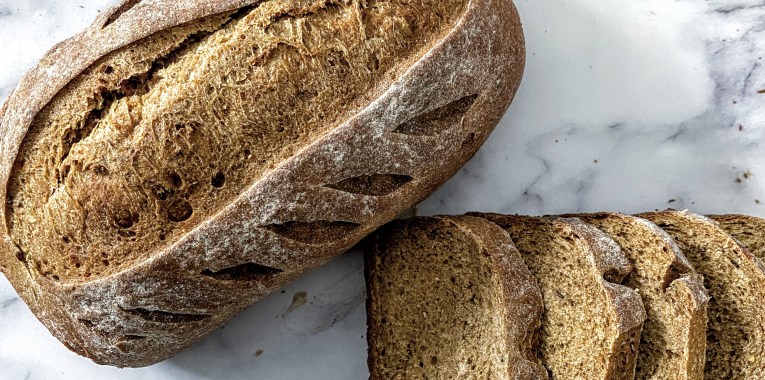
Week 30: Limpa

SWEDEN: Limpa is actually the Swedish word for any loaf of bread, but here in America, it’s the term we use for this slightly sweet rye bread flavored with molasses and scented with cardamom, caraway, anise and orange. You can bake it free-form, but it tends to spread, so I prefer using a 8.5″ x 4.5″ loaf pan, which also makes for uniform slices. Njut av!

STEP 1: BLOOM SPICES

  • 1 c milk
  • 64 g brown sugar
  • 1-1/2 tsp salt
  • 1/4 cup butter (1/2 a stick / 4 Tbsp)
  • 1/4 cup molasses
  • 1 Tbsp orange zest
  • 2 tsp anise seeds, 1 tsp caraway seeds, preferably partially ground with a mortar & pestle
  • 2 tsp cardamom powder
  1. In a small saucepan, mix spices, brown sugar and molasses in with milk and heat until nice and warm, but don’t boil!
  2. Cool to room temperature (about 70 degrees)

STEP 2: HYDRATE FLOURS

  • 245 g bread flour
  • 175 g whole wheat flour
  • 140 g rye flour
  1. Measure the flours in the bowl of a stand mixer, fixed with the paddle attachment
  2. Slowly add milk and continue to mix until there’s not dry bits of flour. You aren’t kneading the dough, yet, just incorporating the liquid into the dry.
  3. Cover and let sit (at room temperature) for an hour.

STEP 2: PREPARE and KNEAD DOUGH

  1. Mix yeast in with milk to dissolve
  2. Add to the hydrated flours
  3. With the dough hook, knead on #4 for 5 minutes, then on #2 for 5 minutes.

STEP 3: 1st RISE (1 hour)

  1. Cover and let rise in a room that’s about 72 degrees (or a warmed up microwave) for about an hour. This dough won’t double in size — will only rise a little bit

STEP 4: SHAPE LOAVES

  1. Scrape dough onto oiled or wet surface and divide into two pieces
  2. Flatten each into a (roughly) 7″ square
  3. Shape into a tight roll, using the “head and shoulders” method.
  4. Place in 8.5″ x 4.5″ loaf pans, seam side down, pressing on the top to fill the pan

STEP 5: 2nd RISE (1 hour)

  1. Let rise until the top is about 1″ above the rim of the pan
  2. Preheat oven to 375

STEP 6: BAKE

  1. Either dust with flour OR brush with a glaze made by mixing 1 egg yolk with 2 Tbsp orange juice
  2. Score with very sharp knife (a razor blade makes a good scoring tool)
  3. Immediately place in oven, and decrease temperature to 350
  4. Bake 40~45 minutes, rotating once after about 20 minutes, until it reaches an internal temperature between 190 – 200 degrees
  5. Remove from pans and let cool on a wire rack before slicing (see why on the Tips page)!

Week 29: Pizza Dough (II)

On week 17, I decided to make pizza – the kind you can whip up when you just don’t feel like cooking. We called it good enough” pizza because although tasty and easy, it wasn’t what you’d make if you were hankering for something better than delivery. We’ve been home now for 29 weeks (203 days!), with no end in sight. So, it’s time to upgrade, and learn how to make a dough worthy of an artisan style, thin-crust pizza. The trick is, you have to begin this the day before — start on a Thursday, and you’ll be all set for Friday night!

Continue reading “Week 29: Pizza Dough (II)”

Week 28: Cinnamon Swirl

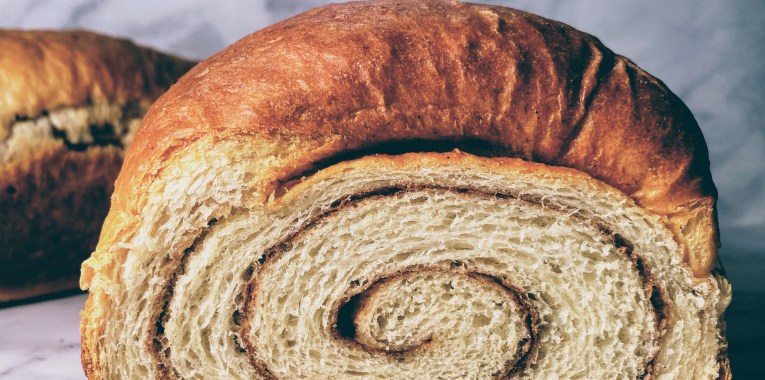
Another fool-proof recipe from King Arthur Baking Company. I’ve linked to the video that shows you every step of the process and listed the ingredients below so you can get everything measured out and then just follow along. Your own private cooking class!

Continue reading “Week 28: Cinnamon Swirl”

Week 27: Clover-leaf Rolls

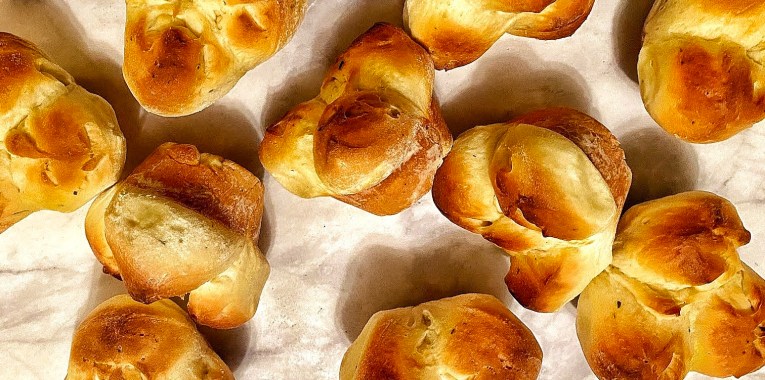
Fun to make, and delicious to eat! Because they are made with an “enriched” dough (dough that contains butter and milk), they can be made a day ahead and then reheated in the oven just prior to serving.

Continue reading “Week 27: Clover-leaf Rolls”