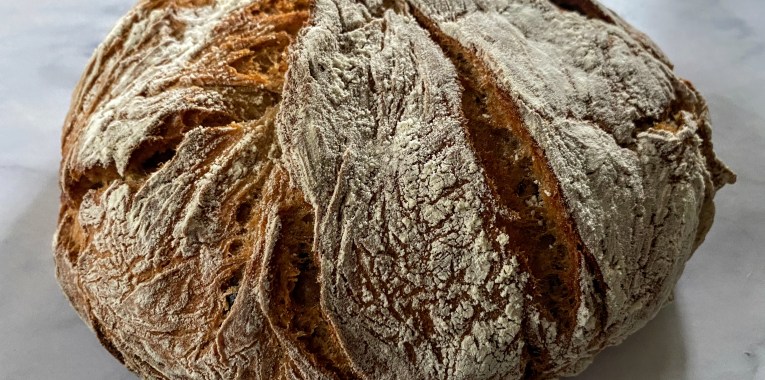
Week 74: 10-Grain Cereal Bread

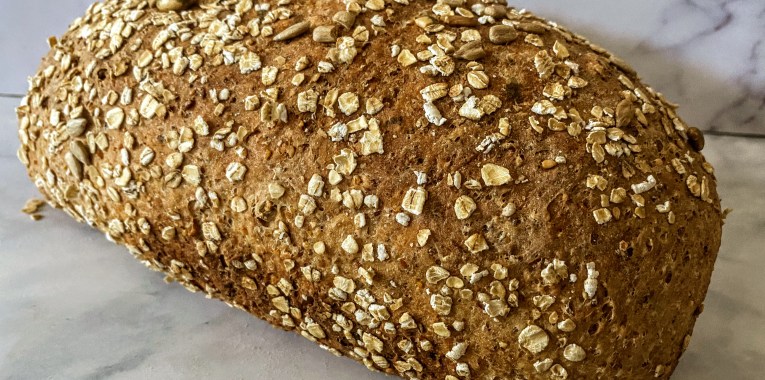
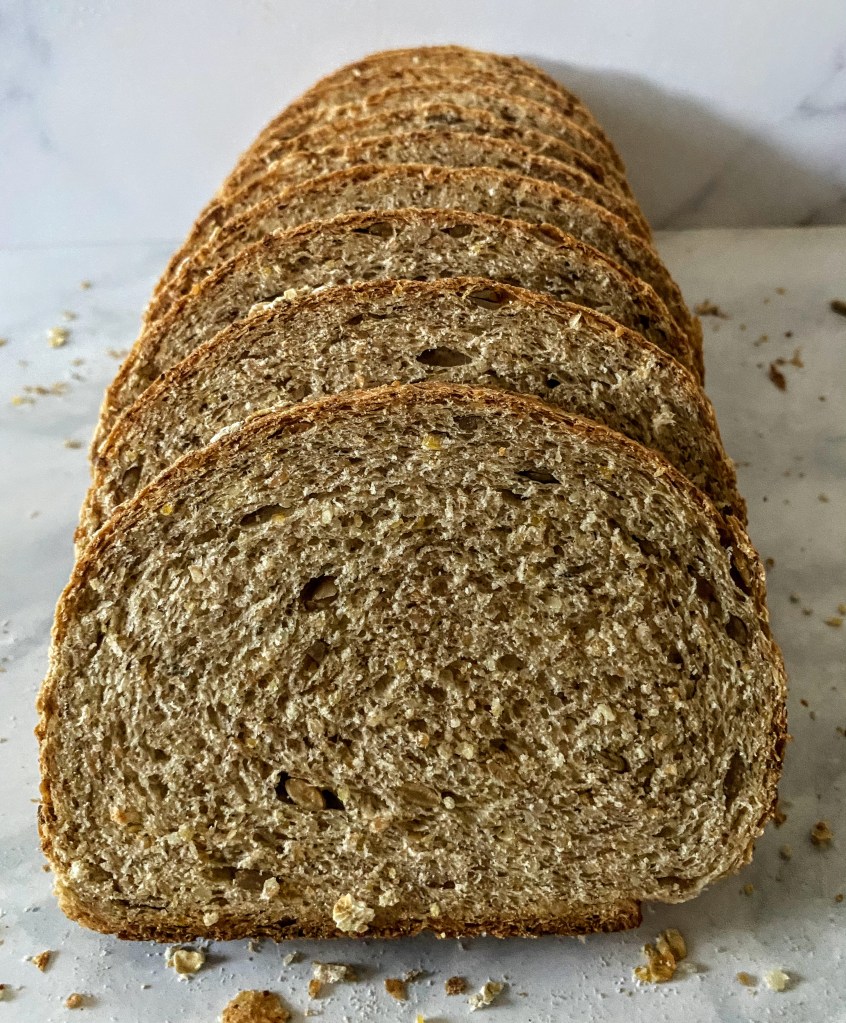
This healthy loaf is easy to put together, and doesn’t take a lot of time. You can get in the habit of making it on a weekly basis so you’ve always got some bread on hand for either breakfast, lunch or dinner. It makes great toast, is sturdy enough for sandwiches, and can also be made into dinner rolls.
  • 1/2 cup multi-grain hot cereal mix
  • 1-3/4 cups boiling water
  1. Measure cereal mix into the bowl of stand mixer and add boiling water.
  2. Mix, then let stand, stirring occasionally, until it cools to 110 degrees.
  • 333g bread flour
  • 100g whole wheat flour
  • 2 Tbsp sugar
  • 1-1/2 tsp salt
  • 7g yeast (2-1/4 tsp)
  1. Meanwhile, whisk flours, sugar, salt and yeast together in a medium bowl.
  2. Once grain mixture has cooled, attach the bowl to the stand mixer fitted with the dough hook attachment.
  3. With mixer running on low speed, add the flour mixture, about a 1/2 cup at a time, and mix until combined.
  • 3 Tbsp butter, softened
  • Optional
    • 2 Tbsp sunflower seeds
    • 2 Tbsp sesame seeds
  1. Add butter, about one tablespoon at a time, and continue mixing, then add seeds if using.
  2. Knead on medium-low speed until dough begins to come away from the sides of the bowl. If that’s not happening, add some flour – just one tablespoon at a time. You can use a rubber spatula and scrape down the sides to help it along. But you want it to be in a big ball around the dough hook.
  3. Continue to knead dough for 5 more minutes.
  4. Transfer dough to a very lightly floured work surface and shape it into a smooth, taut ball.
  5. Place dough in an oiled bowl, cover and let rest until doubled, 45 to 60 minutes.
  6. Preheat oven to 375 degrees.
  7. Lightly oil a 9″ x 5″ loaf pan.
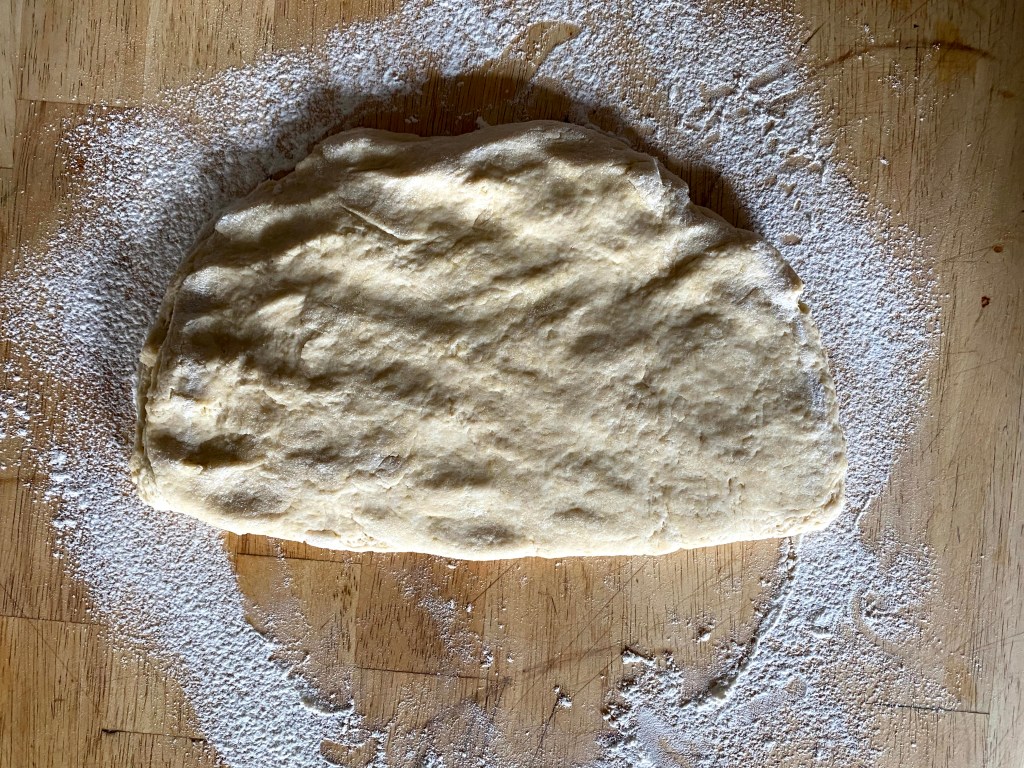
  8. Transfer dough to lightly floured work surface and pat into a rectangle
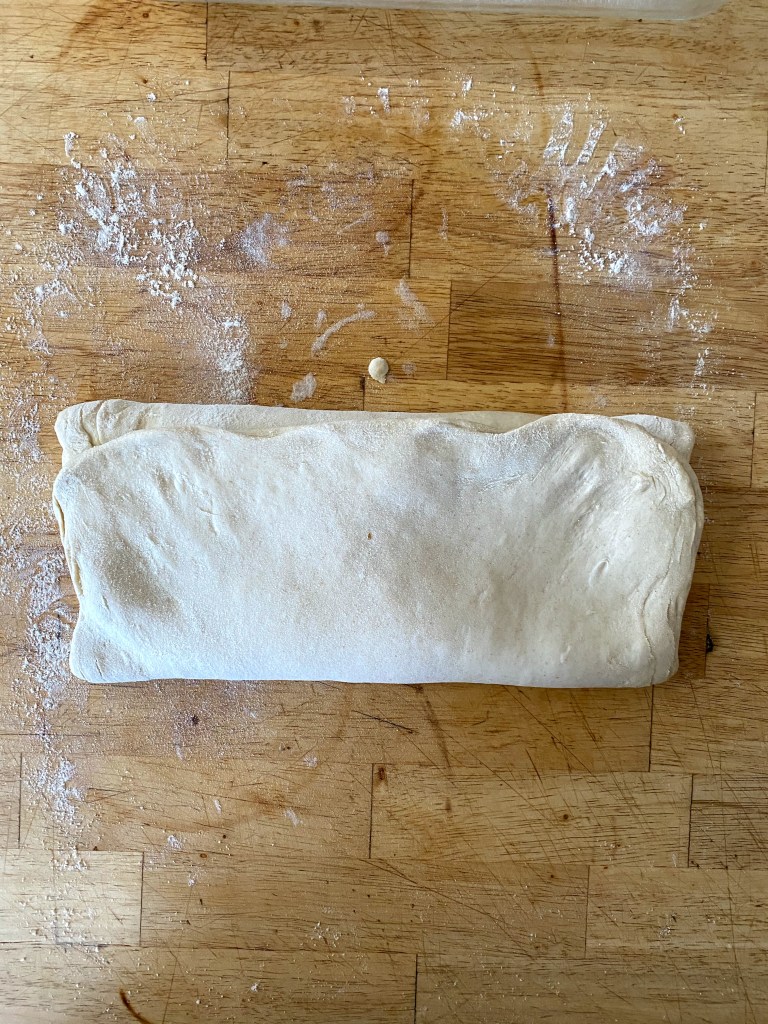
  9. Shape into a loaf as shown below:
  1. Place loaf in tin, cover, and let rise until it’s about 1″ above the rim of the tin.
  2. Meanwhile, preheat oven to 350 degrees
  • 1 egg white
  • 1 ~ 2 Tbsp rolled oats
  1. Mix the egg white with 1 Tbsp water and lightly brush the top of the loaf and top with oats.
  2. Sprinkle the top of the loaf with oats.
  3. Bake until lightly browned, and the internal temperature registers 200 degrees 35 to 40 minutes. Tent wtih foil if the top starts to brown too much before it’s thoroughly baked.
  4. Remove loaf and cool on wire rack before slicing, about 3 hours.

Dinner Rolls: Follow video on Tips page for how to shape rolls. This recipe makes about 15, and they’ll fit in a 9″ x 13″ baking dish.

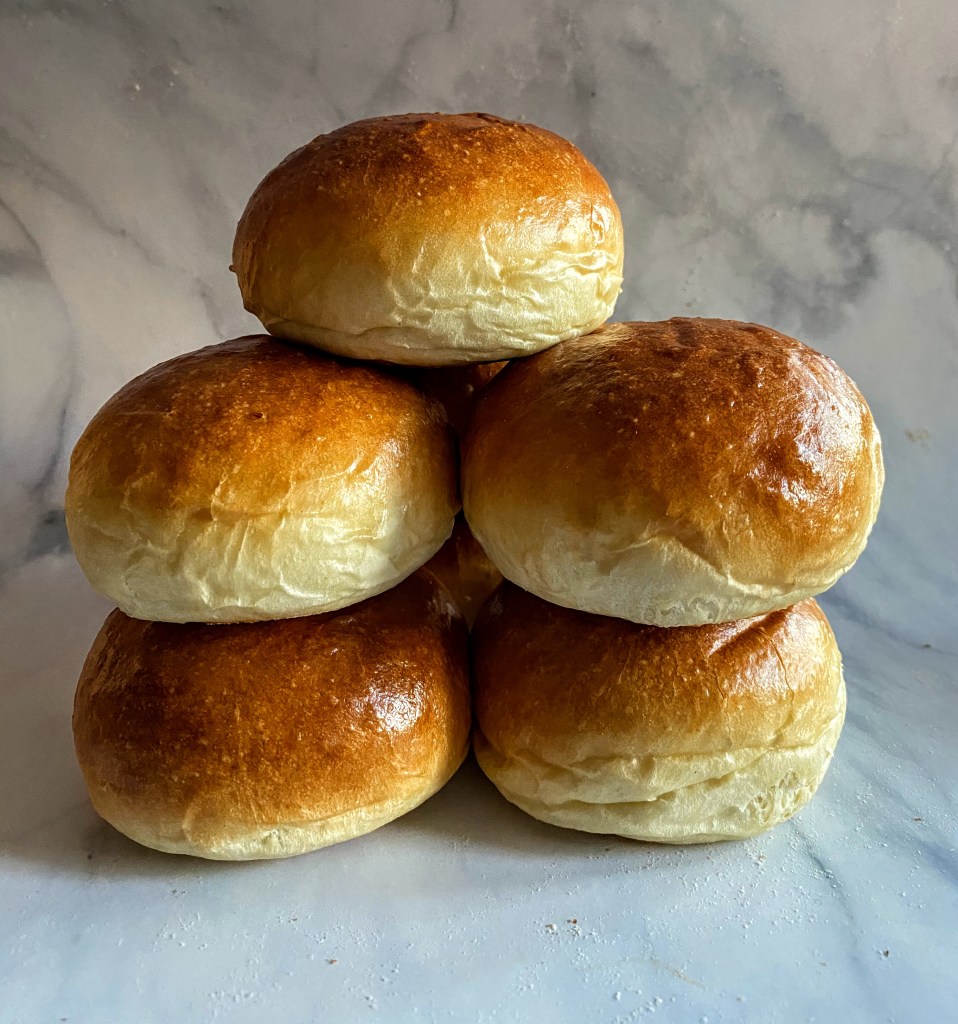
Week 73: Shake Shack Buns

According to eater.com, one of the reasons Shake Shack’s burgers are so popular is their soft, squishy buns. They’ve been using Martin’s Famous Potato Rolls since Shake Shack opened their first location in NYC in 2004. The buns are not readily available here in the PNW, so I did a little digging and came up with a version you can make at home. I’ve never had the burger, but you could give J. Kenji López-Alt’s Fake Shake a try – everything he does is fantastic.

STEP 1: Prep potatoes

  • 1 russet potato (at least 300 grams)
  • 2 Tbsp butter, softened
  • 1 egg, beaten
  • 1 Tbsp sugar
  1. Peel and then roughly chop the potato
  2. Place them in a small pot, add water to cover, and boil until tender.
  3. Reserve 5 Tbsp of the boiling liquid into a small bowl, then drain the potatoes, returning them back to the pot.
  4. Heat on low to evaporate as much of the moisture from the potatoes as you can.
  5. Mash well, then put 1 cup of the mashed potatoes in a bowl.
  6. Add butter to potatoes and mix in until melted.
  7. Add the egg and sugar to the potato water and mix.
  8. Let potatoes water cool.

Step 2: Make dough

  • 350g bread flour
  • 6g yeast
  • 6g salt
  • Mashed potatoes and butter
  • Potato water/egg/sugar mixture
  1. Measure out the flour, yeast and salt into the bowl of a stand mixer and whisk to combine.
  2. Add the mashed potatoes and mix with the handle of a wooden spoon to loosely combine.
  3. Place bowl in mixer, and with the dough hook on low speed, slowly add the water mixture.
  4. Mix until the dough starts to form and there are no dry bits left.
  5. Increase speed to medium-low, and knead until it’s smooth and elastic, and comes away from the sides of the bowl.

Step 3: Proof

  1. Empty dough out until a very lightly floured countertop.
  2. Give it a few kneads and form into a ball.
  3. Place, seam side down, into a greased bowl, cover and let rise 30~60 minutes.

Step 4: Shape

  1. Remove dough from bowl, and shape into a log.
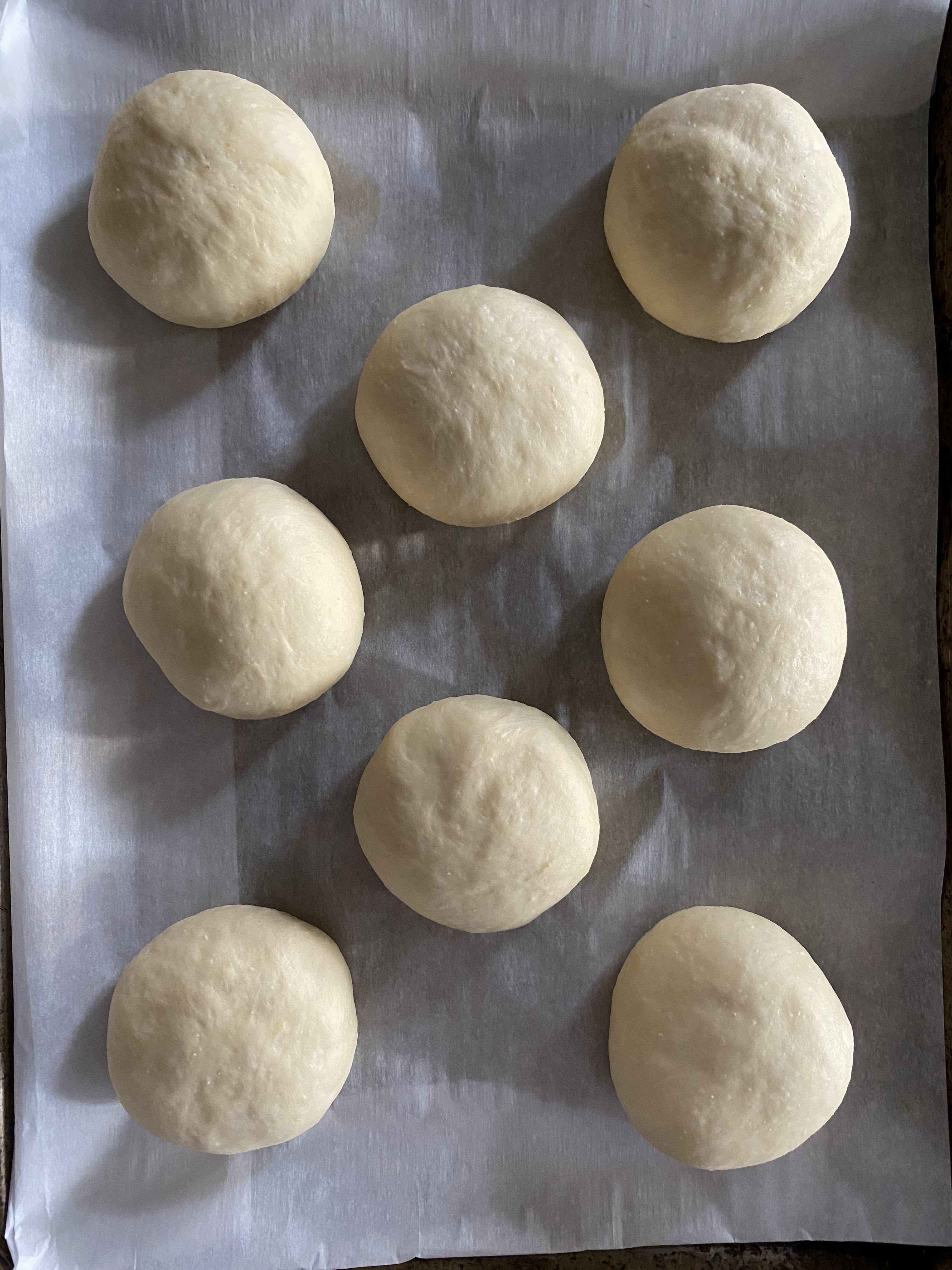
  2. Cut into 8 pieces, weighing about 85g each.
  3. Follow “How to shape up perfect bread rolls” instructions on the Tips page to shape the pieces into rolls.
  4. Arrange the dough balls, seam side down on baking sheet evenly spaced apart.
  5. Press dough balls down to form uniform disks.
  6. Cover, and let rise for 30~60 minutes.
  7. Meanwhile, preheat over to 425 degrees.

Step 5: Bake

  • 1 egg yolk
  • 1 Tbsp water
  1. Lightly beat egg yolk with the water.
  2. Brush tops with a beaten egg yolk.
  3. Bake for 15-18 minutes, until golden brown.

Week 72: Pizza Dough III

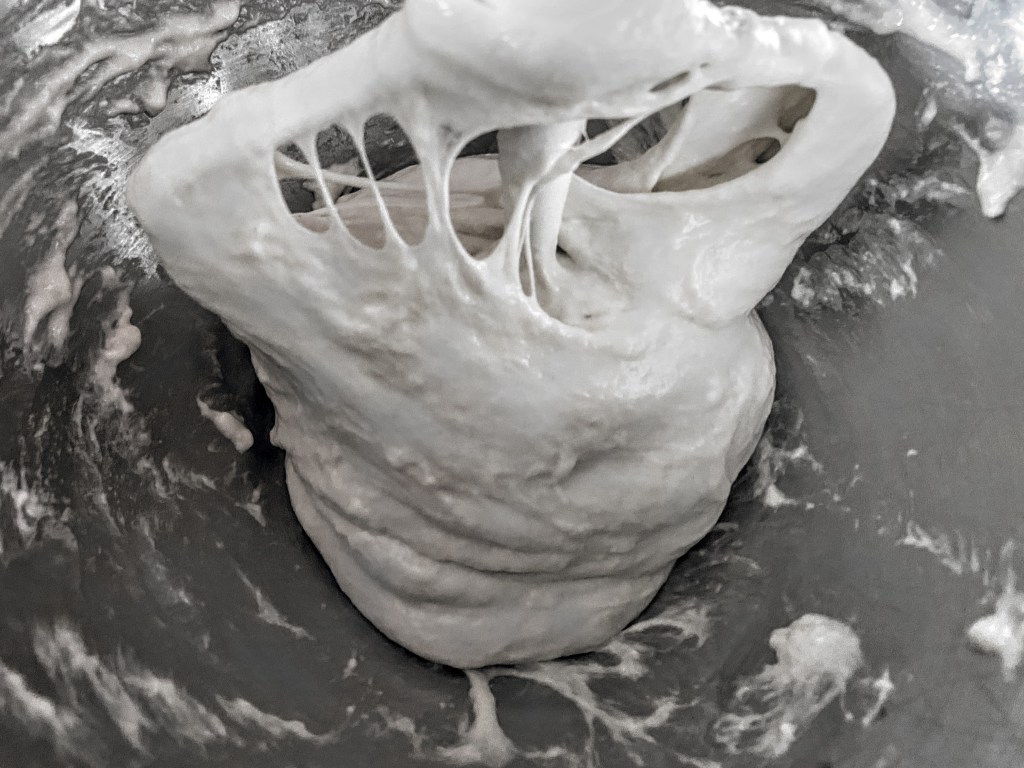
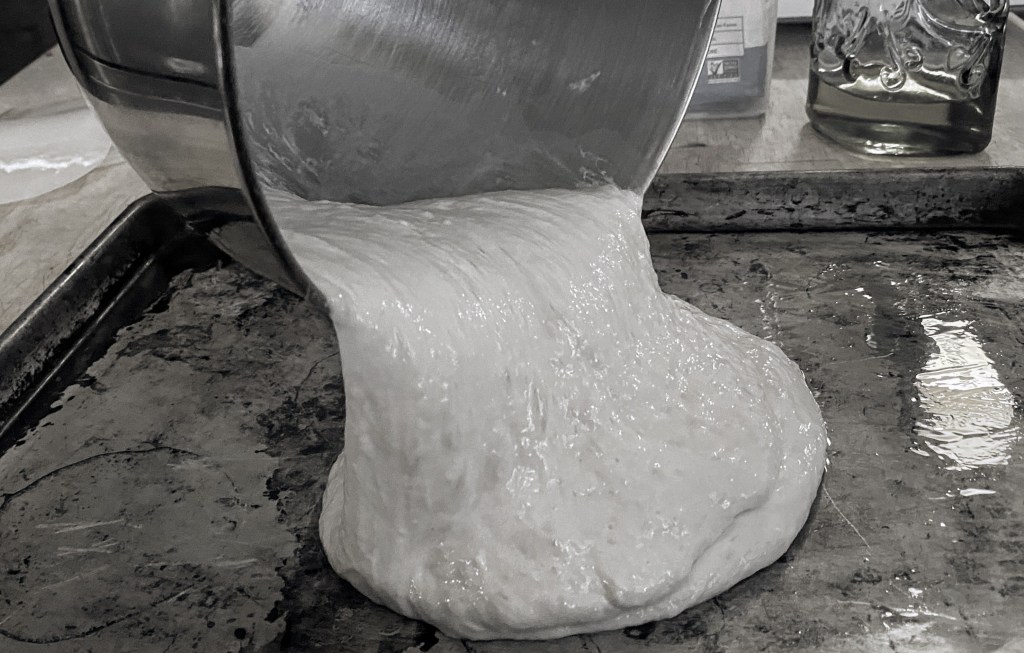
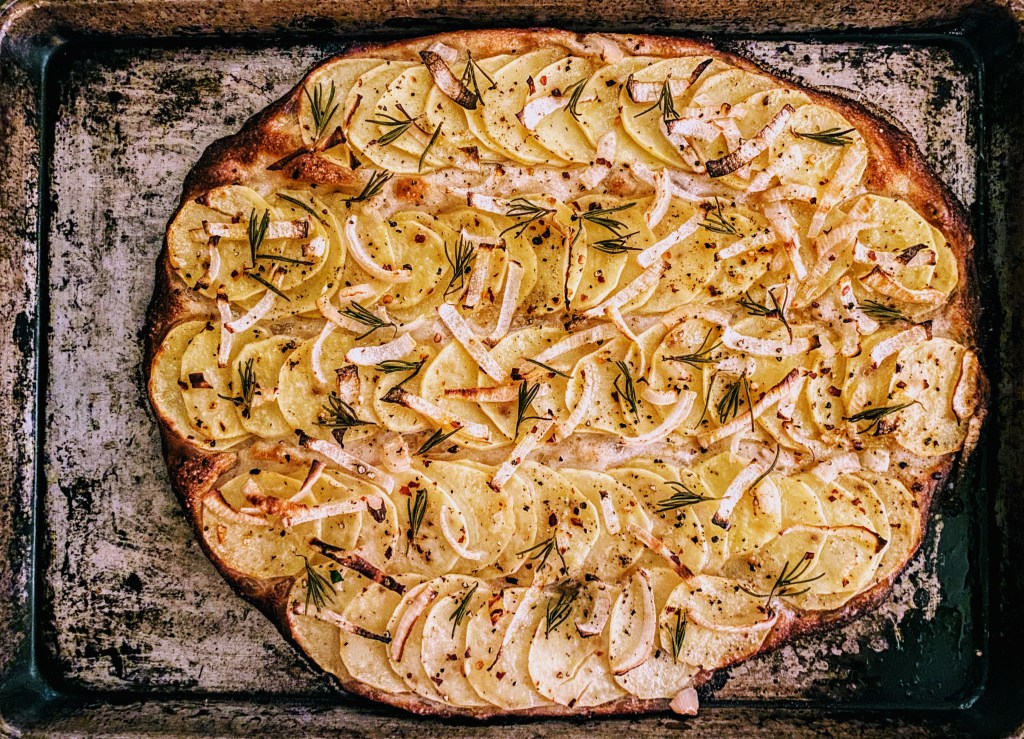
This is a very, very wet dough, so use it whenever you’re making pizza bianca, pizza without sauce. It’s tricky to make, but also a fun, and a great addition to your pizza repertoire! There are a few versions of it online, and most seem to be inspired by Jim Lahey of Sullivan Street Bakery, but the methods are kind of complicated, so my version is below, with photos. My favorite topping is potatoes and I’ve included instructions for that; another great topping would be caramelized onions, blue cheese and figs.

  • 130g bread flour (1-1/2 cups)
  • 130g all purpose flour (1-1/2 cups)
  • 1/4 tsp yeast
  • 1/2 tsp salt
  • 1/2 tsp sugar
  • 285g room temp water (1-1/4 cups)
  • olive oil
  1. Combine flours, salt, sugar, and yeast in the bowl of an electric mixer fitted with the paddle attachment.
  2. On low speed, slowly pour in the water, mixing until ingredients are combined
  3. Increase to medium high, and mix for about 10 minutes until the dough is smooth and elastic and cleanly pulls away from the sides of the mixing bowl. It’s very wet, but it’ll start to come together.
  1. Scrape down sides of bowl to combine all the bits. Cover, and let rise 2 to 4 hours, until bubbly and doubled in size. (Rise time depends on temperature of your kitchen
  • 2 Yukon gold (or red new) potatoes, thinly sliced (use a mandolin if you’ve got one)
  • 1 small onion, halved, then sliced and separated
  • 1~2 sprigs of fresh rosemary
  • Salt, pepper, chili flakes
  • 4 tablespoons extra-virgin olive oil
  1. Meanwhile, prep the potatoes and onion: Once sliced, combine potatoes, onions, slat and pepper (and crushed red chili flakes) with1 tablespoon olive oil, and mix to coat.
  2. After an hour, go ahead an preheat the oven to 440 degrees.
  3. Once the dough has risen sufficiently, pour it into a very lightly greased baking sheet. Too much oil, and it’ll just slip and slide.
  4. Spread the dough out with your hands (don’t pull the sides, just push it around). If it springs back, just give it a rest for awhile and try again.
  1. Evenly layer potatoes over the surface of the dough up to the very edge, and decorate with rosemary sprigs. or about 1 inch from the edge if you desire a crust on your pizza.
  2. Do a final dusting of salt and pepper, and drizzle with olive oil.
  3. Bake about 30 minutes, until sides and bottom is golden brown.

Week 71: Pan di Ramerino

ITALY: I love these little buns! They are both sweet and savory, and when served with cheese, make for a hearty teatime snack (although in Italy, it’s more common to have them with coffee or a sweet wine). They were traditionally made for Giovedi Santo (Holy Thursday), but are now sold in Florentine bakeries all year long. In the middle ages, the rosemary was thought to ward off evil spirts, and the grapes and flour represent the Holy Communion.

The video instruction is in Italian, so I’ve listed the ingredients below. I decided not to coat them with the syrup, as I found they don’t really need to added sweetener, and it makes them difficult to handle.

When ready, bake at 350 degrees.

BIGA LIEVITINO

  • 7g/2tsp yeast (video shows fresh yeast, so I’ve converted to granular yeast)
  • 4g (1 tsp brown sugar)
  • 100g warm water
  • 100 all purpose flour (that is our equivalent to 0 flour)

RAISINS

  • 150g raisins
  • 50g vin santo (Italian dessert wine. Sweet sherry, or any sweet white wine will do)
  • 200g water

ROSEMARY

  • 5g rosemary (3-4 sprigs)
  • 90g extra-virgin olive oil

DOUGH – (you can mix and knead in a stand mixer all at once – even the raisins.)

  • lievitino
  • 50g brown sugar (I used just 25g)
  • 150g water
  • 400g all purpose flour
  • 10 gr of salt
  • rosemary olive oil

TOPPINGS

  • 1 egg, to brush tops before baking
  • 75g sugar + 75g water for tops after baking

Week 70: No Knead Black Bread

This is an absolutley delicious bread, and easy to make. Even though it’s got a long list of ingredients, and is best made a couple of days prior to consuming it, don’t let that stop you from adding this to your repertoire! We serve this on Christmas Day because it it makes for an easy breakfast that blurs into lunch. It’s delicious with sweet or savory toppings: grava lax, smoked trout, egg salad, and fruit jams. And what at treat it is to watch Nigella Lawson, England’s very own domestic goddess, bake bread!

I’ve listed the ingredients below so that you can measure everything out ahead of time, and then follow along with the video. (I didn’t include the acitvated charcol, or the nigella seeds because I can’t find them). Also, the 2-lb pan she references is the same as a 9″x5″ loaf pan.

  • 400ml stout (14oz)
  • 1 egg white (save yolk for brushing on top just before baking)
  • 30g brown sugar
  • 2 Tbsp extra virgin olive oil
  • 2 Tbsp molasses
  • 300g dark rye flour
  • 300g bread flour
  • 25g cocoa powder
  • 4 tsp caraway seeds
  • 4 tsp fennel seeds
  • ¼ tsp yeast
  • 1¼ tsp salt
  • oil to grease pan

You can mix the dough, in the evening, then let it rest overnight, shape it the next day, then bake after the 2-hr rest. Or, mix it in the morning, let it rest all day, then shape it and refrigerate overnight. Pop it into the oven first thing in the morning (directly from the fridge, no need to do the 2-hr rise). Either way, it would benefit from not being cut open for another day, but it’s hard to wait for this one!

I would also score the top so that it splits evenly as it bakes.

Here’s a link to the written recipe, and below is the video. If you’re not familiar with Nigella Lawson, go ahead and open the link and read the recipe through, and be prepared to fall in love with the language she uses to describe and instruct. I also want to highlight this tip that she adds at the end: “Any leftover bread can be blitzed in the processor into fabulous black breadcrumbs. I keep them in the freezer to use whenever I want to add an aniseed crunch. They are particularly good sprinkled over a tomato salad.”

Week 69: Artisan Cinnamon Raisin

Here is a bread that everyone can make, because it doesn’t call for any fancy equipment (no stand mixer, no Dutch oven), and measurements are by volume, so you don’t even need a scale. All you need is time, because it does call for proofing overnight.

The recipe comes our way via the artisanbreadwithstev YouTube channel. Steve’s video instruction is straightforward and simple and gives everyone the ability to successfully bake beautiful loaves. I’ve listed the ingredients below so that you can have them at the ready while you follow along with the video.

  • 16 oz tap water
  • 1-1/2 tsp salt
  • 1-1/4 tsp yeast
  • 2 Tbsp brown sugar
  • 1 Tbsp cinnamon
  • 3-1/2 c bread flour
  • 1 cup raisins

I baked mine in a Dutch oven, but next time I’ll use his method of creating a Dutch oven out of two loaf pans. For breads like this, I actually prefer them to be baked in a loaf pan because then slices are uniform.

Week 68: Rustic Ciabatta

ITALY, by way of NEW ORLEANS: It took me a long time to find a recipe for a ciabatta that was not made with 100% white flour. and that actually worked (whole wheat can be tricky to work with). This is from Bellgarde Bakery in New Orleans, whose mission is to “connect community and ecology through gastronomy”. All of their grains are identity preserved and single origin, and they use olive oil sourced from San Antonio, and salt from Avery Island.

Continue reading “Week 68: Rustic Ciabatta”

Week 67: Angel Biscuits

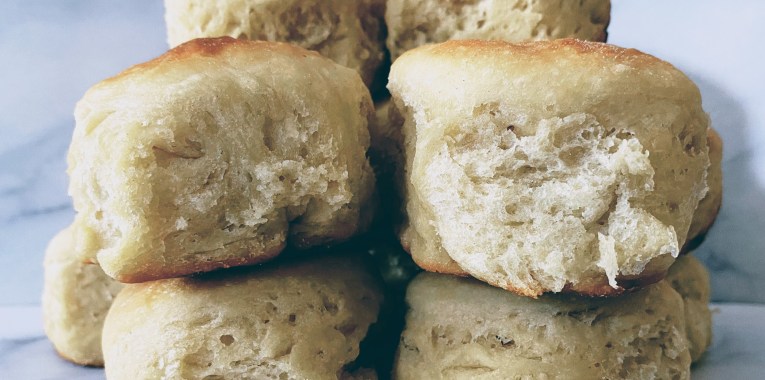
Angel biscuits are made with three leavening agents: baking powder, baking soda and yeast. The unusual addition of yeast creates a texture that is a cross between a biscuit and a soft dinner roll. A perfect foil for Chef David Bull’s Sawmill Gravy.

This dough is very forgiving, and can be stored in the fridge for up to five days, or you can cut the dough into rounds, place them on a cookie sheet to freeze, then pop them in a zip lock and freeze until ready to bake however many you like.

Most recipes use a combination of shortening and butter, but biscuits were originally made with lard, and because of the low water content (compared to butter) it does produce a superior biscuit: fluffy, flakey and airy.* Don’t want to use lard or shortening? These biscuits were made with ghee which makes a really tasty substitute (but not necessarily any healthier*) Here’s a great video showing you how to make it at home.

  • 2-1/2 cups sifted all-purpose flour
  • 1-1/2 tsp baking powder
  • 1/2 tsp baking soda
  • 1 tsp yeast (add 1/2 tsp more if you’re planning on freezing the batch to cook later)
  • 2 Tbsp sugar
  • 1 tsp salt

Parmesan Herb Biscuits: Mix in 1/2 cup grated Parmesan cheese, (save 1 Tbsp to sprinkle on top just before baking), 1-1/2 tsp chopped fresh thyme and 3/4 tsp chopped fresh rosemary.

Add the flour, baking powder, baking soda, yeast, sugar and salt to the bowl of a stand mixer (or a large mixing bowl), and whisk to combine.

  • 1/2 c fat: all lard, shortening, butter (or a combination: 1/4 lard or shortening + 1/4c butter) OR 1/2c ghee
  • 1 cup buttermilk at room temperature (make your own: put 1 Tbsp vinegar into a Pyrex measuring cup, then add room temperature milk to the one cup line)
  • Optional: Cream to brush on tops before baking
  1. Add the ghee/lard/butter (whatever combo you’re using) into the flour mixture in pieces.
  2. With the paddle attachment, mix (on low speed) until crumbly. (Or, use your hands to incorporate the butter into small pebbles, until the mixture resembles coarse meal.)
  3. With the mixer on low speed, slowly add the buttermilk, and continue mixing until the liquid is incorporated and you’ve got a smooth dough. OR, gently fold the until ingredients are moistened. Don’t overmix!
  4. Cover bowl and let rest 1 hour.
    • At this point, you can store this dough in the fridge for up to five days, to shape and bake at a later time.
  5. Turn dough out onto a lightly floured surface, and knead 3 or 4 times.
  6. Gently press dough out into a circle, fold in half, then fold again. Push sides inward to shape into a circle.
  7. Gently roll to a 1/2″ thickness, then cut with a floured 2” cutter. Don’t twist the cutter when lifting it. Press the scraps together, pat then roll into a circle and continue to cut out biscuits until it’s all used up.
  8. Now you’ve got two options:
    • Bake now: Place rounds with sides touching in a 10-1/2′ cast-iron skillet lined with parchment paper,
    • OR Bake later: Place on a cookie sheet, spaced apart, and freeze. Remove to a zip-lock bag and freeze for up to two months.
  9. Remove biscuits from freezer and preheat the oven to 400.
  10. Brush tops with cream, then bake until golden, 16 to 20 minutes.
  11. Serve warm with Sawmill Gravy

*Why lard bakes a better biscuit:

  • Gluten strands in dough form strong bonds when baked, which makes a tougher crumb. When lard coats the gluten strands it weakens their structure and keeps them from bonding (fluffy),
  • Lard melts more slowly than butter, creating air and steam (flakey), and
  • The fat crystals in lard are larger than butter, so when it melts, tiny, airy holes develop (airy).

You shouldn’t be deterred from that ingredient (unless you’re vegetarian, of course). When Crisco shortening launched in 1911, it very quickly became the favorite with it’s netural taste and long shelf life — and it’s heavy marketing campaign that told consumers it’s healthier than lard. We now know that shortening’s partially hydrogenated fats (trans fats) are associated with higher health risks than the saturated fats (such as lard) they were designed to replace. In addition, lard has 20% less saturated fat than butter, and is higher in monounsaturated fats, which are good for cardiovascular health fat. Just make sure you find a brand that is 100% non-hydronated.

Week 66: Pane Francese

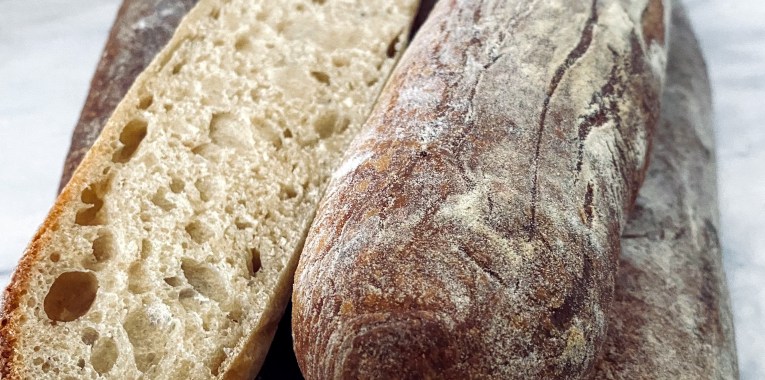
ITALY: Looks like a baguettte, but tastes like a ciabatta – what could be more perfect? This Italian “French bread” has a creamy chewy interior, a dark exterior, and gets its flavor boost from two overnight fermentations, and an addition of milk and olive oil in the dough.

I could only find a few verisons of this bread, and they varied widely. I tested three (all from cookbooks: The Italian Baker, Bread Illustrated, and Bien Cuit: The Art of Bread), then concluded that although they each had some great points, they also came with some tricky and/or non-authentic steps. So, I did a fourth test using what I’d learned from the first three and came up with this method below, which worked out really well.

I found Kingdom Bread’s instructional video to be really useful, and recommend watching it to get an idea of what the process will be (linked below as well). You’ll need a tea towel, and a spray bottle before you get started.

STEP 1: Make the biga (pre-ferment)

  • 300g white flour
  • 1/8 tsp yeast
  • 300g water 
  1. Mix biga ingredients in medium bowl until thoroughly incorporated. I use two chopsticks, then scrape the sides of the bowl down with a dough scraper.
  2. Cover and let rest overnight for 10-13 hours.

STEP 2: Make dough (next day)

  • 450g white flour
  • 50g whole wheat flour
  • 2-1/2 tsp salt
  • 1/4 tsp (heaping) yeast
  • 235g whole milk
  • 70g extra-virgin olive oil
  1. Measure the flour, salt, and yeast into the bowl of a stand mixer.
  2. Pour some of the milk around the sides of the biga, then scrape the sides inward to help release it from the bowl.
  3. Turn the biga out into the stand mixer, using a dough scraper it it doesn’t slide out easily.
  4. Add the olive oil and the rest of the milk.
  5. Mix, with dough hook attachment, for 4 minutes on speed #1, and then for 5~6 minutes on speed #2.

STEP 3: Rock & Roll kneading

  1. Lightly oil work surface and hands.
  2. Slide dough of the dough hook, and then empty dough out onto the lightly oiled work surface
  3. Gently press dough into a rectangular shape, then do 10 “roll and folds” (video instruction below). It might seem tricky at first, but keep going. You will eventually get there!
  4. Tuck in sides with your hands, then place in an oiled bowl, seam side down.
  5. Cover and let rest 1 hour

STEP 4: Envelope kneading & two 1-hour rests

  1. Lightly oil hands, and a rectangular baking pan
  2. Very lightly flour the countertop
  3. Turn dough out onto the countertop, using your dough scraper if neccessary, seam side up
  4. Pick up sides and gently pull out to achieve a rectangul measuring about 12″ x 20″. Pick up the top wide side, stretch it out, then fold it 1/3rd of the way down. Do the same with the bottom third: pick it up, stretch it out, then fold it up over the top. Like an letter for an envelope.
  5. Now fold the sides in. Pick up the left side, stretch it out, and fold it over 1/3rd of the way, then pick up the right side, stretch it out and fold it over.
  6. Cup your hands, around the dough, and rotate dough while tucking the sides under .
  7. Place the dough, seam-side down, in the baking pan, cover with oiled plastic wrap, and let rest 1 hour
  8. Lightly oil countertop and hands
  9. Repeat steps #3 – 8.

STEP 5: Shaping

  1. Line the 9″ x 13″ baking pan with a tea towel that’s been dusted with flour
  2. Lightly dust the work surface and your hands with flour.
  3. Turn the dough out onto the work surface and let it spread, then gently form it into an 8 x 13″ rectangle, by pressing to expand it, and stretching out the sides.
  4. Using a bench scraper, divide the dough into 4 equal pieces, each measuring about 2″ x 13″.
  5. Place first log, cut side down, onto the dusted tea towel, tent a portion to form a divider, then place the next one in. Repeat until thtey are all in, cut side down.
  6. Cover and let rest for 30 minutes.
  7. Place the covered pan in the fridge and chill for at least 12 hours.

STEP 6: Bake! (next day)

  1. Preheat the oven to 550° (it’s okay to just heat it to 500 if that’s as high as your oven goes)
  2. When hot, place a pan on the bottom rack, then add boiling water.
  3. Bring oven back up to 550 degrees and place an inverted baking sheet onto the middle rack
  4. Grab the edges of the tea towel and gently lift the loaves out of the pan.
  5. Spread the towel out flat.
  6. Use a bread board, (or piece of cardboard) gently flip the loaves off the towel onto a bread board (piece of cardboard), then flip onto a bread peel that’s been lined with parchment paper.
  7. Slide the loaves onto the inverted baking sheet.
  8. Lower oven temp to 450.
  9. Bake about 25 minutes until dark golden brown and sound hollow when tapped on the bottom
  10. Cool on wire rack – do not cut into them until they’ve cooled!!
  11. Let the bread cool completely before slicing and eating, at least 4 hours but preferably 8 to 24 hours.

Week 65: Ramazan Pidesi

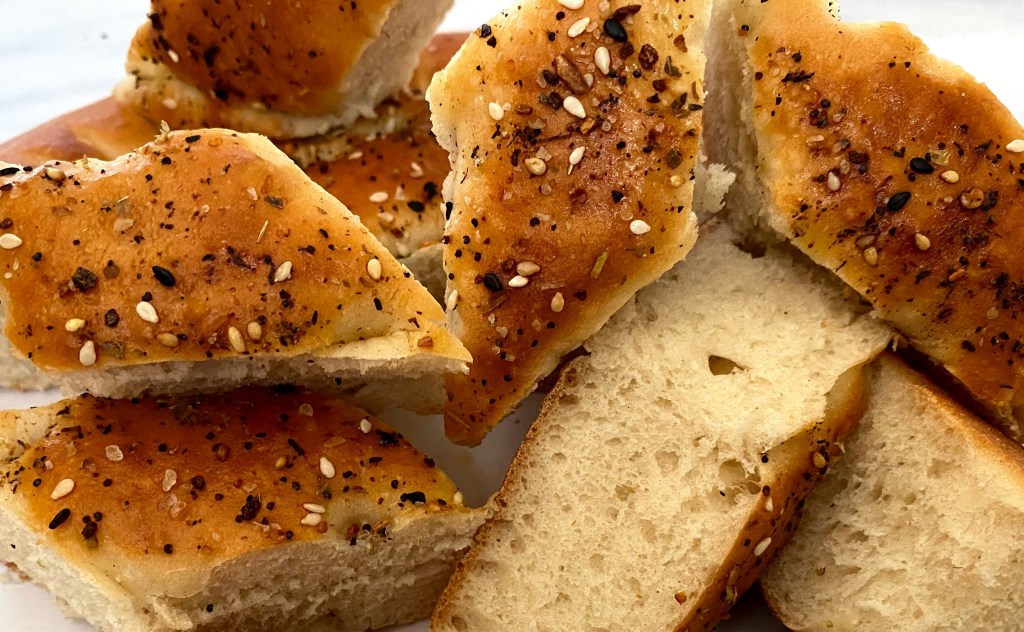
TURKEY: During Ramadan (the 9th month of the Muslim year, when fasting is observed from sunrise to sunset), Turkish bakeries churn out loads of these flatbreads just in time for iftar, the meal eaten after fasting once the sun goes downs. Lines start forming an hour or so before sunset, so that the pide can be purchased fresh from the oven and enjoyed still warm.

It took me awhile to find a video recipe that was in English, and used measurements that I could duplicate at home. Aysenur Altan lives in Istanbul and has one of the first Turkish Recipe channels in Turkey. Follow her here on Instagram!

Notes

  1. The ingredients listed below are for just one loaf (she’s making two). It really does need to be eaten day of, so I didn’t want any leftovers.
  2. Try as I might, I could not find nigella seeds, so I sprinkled some oregano (they taste a little bit like that) and also some everything bagel seasoning because of the black and regular sesame seeds.
  3. I also shaped, then baked it on parchment paper, instead of using semolina flour to dust the surface of the baking sheet.
  4. I used the end of a spoon to make the indentations in the circle.
  5. Mine took 20-25 minutes to bake, but the video says just 10, so check often!
  • 250 ml warm water
  • 1-1/2 tsp yeast
  • 1-1/2 tsp sugar
  • 1-1/2 tsp olive oil
  • 3 cups flour
  • 1/2 tsp salt

Egg wash

  • 1 egg yolk
  • 1 Tbsp olive oil
  • 1 Tbsp yoghurt (or milk)

Topping

  • Sesame seeds
  • Nigella seeds