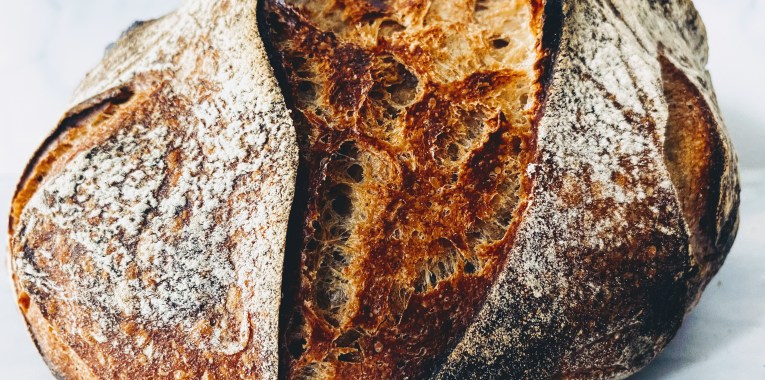
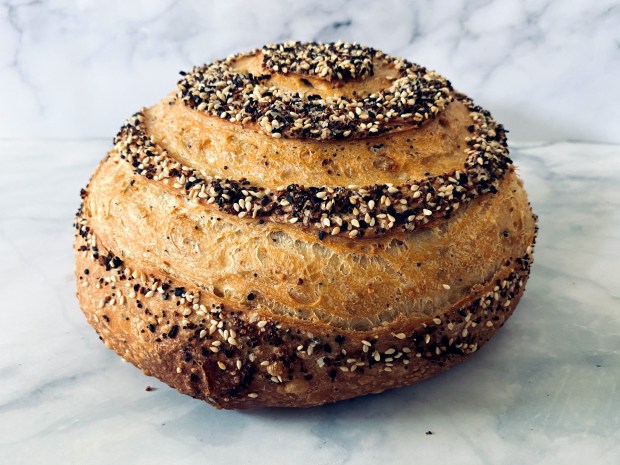
Week 64: Everything Bagel Bread

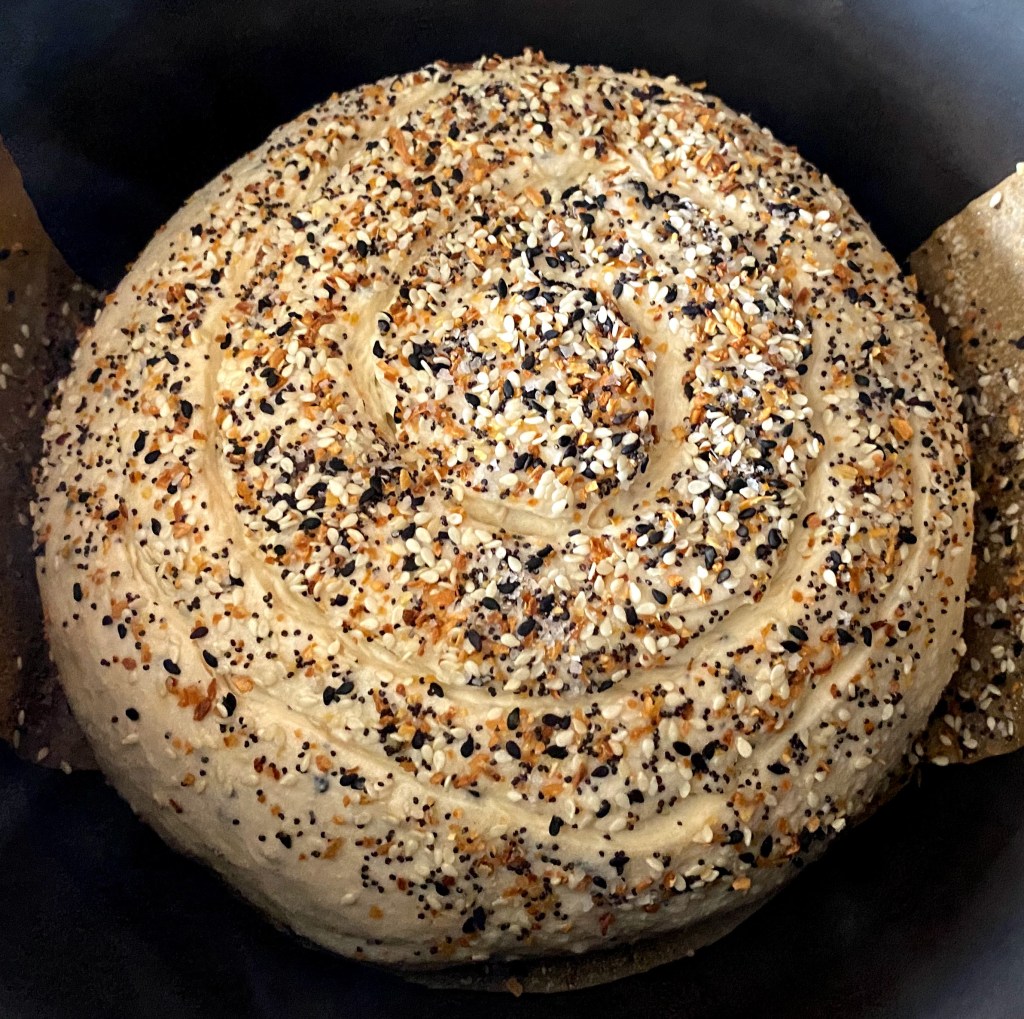
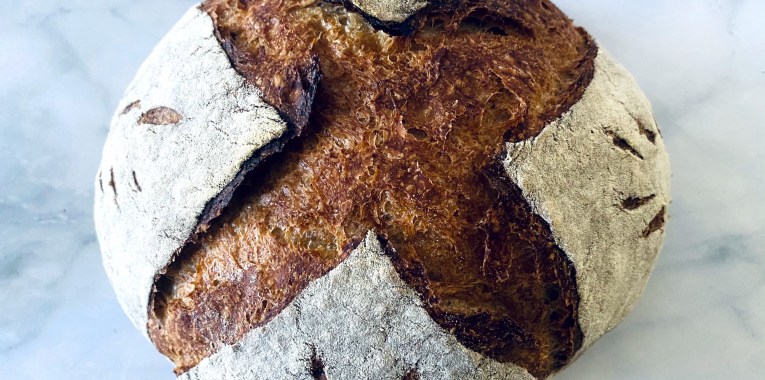
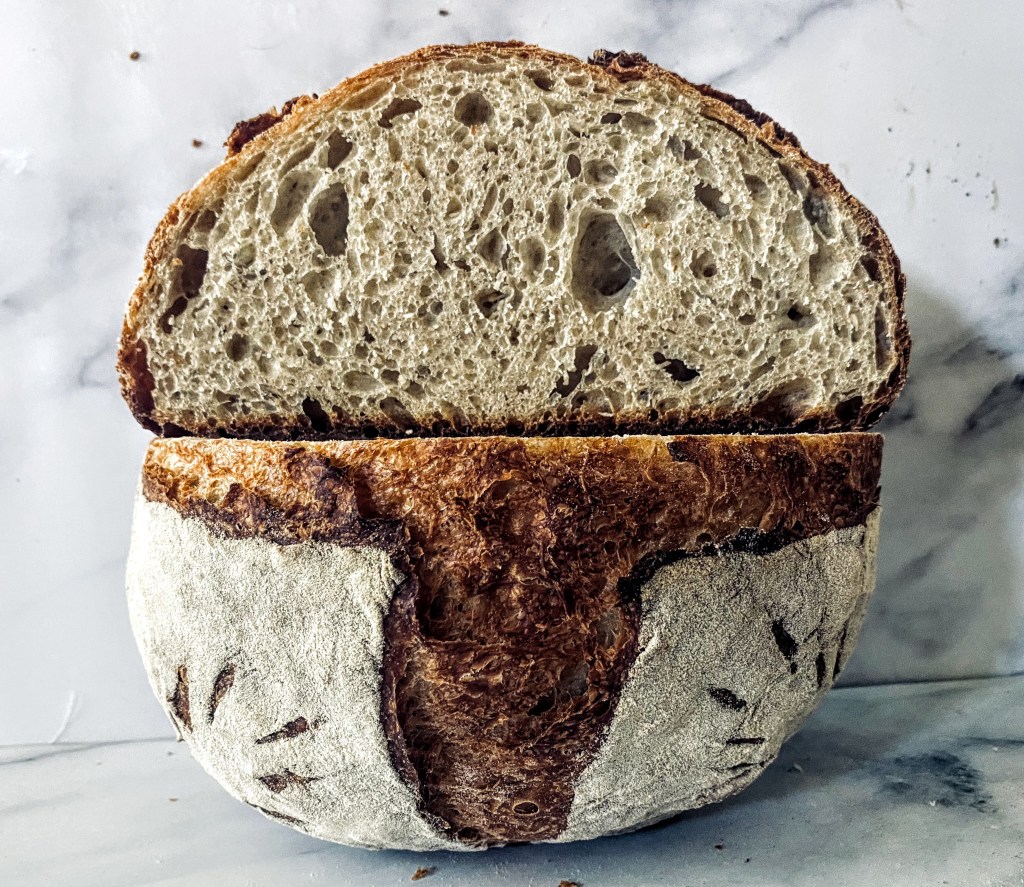
Want the savory punch of a bagel without the time-consuming process of either baking them yourself or going out to get some? Then this bread is for you – delicious, easy and satisfying. It does require an overnight rest, but after that, you don’t need to spend much time on it at all. The Everything Bagel seasoning is mixed into the dough in addition to being sprinkled on top, making it the perfect foil for some avocado toast. This is one of my favorite breads so far!

I found this on Leite’s Cuisine, one of my top ten food blogs. It’s been around since 1999, and has thousands of tested, well-written recipes, from hundreds of professional contributors. All bread recipes are written in both US and Metric measurements, which is super convenient.

Click here for the recipe. Trader Joe’s makes a good seasoning mix, but if you can’t find it, Leite’s Cuisine’s recipe is below:

  • 2 Tbsp poppy seeds
  • 1-1/2 Tbsp black sesame seeds
  • 1-1/2 Tbsp white sesame seeds
  • 4 tsp dried minced onion
  • 4 tsp dried minced garlic
  • 2 tsp flaked sea salt or coarse salt

If you want to try your hand at bagels, we made them during Week 51. Recipe and lots of tips here.

Week 63: Whole Wheat Burger Buns

Hamburgers originated in Hamburg, Germany, with the meat patty typically served between two slices of toast. The use of a soft bun was popularized by a fry cook named Walter Anderson, who in 1921 founded the White Castle hamburger chain, home of the “slider”.

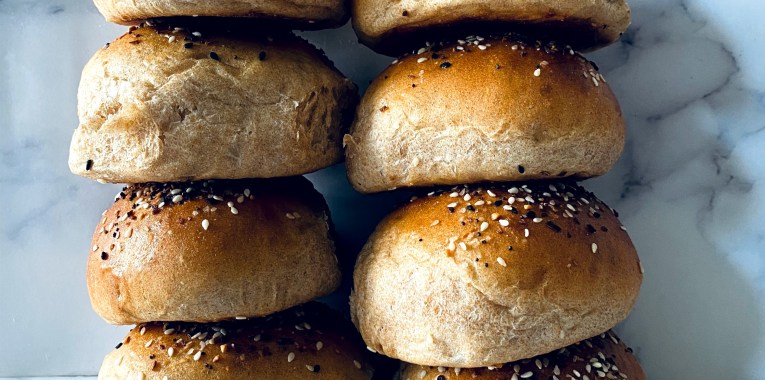
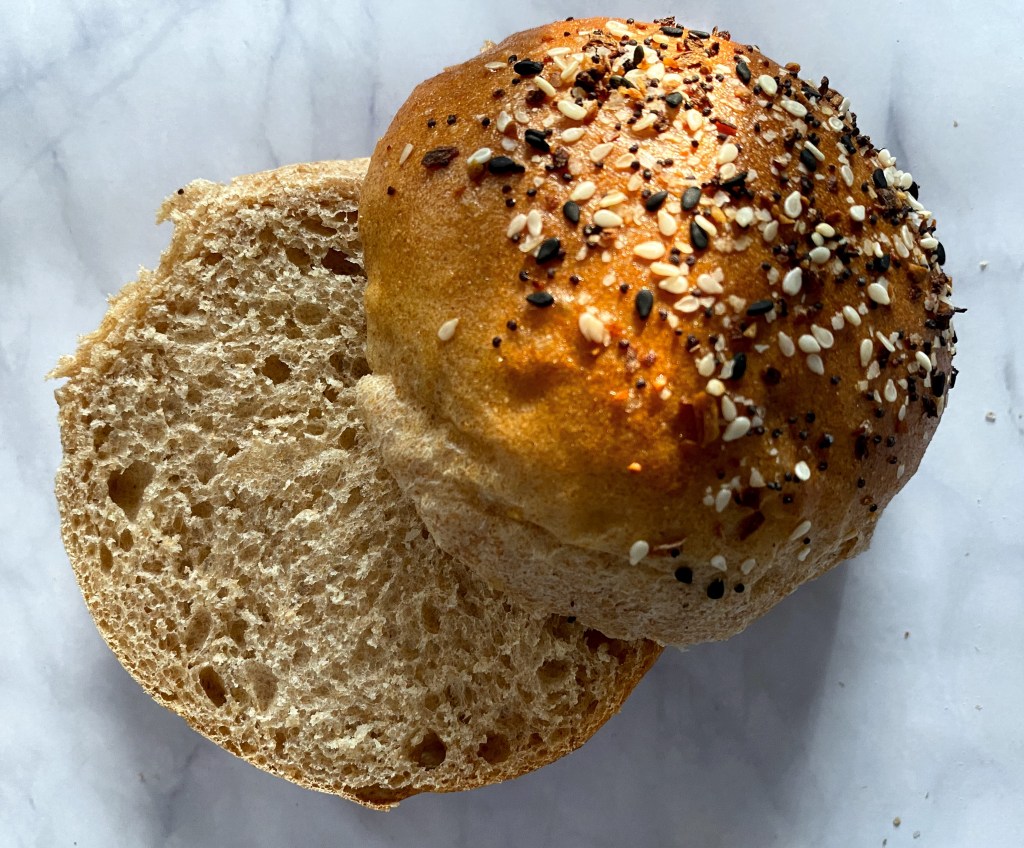
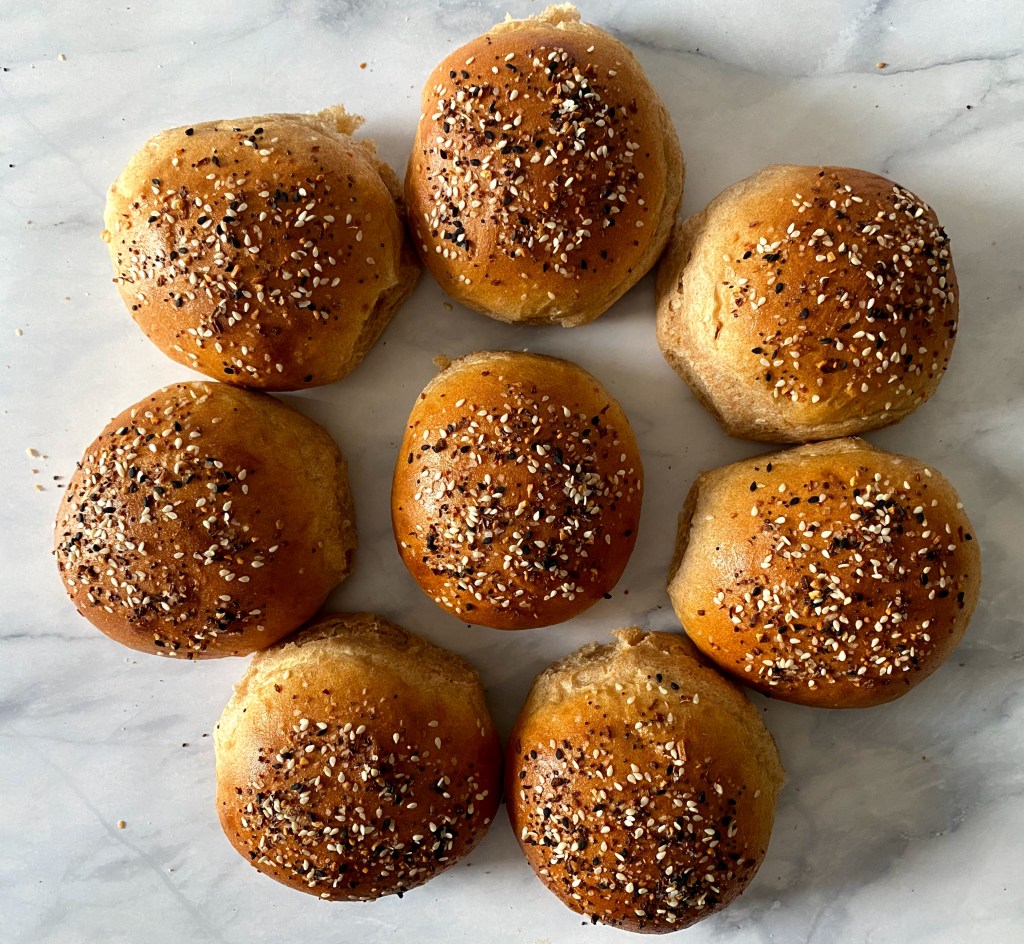
These soft buns are made with 80% whole wheat flour, enriched with whole milk and butter, and topped with an Everything Bagel seasoning mix. You can make them vegan by using any non-dairy milk, and substituting a plant based oil for the butter. If you’re looking to make an all-white flour version, try the brioche-style Burger Buns from Week 10.

STEP 1: Make dough

  • 240ml warm milk (120°)
  • 2 eggs (1 for dough + 1 to used as an egg wash)
  • 240g whole wheat flour
  • 60g bread flour or all-purpose flour
  • 7g yeast
  • 27g sugar
  • 13g salt
  • 28g softened butter
  • Everything Bagel seasoning
  1. Mix one of the eggs in with the warm milk and whisk to combine
  2. Measure out flours, yeast, sugar, salt into the bowl of a stand mixer, and whisk by hand to combine
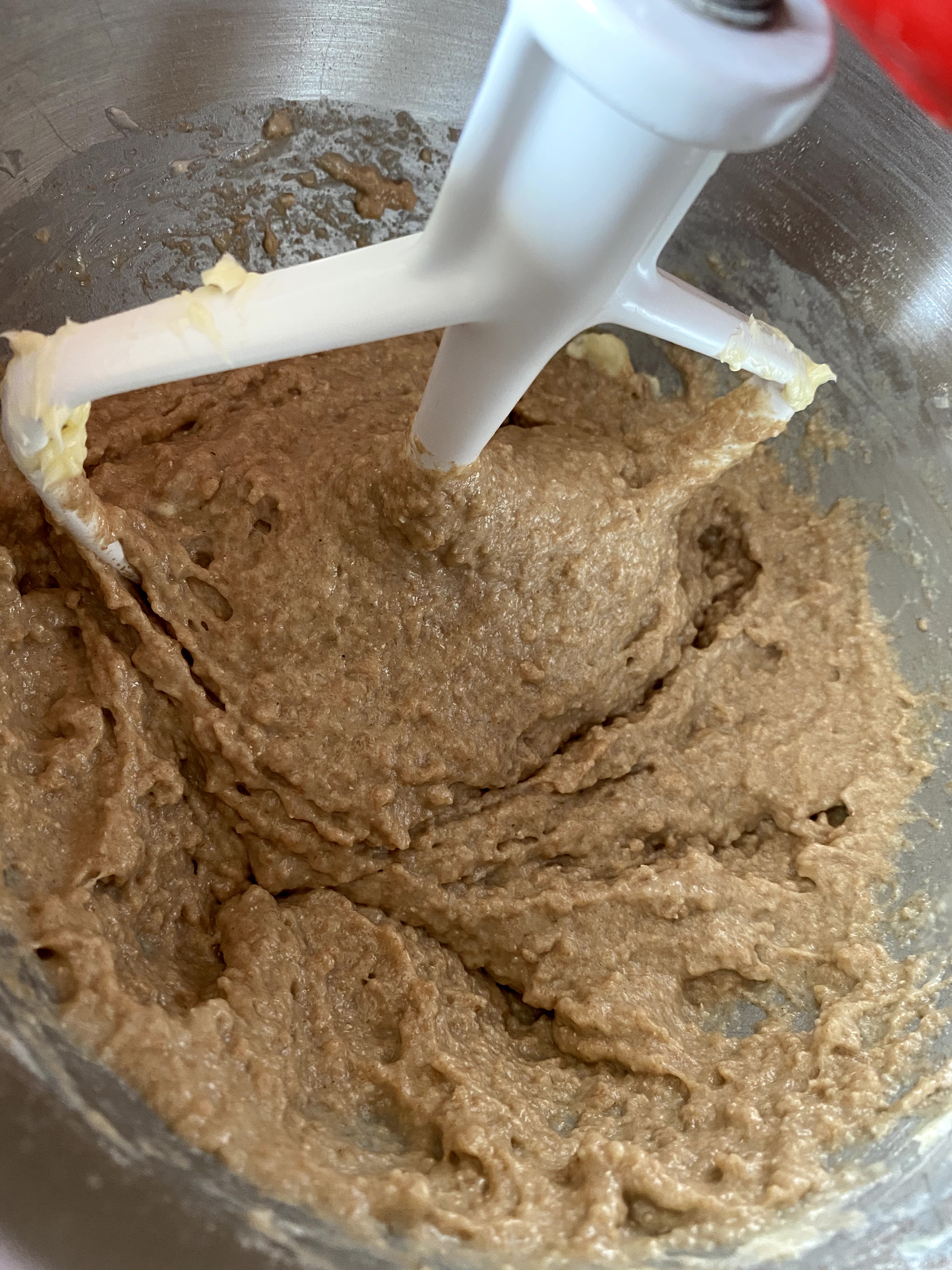
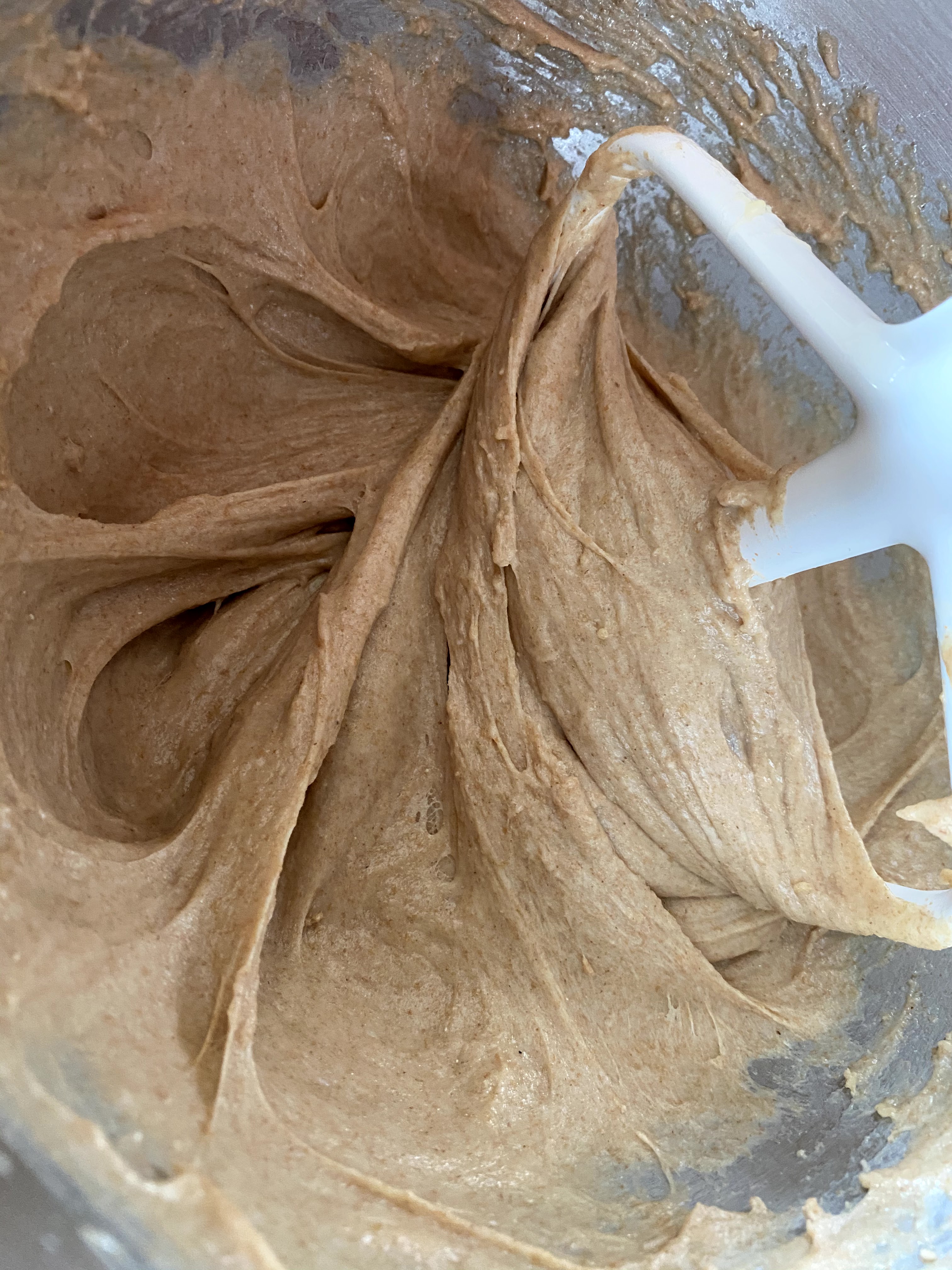
  3. Place bowl in stand mixer, and with the paddle attachment, mix on low while slowly addingthe milk/egg until combined
  4. Add the butter in bits and continue to mix on low until combined
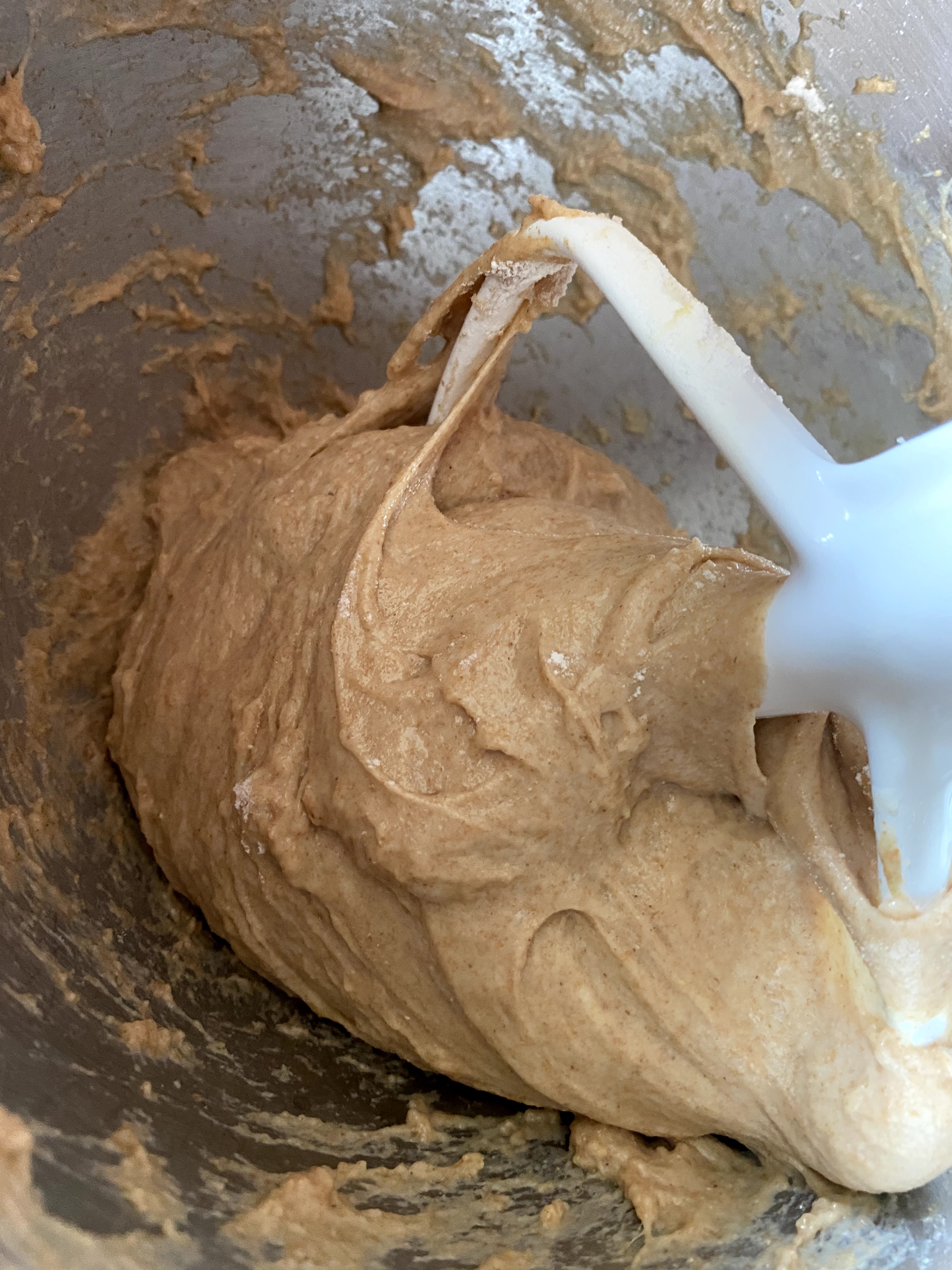
  5. Beat on high for 2 minutes
  6. On low speed, add 3 Tbsp bread flour until dough is more sturdy and comes away from the sides of the bowl

STEP 2: Rest dough

  1. Put 1 Tbsp flour on countertop, then empty dough on top.
  2. Gently knead flour into the dough so it is less sticky, using a dough scrapper if it sticks to the counter
  3. Place in oiled bowl, cover, and let rest 30 minutes.

STEP 3: Shape buns

  1. Scrape the flour off the countertop, then lighly coat in oil
  2. Empty dough onto the counter
  3. Cut dough into 8 pieces, about 80 – 90g each
  4. Flatten each piece, pull sides up and over, turn over and shape into a ball with a tight surface. (Check out this video on the Tips page)
  5. Place on a parchment lined cookie sheet about a finger width apart
  6. Cover and and let rise about 30-35 minutes.
  7. Preheat oven to 400

STEP 4: Bake

  1. Just before baking, mix second egg with 1 Tbsp water and brush on top of buns, then sprinkle with the Everything Bagel seasoning
  2. Turn oven down to 375, and bake for 12-15 minutes
  3. Cool on wire rack.
  4. Don’t cut until just before serving!

Week 62: Low-Knead Bread

I don’t know what I enjoy more: eating bread or baking bread. But sometimes, when I set out to make it because I really want to eat it, I run into a problem with timing. Oftentimes, there’s a long stretch of time between starting the process to consuming the bread. Most artisan loaves aren’t ready on the same day as you prepare the dough because they require an overnight rise, and if you don’t get around to starting until late in the day, there’s not enough time for all of the steps.

Last week I tested a work-around that produces a delicious, satisfying, impressive loaf in 5 hours from start to finish. It’s as beautiful as a sourdough, but a lot less complicated, and not as time-consuming. It’s easy like the no-knead method, but incorporates a bit of “stretch & fold” kneading (see #2 Kneading During Proofing video here) to speed up the process of strengthening the gluten, thereby avoiding the overnight soak, i.e. autolyse*.

Back in 2006, the New York Times published Jim Lahey’s No-Knead Bread, which revolutionized bread baking. Two years later, Cook’s Illustrated introduced us to J. Kenji Lopez-Alt’s version, Almost No-Knead Bread. And just last month, in May of 2021, he gave us No-Knead Bread, Revisited, which is what I’ve based mine on. I didn’t use vinegar, added some honey, substituted whole wheat and rye for some of the white flour, cut the time down by 30 minutes and used a Dutch oven to bake.

Rest times are 1 hour + 1.5 hours + 1 hour, so perfect if you work from home, and doable if you work away from home because you can make it in the evening, pop it in the fridge after the final rise, then bake the next day.

STEP 1: Make dough

  • 300g bread or all-purpose flour (or substitute 50g with whole wheat or rye, or 25g of both)
  • 7g salt
  • 3g yeast
  1. Measure dry ingredients in a bowl and mix (I use a whisk) to combine.
  • 225g warm water
  • 11g honey
  1. Add honey to water and stir to combine
  2. Mix honey water into dry ingredients, using the handle of a wooden spoon, or your hand. Make sure there are no dry bits.
  3. Cover and rest 1 hour

STEP 2: Knead & Proof

  1. Keeping dough in the bowl, do a round of stretch and folds, then cover and let rest 30 minutes. See kneading during proofing, and shaping videos here. (#1 stretch + fold | 30 minutes rest total so far)
  2. Repeat this two more times. Each time you can pull the dough out a little longer, but not too much so that it tears. Only do four stretch and folds each round. (1.5 minute rest so far)
  3. Do one more stretch + fold, then leave to rest for 1 hour.

STEP 3: Final rise

  1. Carefully remove dough to a lightly floured surface, without deflating it.
  2. Pull sides to shape into a tight ball, then turn over, and with cupped hands, tighten surface some more.
  3. Place in lined and floured proofing basket seam side up and cover
  4. Proof 1 hour or until finger test, and preheat oven to 500. It’s better to be under proofed than over proofed, so check often:
    1. Dough is under proofed when you poke a finger in it and is springs back quickly
    2. Dough is proofed when you poke a finger in it and it springs back slowly
    3. Dough is over proofed if you poke a finger in it and it doesn’t spring back.
  5. Cover with parchment, then a cutting board and turn over
  6. Slowly remove basket and score. Score round loaves symetircally and mostly on the top, so they rise up, not out
  7. Bake, covered, at 475 for 25 minutes
  8. Remove cover and bake for 10 minutes.
    1. Put a cookie sheet on the lowest rack to redirect the heat so the bottom doesn’t burn
  9. Let cool completely before slicing
Week 61: Easiest Bread Ever

I’ve spent the last year and a half learning how to bake bread. It’s been fun, not always easy, and to be honest, not always successful. There are so many nuances to it: proper kneading techniques, making sure you don’t over-proof or under-proof the dough, getting the flour-to-water ratios just right, understanding the gluten structure of different types of flour, and having all the right tools — not to mention enough time — for all the steps.

When I came across this method I was very skeptical because it kind of goes against everything I’d learned so far. For one thing, it only takes about 15 minutes to throw together, if that. After a 10-minute rest, a bit of shaping, then a 30-minute rise, it’s ready to bake. You “knead” it in a stand mixer with the paddle attachment (!) on high (!!) for just two minutes. It doesn’t compare to an artisan loaf with it’s overnight ferment and beautiful open crumb, but it makes a perfectly acceptable sandwich loaf and best of all, it’s something you can make on the fly.

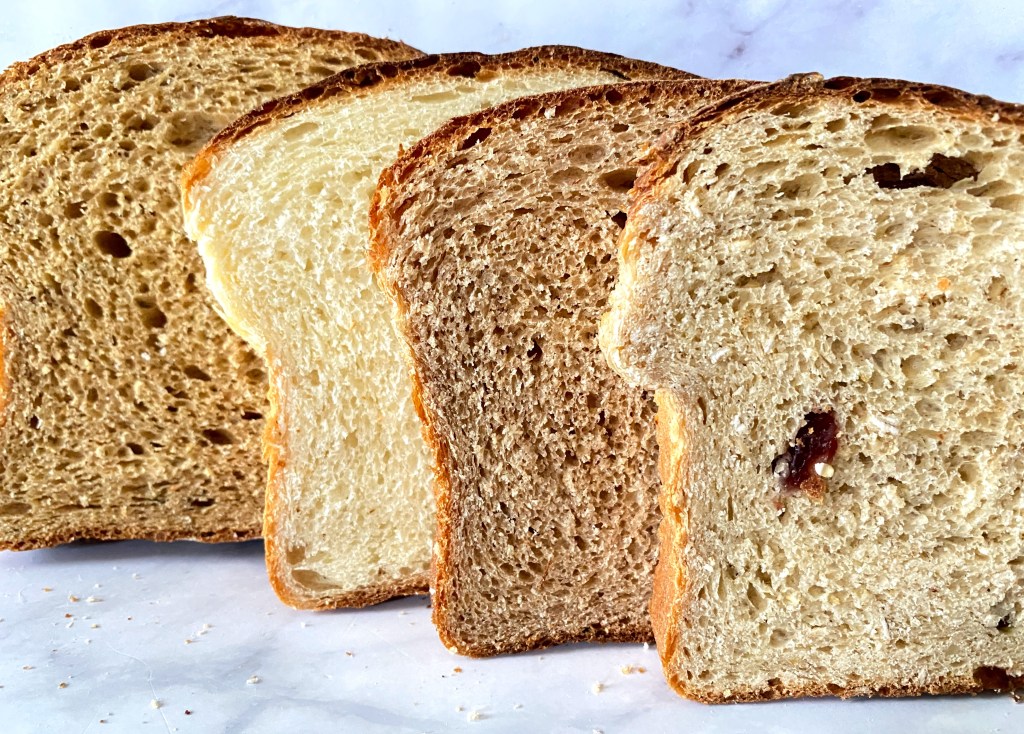
I’ve listed the ingredients (in grams) so you can make your loaf along with the video instruction linked below. I also made four different versions so you have the option to make either a whole wheat, white, oatmeal raisin or ryre.

  • 300g bread or all pupose flour < OR >
    • Whole wheat: 240g whole wheat flour+ 60g bread or all purpose flour
    • Oatmeal raisin: 300g bread or all purpose flour + 50g oats
    • Rye: 125g rye flour + 175g bread or all purpose flour
  • 7g (2 tsp) yeast
  • 1 tsp salt
  • 1 cup milk (any kind: dairy, oat, almond, soy, etc.) at 120 degrees
  • 2 Tbsp honey < OR >
    • Whole wheat: 2 Tbsp brown sugar
    • Oatmeal raisin: 2 Tbsp maple syrup + 1 tsp cinammon
    • Rye: 1 Tbsp sugar + 2 tsp caraway seeds + 1 tsp dill seeds
  • 1 egg (if you want to omit the egg, use 1 Tbsp oil in its place)
  • 2 Tbsp oil or melted butter (I use butter for the white and oat versions)

Notes:

  1. The video is for the whole wheat version. I translated the cup measurements into grams because it’s so much more accurate. If you don’t have a scale, it’s 1-2/3 cups whole wheat flour + 1/3 cup all-purpose or bread flour.
  2. She uses 1/4 cup of flour once the batter is mixed to stiffen it up a bit. I add it in one tablespoon at a time, because you might not need that much, and if you dump it all in at once, you can’t take it back.
  3. You can use 8 x 4 loaf pan if that’s all you have, but 9 x 5 is better
  4. She doesn’t grease her pan, but I went ahead and greased mine just in case
  5. If you let it rise for too long, and it gets too high, you’ll over-proof it, and it’ll collapse in the oven. So no highter than 1″ for sure. It’s always better to underproof a little than over proof!
  6. Mine definitely got too dark on the top, so do cover with foil

If you want all whole wheat try Week 21: 100% Whole Wheat from Year 2020. It’s a bit more complicated (a lot, really), but well worth the effort for such a healthy, delicious result!

Week 60: Flour Tortillas

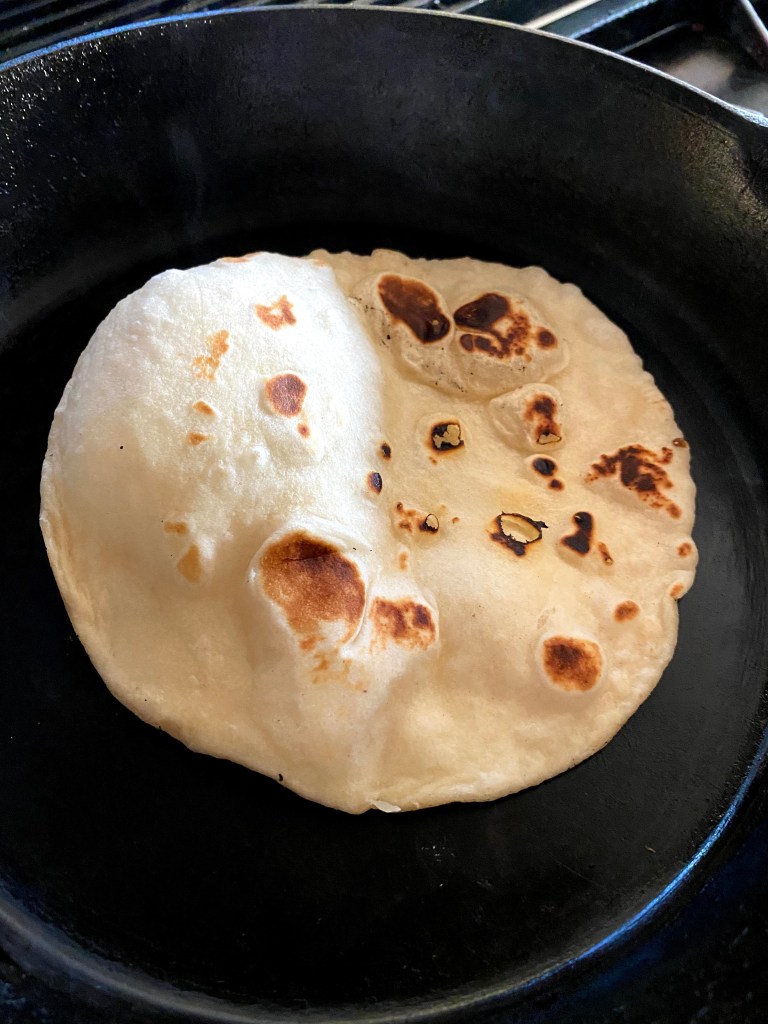
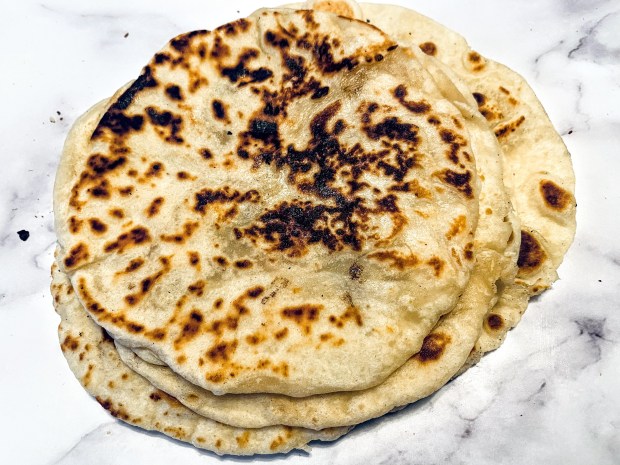
MEXICO: This is very different from most of the tortilla recipes I tried, and on first glance might not seem authentic. It was contributed to Serious Eats by Christian Reynoso, the sous chef at Zuni Cafe, and recipe columnist for the San Francisco Chronicle. This is his mother’s family’s method that uses milk instead of water for added richness, a little bit of baking soda to keep them light and airy, and a bit of sugar to balance the savoury lard*. It’s perfect.

Mexican-Style Flour Tortillas | Christian Reynoso, Serious Eats

6 TortillasIngredients12 Tortillas
158g (1-1/4 cups)Flour315g (2-1/2 cups)
4gSalt8g
1 tspBaking Powder 2 tsp
1/2 tspSugar1 tsp
57g (1/4 cup)Lard/Butter/Shortening115g (1/2 cup)
110gMilk220g
22gSpinach*45g

Tips:

  • Lard is actually better for you than butter. It contains no trans fats, and is 60% monounsaturated fat, which is associated with a decreased risk of heart disease. And, it’s better than vegetable shortening as well, unless you’re vegetarian. Easy enough to substitute butter if you prefer; clarified would be better because it removes the milk solids and water.
  • I just used a hand whisk to mix the dry ingredients; didn’t bother with using the stand mixer and whisk attachment.
  • Pay attention to the instructions for rolling out the dough. It really helps to flip it and turn it as you roll it out to the desired size.
  • Don’t use super high heat – they’ll burn before they are cooked all the way
  • You have to mind them the entire time they are cooking, and it only takes a few minutes, so it’s best to just roll one out, then cook it, then roll out the next one. Instead of rolling them all out at once.
  • I store them in a zip lock once they are cooked, instead of under a kitchen towel
  • For spinach tortillas, blend 45g raw spinach leaves with the milk until completely liquefied. Then, use only 110g or 220g milk/spinach liquid – sometimes there a little left over, sometimes none. Depends on the water content of the spinach leaves!

Week 59: French Sourdough

FRANCE: Pain de Campagne is a multi-grain French sourdough, made with white, whole wheat and rye flours. Back in the day, French villagers would bake very large loaves in communal ovens, which could feed the family for weeks. Some say scoring was a way to identify your loaf.

This recipe follows Maura Brickman’s method for Pain de Campagne introduced on King Arthur’s website (see video link below) whereby you can use your starter straight from the fridge. You don’t have to feed it the night before, and you don’t have to create a levain with an active starter. This removes two steps from a very long process.

Continue reading “Week 59: French Sourdough”

Week 58: Same Day Sourdough

Baking a sourdough loaf is a two-day affair, because there are so many stages in the prepping and proofing. I set out to find if it was possible to a.) make a loaf in one day, and b.) be 100% satisfied with the result. And, I’m here to tell you that there is! This is a method for baking a sourdough loaf with no overnight rise, and if you get started early enough, (8:00 AM) you’ll have a warm loaf to bring to the dinner table.

Continue reading “Week 58: Same Day Sourdough”

Week 57: Sour Sourdough

So far, my sourdough loaves have not been very sour. My starter is young, and I think that might have something to do with it. To make this have that familiar sourdough tang, I used a more mature starter, less starter than usual so that I can extend the resting times, skipped the autolyze step, mixed in a little whole grain (wheat or rye works) because they contain complex carbohydrates, which results in a higher production of acetic acid, and used a warm proofing temperature throughout.

*King Arthur has a Extra Tangy Sourdough Bread recipe that suggests adding 1/4 ~ 1/2 tsp citric acid if you really want that sour boost.

DAY ONE

STEP 1: Activate starter (4~6 hours)

Feed your starter so you can use it when it is active/mature. Mine usually takes between 4~6 hours, depending on the temperature. Keep it close by, so you can monitor the rise, and use it when it’s mature, and not starting to fall. My starter is a 1:1:1 ratio, i.e. 100g flour + 100g starter + 100g water.

STEP 2: Mix dough

  • 20g levain (active starter)
  • 350g lukewarm water (room temperature)
  • 450g bread flour (all purpose is okay, too)
  • 50g rye or whole wheat flour
  • 10g salt
  1. Gently whisk the levain (your active starter) with the water to thoroughly combine.
  2. Add the flour and salt and mix with your hands by picking up portions and squeezing through your fingers, until flour is thoroughly incorporated. Use the dough to pick up areas that have dried flour to incorporate.
  3. Rub your hands together to remove bits of dough and scrape down the sides of the bowl.
  4. Cover and let rest for 4 hours in a warm place.

STEP 2: Fold Dough

  1. Pick up one end, stretch it up, and fold it over almost to the other side. Pick up that side, stretch it up and fold it to cover. Now fold the other sides in the same way. Don’t worry about scraps of dough in the pan, they’ll get covered as the dough spreads overnight.
  2. Cover and let rest 30 minutes.
  3. Repeat step one, cover and let rest 30 minutes.
  4. If it looks to be holding it’s shape a little better, then stop. If not, do another fold. Cover and let rest 30 minutes.
  5. By now it should be ready for it’s big rest. Keeping it in the same warm place, let it rest overnight about 12-13 hours. If your house is cool in the evening, find a warm place like the oven with the light on and the door cracked. I read a recommendation to place it on top of the water heater. You just want it to be somewhere in a consistent 72-75 temperature.

DAY TWO

STEP 1: Shape dough

  1. Gently turn your dough out onto a lightly oiled surface if it’s a wooden counter. If it’s granite or Formica, you don’t need the oil.
  2. Follow the video instructions on the tips page on how to shape your dough into an oval (batard) or round (boule) shape
  3. Prepare a proofing basket or a banetton, and place the dough in, seam side up.
  4. Cover with plastic wrap then proof in fridge for 6-8 hours.

Step 2: Bake

  1. Preheat oven and pot with a lid to 500.
  2. When it’s ready, remove bread from fridge and score. This is a great scoring tutorial from Breadtopia, with four videos for visual instruction.
  3. Bake at 475 for 20 minutes, then remove lid and back for 15-20 longer.

Week 56: Sourdough

If you do a Google search for sourdough recipes, you’ll get 25,600,000 results. There is a ton of information — and misinformation — to sift through. I tested five different methods and this version, from Full Proof Baking’s Kristen Dennis was the clear winner. Although it is time consuming, and a little tricky, the instructions are very detailed and the steps are demonstrated on the video, linked below. This is an all day affair — a perfect loaf for #bakingwhileworking.

Continue reading “Week 56: Sourdough”

Week 55: “Sourdough” Starter

The word “Sourdough” is in quotes because the name is a total misnomer. This is a wild yeast starter, and not all breads made with this non-commerical yeast are always sour. Using this type of starter (also known as a levain) doesn’t equate to making a sourdough loaf, and it’s often used to make all sorts of baked goods, such as pancakes, brownies, etc.

When you let a mixture of flour and water sit, the wild yeast that naturally occurs in flour (it’s actually everywhere) starts to grow by eating, i.e. metabolizing, the starches/sugar, producing lactic acid. This gives it a tangy taste. Bacteria then feeds off the yeast’s waste, producing acidic acid, which is what makes it sour. While all this is happening, it’s considered live, and the mixture gets bubbley and rises. Once everything’s consumed, it falls and is dormant until the next feeding. So that you don’t end up with a massive amount of starter, you throw some away just before each feeding, and then add some fresh water and flour to the remainder, thereby keeping a consistent amount.

You can actually purchase starters on line, if you want guaranteed success. And the 1847 Oregon Trail Sourdough Preservation Society will send you one for free. Yes, it’s been around for that long!

Continue reading “Week 55: “Sourdough” Starter”